
From Miami to Madrid, tears for ‘CAM’ — the best of an exiled Cuban generation that’s leaving us | Opinion
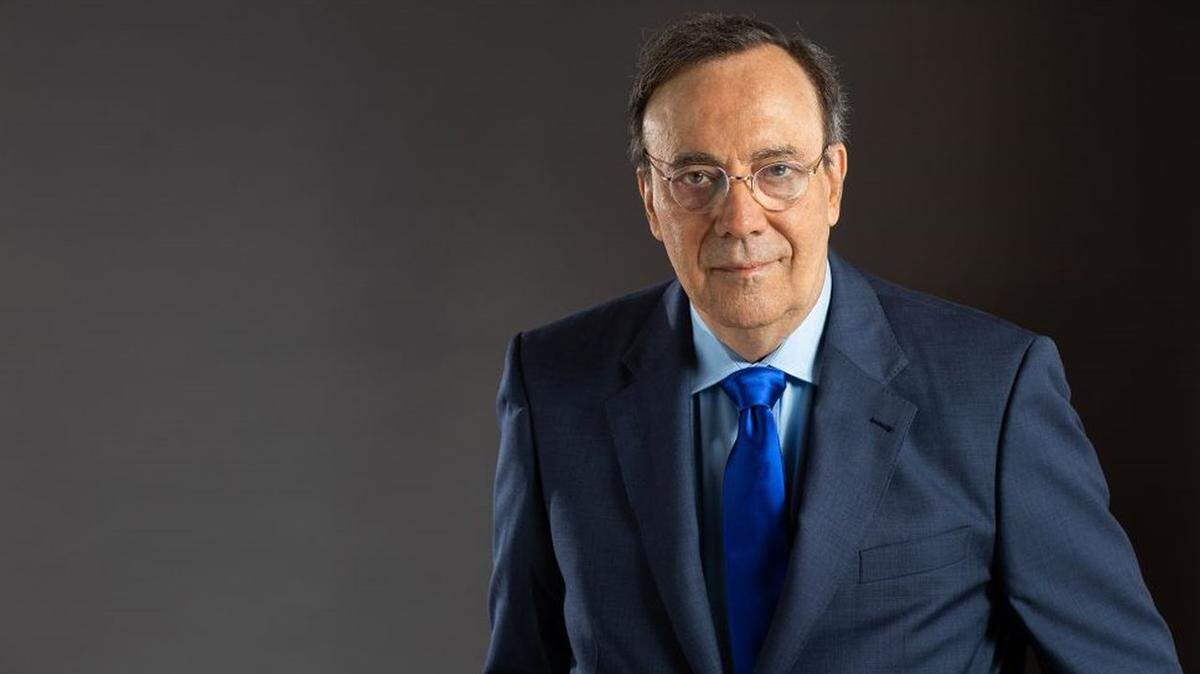
I come unforgivably late to paying tribute to a Cuban exile, Carlos Alberto Montaner, who meant more to many of us in Miami than words can express.
Forgive the tardiness, maestro.
It was impossible to write through complicated tears.
Known all over the Americas and Spain for his prolific writing and wit, Montaner — colleague, political columnist, friend (nuestro “CAM,” we’d call him), and no politician, as some wrongly peg him when he never ran for office — represents the best of a generation that is leaving us without seeing the dream of a democratic Cuba realized.
You see, he should have been the president of a free Cuba.
A true leader
Montaner — a respected liberal among Latin American leaders and opinion-makers of most political persuasions, despite the Cuban regime’s unrelenting propaganda against him — had all it would have taken to lead out of darkness a post-Castro Cuba.
He had the intellectual heft, the political savvy, the allies and the eloquence to bring about the miracle of uniting Cubans on the island and the worldwide diaspora. He could have won a fair election and led an economic and multi-partisan political resurgence that wouldn’t have left out those with whom he disagreed politically.
He knew the intimacies of governance through his relations with Latin American and European leaders. He couldn’t be dismissed as a right-winger. He wasn’t one, which brought him bitter enemies in our divided Miami exile. He couldn’t be dismissed as a leftist. He was barely left of center, a registered no-party-affiliation Miami-Dade County voter.
Although he sure had his biting opinions, Montaner didn’t publicly fight his own, another trait that made him the better person. He was a highly focused man with a single purpose — gaining allies in the fight for an independent and democratic Cuba. He acknowledged only one set of enemies: the Castro dynasty, its supporting cast and heirs.
Montaner seldom delved deeply into American politics, except when it came to Cuba and Latin America policy, and other foreign affairs — his domain. He was an expert on the historical and cultural influences that shaped the Americas.
In 2020, however, he thought the U.S. presidential election so important that he decided to defend in a televised ad Democratic candidates Joe Biden and Kamala Harris against Republican Party campaign rhetoric labeling them socialists.
READ MORE: ‘He is no socialist’: Well-known Cuban-American writer defends Biden in new political ad
When criticizing world leaders in his columns, including former President Donald Trump, Montaner treated both the man and his policies with decorum, his elegant words more eloquent than epithets.
Even his political wit and sting carried the diplomatic veneer of culture and class.
“Nuestro presidente,” some of us would tease him after the fall of the Soviet empire, dreaming of a Cuba that, despite the social inequities, vendettas and corruption pre-Castro, was a leader in many industries, including communications and culture.
CAM would respond, also in jest, assigning us jobs in his administration.
Whether it was visiting his home in Madrid’s gorgeous El Retiro neighborhood, a Spanish publisher’s dinner during the Miami Book Fair or having lunch with him and his beloved wife, Linda, among the suits gathered at Perricone’s on Brickell, to be in his company was a privilege — and fun.
Many years ago, I tried to coax CAM, post-heart surgery, to eat more healthfully instead of the bowl of pasta he had ordered. It was a fail, the only time I saw him about to lose his temper with both Linda and me.
READ MORE: Renowned writer, newspaper columnist Carlos Alberto Montaner dies in Spain
A last lesson
Though his leading a democratic Cuba couldn’t be, Montaner leaves us with a lifetime of political analysis, thousands of opinion columns, 20-something non-fiction books and novels — and one last lesson: how to die with dignity.
“When you read this article, I will already be dead,” he wrote in a column he began writing in Miami in 2022 after he was diagnosed with a degenerative brain disorder known as progressive supranuclear palsy.
Finished via dictation when he could no longer write, it was published posthumously last week.
“I firmly believe in euthanasia and assisted suicide, as fortunately, so do more than 70 percent of Spaniards,” he wrote.
Some of the nations top newspapers — The Washington Post, The Wall Street Journal and his American hometown’s Miami Herald and el Nuevo Herald — have written obituaries marking his June 29 death at his home in Madrid. He had traveled there, his faculties quickly deteriorating, to die on his own terms.
The Post’s obituary casts Montaner as “a polarizing figure across Latin America with harsh critiques of politics and culture.” But I don’t see Montaner that way at all. I find his criticism insightful.
And readers, the ultimate judges, appreciated his intellect so much that his work, regularly published in countless newspapers and magazines in three languages, was estimated to have been read by some 6 million people across IberoAmerica and Europe.
Once a friend, always a friend
The last time I heard from Montaner was in September, when I woke up to an email in my personal account.
He was copying me on instructions to the manager of his web pages.
“Dear Wen,” he wrote, “close the Facebook page in which they’re attacking my friend Fabiola Santiago. Leave only the one I author.”
How many “influencers” in this world of ours are willing to forsake a piece of internet glory for a friend?
Only this giant of a gentleman.

This story was originally published July 11, 2023 at 4:53 PM.
