
The smoke of censorship cleared, Miami-Dade students to see Nilo Cruz’s Pulitzer-honored play | Opinion
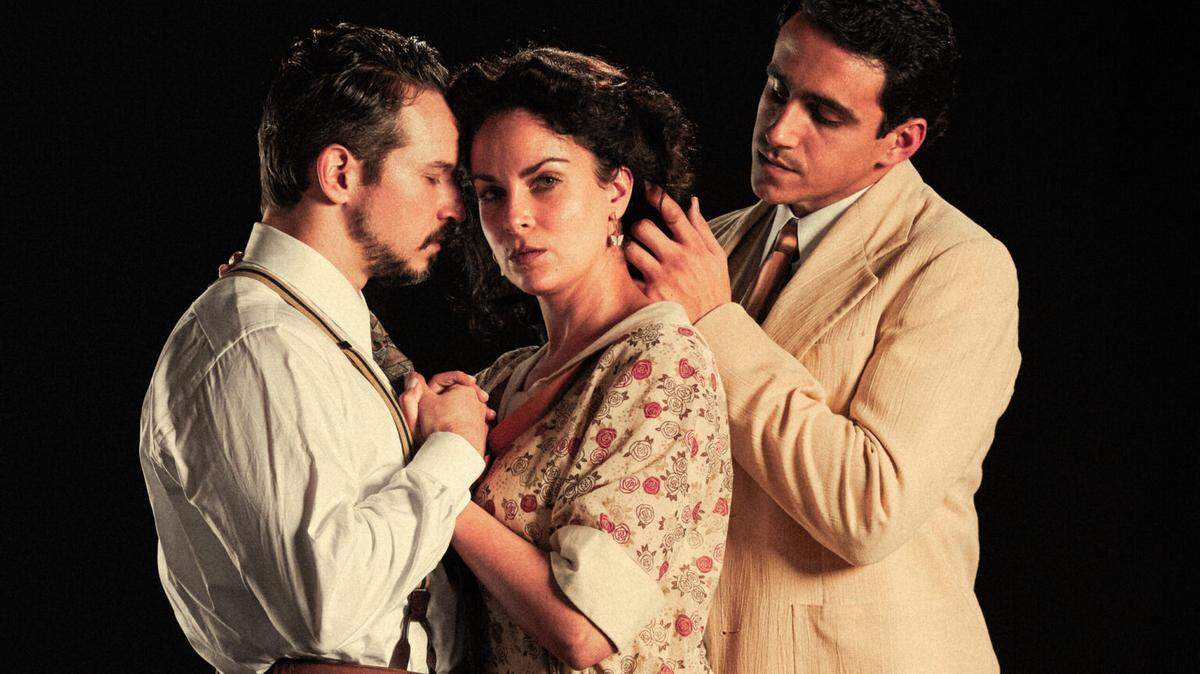
A beautiful thing happened Saturday night at the packed Colony Theatre in Miami Beach.
Before actors took to the stage for a dramatic opening of the 20th anniversary edition of the widely praised and internationally produced play “Anna in the Tropics,” the director of Miami New Drama, Michel Hausmann, had good news to share.
Miami-Dade students — banned from seeing the historic Pulitzer Prize-winning play by Miami’s Nilo Cruz, after it was wrongly pegged as too sexual and violent even for 18-year-olds — will get to attend special matinee showings.
Applause rang throughout the restored 1935-era Art Deco theater — and the opening went on, an exquisite rendition, directed by Cuban-American Cruz himself, of a play that captures a slice of the culture of the Cuba and Florida of yesteryear.
A controversy that should have never been, except for the divisive state of Florida politics, it was resolved during talks between Miami-Dade Schools Superintendent Jose L. Dotres, educators and staff, the theater company and Cruz.
“I’m very happy that students will be seeing it,” Cruz said.
Powerful play
But I wasn’t expecting the announcement at that special moment, and seeing people’s reaction was powerful on many levels.
Dotres, also Cuban American, did the right thing by students. Working with his performing-arts programming team, he reversed an earlier recommendation to keep students from attending special showings of this play about Tampa cigar rollers who are inspired to ask more of life by the lector’s reading of Leo Tolstoy’s “Anna Karenina.”
He doesn’t want any credit for his leadership in the negotiations, but it’s due him: Bravo, superintendent.
Now, public school seniors and students who are part of visual performing arts programs will attend three matinee shows. Parents will have to sign a permission letter that specifies the content of the play, in order to comply with the recently passed Parental Rights Act, Dotres told me.
“Done right, it’s to the benefit of students,” he said. Everyone involved, he added, is “very happy that we are able to provide this cultural opportunity for our students.”
It’s the right call.
As I said in three columns about the controversy, there’s a lot more sexual and violent content easily accessible in students’ phones and television sets than there is in all the scenes of this play put together.
Still, the sexual scenes will be toned down for the student performances, a compromise necessary to win parental and educator approval, which Cruz was willing to do. Not that I think it’s necessary after seeing it again. More than ever, I stand by what I said previously: What raises the bar on this play is Cruz’s poetic language and masterful storytelling.
What language delivers — a unique story of love and family betrayal steeped in tradition and changing times — is magical, rousing and never crass.
The students who will get to see it will be richer for it.
Exposure to arts in education
An education left to unfold only in classrooms — where, in today’s Florida, curricula are scripted by politicians more concerned about their careers than our children’s future in a complex world — would shortchange students.
When educators leave students wanting, they will search for what’s missing elsewhere. Blessed are those who find it in a theater, in a work of art, in a book — and not the streets.
This is also an important win for public education.
Surely, any parent of means can afford the tickets and take their literature-loving teenagers.
But the lifting of censorship addresses accessibility for those who simply can’t afford it. This is a community of immigrants where parents are too often so immersed in the family’s survival and adaptation that the last thing on their minds is the value of an education supplemented by field trips that open doors to other worlds.
I know.
I was one of those students — and my Cuban-refugee parents were so afraid of everything new that I had to have the Spanish teacher call them and explain the worth of my going to see “Fiddler on the Roof.”
And that it was safe to let me ride a bus to Fort Myers to see Thomas Edison’s house and to the Keys to learn about the “Conch Republic,” where I first heard about Key West’s Cuban heritage, including the famous speech made at the San Carlos by Cuba’s beloved Independence War hero José Martí.
There will be students in the audiences of Cruz’s play who will be inspired to become playwrights, poets, actors, directors, stage designers. Or, not. Inspiration doesn’t cage you into a career. That’s the beauty of art. Maybe they will become CEOs, financial wizards or Florida’s governor — and still be affected by the way great theater shines a light on the human condition.
Sitting at the Colony among many well-known Miamians, actors waiting in the wings ready to begin, the news of the reversal of an act of censorship unworthy of our community felt like one of those breakthrough moments.
It’s good to confirm, despite the viral insanity overtaking Florida, that cosmopolitan Miami can still be an oasis of intelligence, thanks to the transformative power of art.
This story was originally published January 17, 2023 at 5:08 PM.
