
Fabiola Santiago: 45 years later, Miami is a state of mind
I’ve been revisiting beloved landscapes where I made my life in Greater Miami — or better said, where this metropolis shaped me, sojourns that started after a question posed at a lively dinner table conversation wouldn’t leave my head.
Cuban-Americans all, we were discussing arrivals and departures, second homes and making memories, and I was in inspired “Ms. Elsewhere” mode, desiring another geography and house-hunting out loud. This is an exercise that always begins close enough, with the Fort Lauderdale ‘Where the Boys Are” of my teen years, runs the stretch of the east Florida coast, and dissatisfied with the options, inevitably winds up somewhere across the Atlantic.
“But,” one of the dinner guests drills me, taking my flight all too seriously, “can you really leave Miami?”
“You bet,” I say to survive the moment — bravado as escape from the weight of history and the original wound.
Tuesday marked the 45th anniversary of the fateful Freedom Flight that brought me to these shores: A Varadero-to-Miami refugee airlift charter, a window seat, the turquoise ocean below and my father beside me; my little brother and mother on the other side. Three changes of clothes each in a suitcase. My arm hurting from the vaccine that a nurse, cursing us under her breath for leaving the country, had harshly injected into my left arm.
I was 10 years old.
I still bear the mark of her patriotism.
I was sad, scared — and excited.
I acquired the flight gene that day — and probably the news addiction as well.
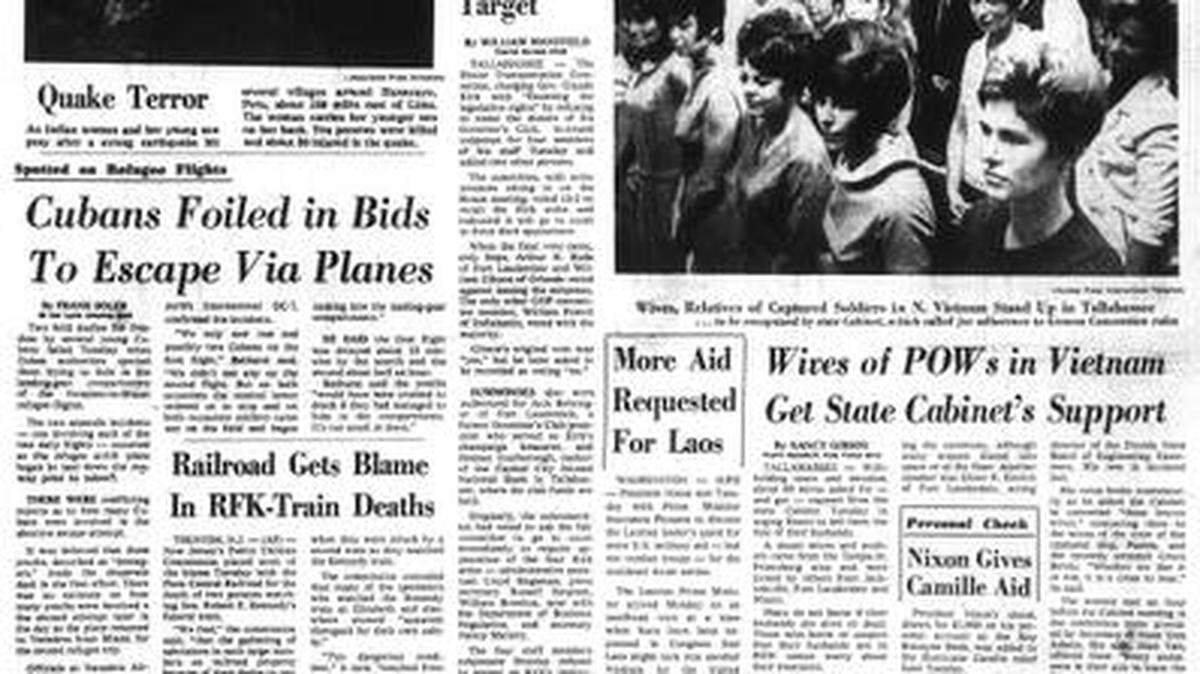
On the day I left Cuba, as I waited to board, I saw young men dash out of the woods and try to hop on the landing gear of the flight before ours — and as I learned, many years later as a journalist when I found the next-day Miami Herald edition for Oct. 8, 1969, our flight as well.
On this anniversary, a date Cuban exiles mark like a birthday, a mother and her two teenage daughters wash up ashore in Miami Beach.
Five decades of one exodus after another — and the one constant is that Cubans keep fleeing the island and coming to Miami.
We’re good at leaving — but I’m even better at carrying all the places I love within me. That’s why I understand what the French writer Patrick Modiano, who won the 2014 Nobel Prize in Literature on Thursday, means when he says, “For me, Paris has always been something internal.”
For me, cubanidad is a state of mind. For me, Miami is a state of mind. For me, flight is a state of being.
Cuba and Miami are forever linked, and no place else embodies that better than the Freedom Tower, the old Miami News building-turned-refugee- processing-center, lovingly restored and converted into a museum and gathering place, where an exhibition on the Freedom Flights and Pedro Pan Exodus is on view.
The tower, el refugio, was the first place we visited in America.
Can I really leave Miami?
Have I ever really left Cuba?
My dead are buried on both sides of the Florida Straits, a melding of history, roots and belonging.
I can leave Miami — so many of my dearest have. But leaving, no doubt, would feel like a second exile.
This story was originally published October 10, 2014 at 7:12 PM with the headline "Fabiola Santiago: 45 years later, Miami is a state of mind."