
What’s riding on the Supreme Court review of DACA? For Dreamers, everything | Opinion
They spent their childhoods like you and me reciting the Pledge of Alliance every morning in their American schools.
The United States is their home in every sense of the word — except that they lack legal status.
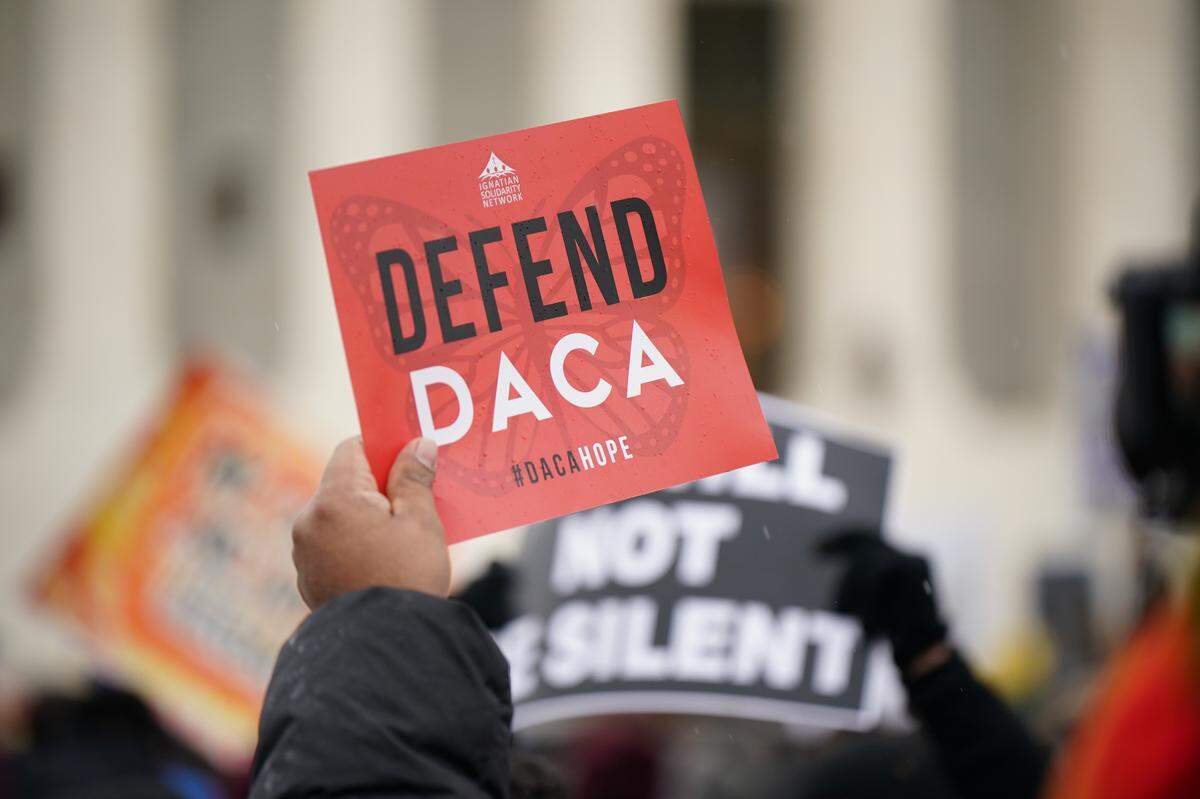
And now, as the U.S. Supreme Court hears oral arguments on whether the program protecting them from deportation to countries foreign to them can be revoked — as President Donald Trump did in 2017 — the Dreamers once gain face uncertainty.
On Tuesday, the Supreme Court took up the case on whether the move by Trump to end the Deferred Action for Childhood Arrivals (DACA) program created by President Barack Obama in 2012 to allow young people brought as children to live and work here legally, was lawful.
They had enjoyed a victory when lower courts rejected Trump’s claim that the program was unconstitutional, saying that his decision to end DACA was “arbitrary and capricious.”
The review by the highest court in the land is widely seen as one of the most important cases this term and another test of Trump’s hard-line immigration policy.
It’s not that the Dreamers are a large immigrant group.
Of the estimated 700,000 who qualified for the program across the country, some 25,500 live in Florida, where the Republican leadership supports the president and his policies with zealotry. Given the high profile of Dreamer youth in the state, they could’ve stayed at least neutral, but the last two attorneys general, Pam Bondi and Ashley Moody, have expressed in writing to the Supreme Court their support of the Trump view that DACA is illegal.
Although he pledged “I love Dreamers,” Trump terminated DACA at a moment of heightened anti-immigrant rhetoric when he was trying to use the Dreamers’ status as a bargaining chip to fund his border wall with Mexico.
It was an unpopular tactic and the president didn’t get the billions he sought. These young people, educated in U.S. schools — and many of them top students and contributors in their communities — enjoy widespread support among Americans, polls show.
The permanent solution to their predicament could’ve been settled by Congress long ago, but divisive politics have kept a “clean” Dream Act bill from coming to fruition, even as Dreamers have prospered in places like Miami.
But the Dreamers have become the proverbial political football everyone tosses around. Yet, no one scores a touchdown.
A Dream Act that provides them with status and a path to citizenship has failed to pass Congress. In the latest political round, the Democratic, Nancy Pelosi-led House passed it, but it is still waiting to be heard in the Republican-controlled Senate.
Through it all, the Dreamers have lived in limbo as lower courts have weighed in on DACA, not knowing whether they will be able to practice the professions they’ve trained for or whether one day they will be separated from their U.S.-born children.
What’s riding on the Supreme Court review of DACA?
For Dreamers, everything.
“I unfortunately don’t feel that a conservative Supreme Court will make a decision that is in the best interest of DACA recipients,” Monica Lazaro, a Miami Dreamer working on a master’s degree at Harvard, told me. “Since I have been overwhelmed with work, I try to avoid thinking about my future — with or without DACA — because the uncertainty will not make things easier.”
Brought here from Honduras when she was 9 in 2002, Lazaro had always hoped — and worked toward, as one of the most eloquent young voices in South Florida — for a permanent solution that includes a path to citizenship.
“I am deeply saddened that it all comes down to this,” she said of the court case. “However, I do see a possible light at the end of this tunnel. Ending DACA would create an urgency. Many DACA recipients are homeowners, car owners/leasers, business owners/associates and we are also taxpayers so I can’t imagine that an administration would deport such individuals. From a conservative economic perspective, it does not make sense. They would have to come up with an alternative solution to DACA.
“Now, whether it’s a good one, I don’t know.”
The court’s decision isn’t expected until the summer of 2020.
Some court watchers said justices appeared inclined to give Trump a win.
But there’s historical precedent for Obama’s DACA. Other presidents from both political parties also have adjusted the status or granted entry to immigrant groups without congressional approval.
Nicaraguans fleeing the U.S.-backed contra war, for example, were welcomed by President Ronald Reagan in the 1980s. All that took was a policy directive from the White House to Miami’s immigration director. Or, for a journalist like me to write a story about their plight — and they were safe from deportation.
The Cuban rafters of the 1994 exodus were first interdicted at sea and sent to the U.S. Naval Base in Guantánamo Bay, but after some nine months in limbo, they were processed and granted entry by President Bill Clinton.
But there isn’t much precedent for what Trump has done: He has intentionally harmed for political gain a group of young people raised in this country as Americans.
He provided more evidence of his intent again Tuesday by tweeting a whopper of a lie about Dreamers, followed by another empty promise.
“Many of the people in DACA, no longer very young, are far from ‘angels.’ Some are very tough, hardened criminals,” he wrote, in an obvious attempt to defame them and influence the court. “President Obama said he had no legal right to sign order, but would anyway. If Supreme Court remedies with overturn, a deal will be made with Dems for them to stay!”
May the court affirm the relief from political cruelty the Dreamers deserve.
This story was originally published November 12, 2019 at 4:52 PM.
