Forget troops: An Iran-like air strike on Venezuela looks more likely | Opinion
While America’s attention is fixed on the tragic assassination of right-wing activist Charlie Kirk, let’s not lose sight of the Trump administration’s preparations for a possible U.S. military attack on Venezuela. It may happen sooner than you expect.
A full-scale land invasion to oust Venezuelan dictator Nicolás Maduro is highly unlikely (we’ll get to the reasons why in a moment) but a growing consensus among military experts is that President Trump may soon order a targeted air attack on a Venezuelan military airfield or a drug lab.
Following the Sept. 2 U.S. strike on an alleged drug speedboat in international waters near the Venezuela coast — an incident in which all 11 people aboard were killed after the vessel reportedly tried to flee — there has been a flurry of U.S. military exercises in the Caribbean.
U.S. Marines are practicing amphibious maneuvers in Puerto Rico, and Air Force special operations units are honing airport seizing skills on the island of St. Croix, U.S. officials say.
“Make no mistake about it, what you’re doing right now is not training,” U.S. Defense Secretary Pete Hegseth said on social media during a Sept. 8 surprise visit to Puerto Rico. “This is the real-world exercise on behalf of the vital national interest of the United States.”
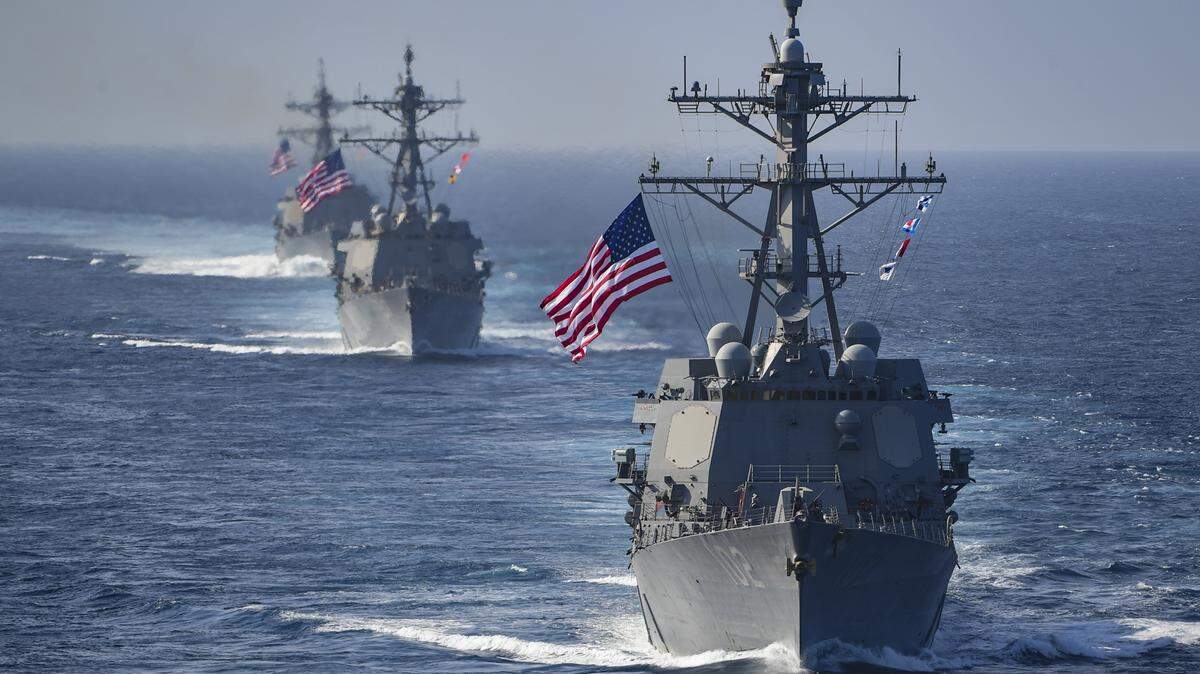
In addition to a naval force of at least 7 U.S. warships, a submarine and 4,000 troops already deployed in international waters off the Venezuelan coast, the Trump administration is deploying 10 F-35 fighter jets to Puerto Rico for operations against drug cartels, according to the Associated Press.
The Trump administration says it is waging a war against Venezuelan drug cartels, and has described Maduro as a “narco-terrorist” cartel leader. Last month, it increased to $50 million its reward for information leading to Maduro’s arrest.
Skeptics, however, argue that Trump’s threats on Venezuela are little more than political theater aimed at mollifying his Venezuelan-American and Cuban-American supporters in South Florida.
Many Venezuelan and Cuban Trump voters resent the U.S. president’s orders to deport about 600,000 Venezuelans who until now enjoyed legal temporary residency under Temporary Protection Status (TPS). Venezuelan exiles have also been disappointed by Trump’s decision to renew Chevron’s license to operate in Venezuela, a move that will provide the country with much-needed foreign income.
Critics of Trump’s crusade also point out that as long as America’s insatiable demand for drugs isn’t reduced, traffickers will always find a way. But Trump is not doing much on that front, they say.
So, what ‘s likely to happen now? Despite White House Press Secretary Karoline Leavitt’s recent statement that Maduro is not the legitimate president of Venezuela, most military analysts agree that a U.S. land invasion to topple the regime is unlikely.
Frank Mora, a Florida International University professor and former senior Pentagon official in charge of Latin America, told me that the current naval force in the Caribbean is too small to invade, much less occupy, a country the size of Venezuela. To maintain order after an invasion, “You would need 200,000 or 250,000 troops,” he said.
Evan Ellis, a professor at the U.S. Army War College and former Trump administration official, told me he sees only a 30% chance of U.S. ground invasion of Venezuela. But he said there’s a greater possibility of a hit-and-run operation to capture Maduro or — more likely — an air strike against a Venezuelan target, much like the June U.S. attack on Iran’s Fordow uranium enrichment facility.
Supporters of a U.S. attack say Trump would be on solid legal ground if he decides to strike Venezuela. They argue that the U.S. government has been accusing Venezuela’s regime of state-sponsored drug trafficking since at least 2005, long before Trump’s first term in office.
Indeed, the Bush administration declared in 2005 that Venezuela had failed to cooperate in the war on drugs. In 2009, the U.S. Government Accountability Office (GAO) concluded that Venezuela had become “a major transit route for cocaine.”
And in 2015, U.S. anti-narcotics agents arrested two of Maduro’s nephews in Haiti on drug trafficking charges. The two were convicted and later released in a 2022 prisoner exchange.
All of this leads me to suspect that we could soon see an Iran-like U.S. air strike on Venezuela. But if this is to be more than just an effort to divert attention from gun violence in America, a declining economy and his poor poll numbers, Trump must put a greater focus on restoring democracy in Venezuela and seek backing from other countries.
Instead of going it alone and risking turning Maduro into a victim — rather than the brutal dictator he is — Trump should seek support from democratic leaders across the world to get Maduro to recognize his 2024 electoral loss and leave office. That would make much more sense, and be more effective, than a solo U.S. air attack.
Don’t miss the “Oppenheimer Presenta” TV show on Sundays at 9 pm E.T. on CNN en Español. Blog: andresoppenheimer.com