Argentina’s Milei will criticize leftist dictators, but foreign policy won’t be his focus | Opinion
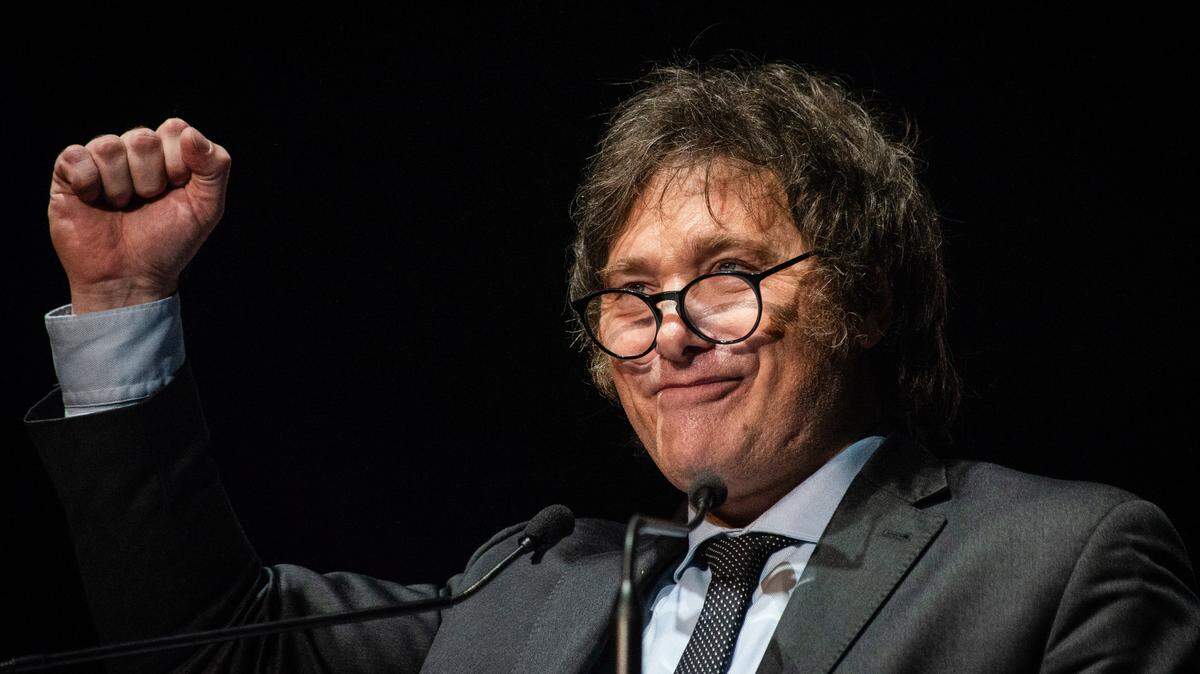
BUENOS AIRES — Many Venezuelan, Cuban and Nicaraguans who oppose their countries’ dictatorships have high hopes that Argentina’s newly elected president, Javier Milei, will become a champion of democracy in the region.
My impression after talking with his top aides is that, while he will be an open critic of leftist autocracies, foreign policy won’t be his top priority.
Milei, who takes office on Dec. 10, told me in an interview earlier this year that the United States and Israel will be his top two allies and that, as president, he would not promote commercial or political agreements with “places where there is communism.” He noted, however, that he would not interfere with Argentina’s private-sector ties with any country.
But since winning a landslide victory in the Nov. 19 elections, Milei has moderated his stands on domestic and foreign-policy issues.
The president-elect’s main priority will be to revamp Argentina’s economy, which is going through its worst crisis in recent memory, his top aides told me.
Indeed, the outgoing leftist-populist government’s disastrous economic policies have increased inflation to an annual rate of more than 140%, and poverty has risen to more than 40% of the population.
During a week-long stay in Buenos Aires, I had to pay for my meals with huge stacks of 1,000-peso bills. For a dinner for two at a good steak house, I usually paid around 35,000 pesos, the equivalent of $35 dollars at the black market rate, with appetizers, wine and dessert included. But while that’s a bargain for U.S. visitors, it’s a lot of money for Argentines who make the minimum wage of $146 a month.
Contrary to previous media speculation, the incoming government plans to invite the leaders of Cuba, Venezuela and Nicaragua to Milei’s inauguration, knowing that they are unlikely to show up. But lower-level officials from these countries may attend, as well as officials from other totalitarian regimes, with the possible exception of Iran.
Diana Mondino, the Milei government’s designated foreign minister, told me in an extended interview that, “Our wish is to invite the entire international community, if possible.”
Referring to the presidents of Venezuela, Cuba and Nicaragua, she said that, “These are people who are rejected in their own country, or I should rather say, because that doesn’t sound well for an upcoming foreign minister, they are not fully accepted in their own countries.”
Asked whether Milei will talk with the dictators of those three countries at upcoming Latin American summits, she responded affirmatively.
“One thing is to talk and another thing is to have a friendly personal relationship,” Mondino told me. “Of course they will talk. If they meet at an elevator, they will obviously greet one another. Javier is a very educated person.”
When I asked if Argentina plans to play a leadership role in the defense of democracy in the region, Mondino said, “We hope to have a leading voice in everything related to international rights.” She added, “The way of doing it doesn’t need to be confrontational, but we will seek to help at the very least to expose some internal human-rights problems that many countries have.”
But Mondino rejected speculation that Milei may seek to create a bloc of right-of-center democracies, made up of Argentina, Uruguay, Paraguay, Ecuador, the Dominican Republic and other countries, to confront the powerful group of populist left-of-center countries led by Brazil, Mexico, Colombia and Chile.
“I don’t know if these blocs are of much use,” except when their aim is to facilitate trade, she told me.
Referring to Milei’s campaign vow to “eliminate” Mercosur, the three-decades-old trade bloc made up of Argentina, Brazil, Paraguay, Uruguay and Venezuela, Mondino told me that the group needs to be “modified.” She added, however, that the Milei government will try to “modernize” the group rather than to dismantle it at once.
Mondino confirmed that, for the time being, “Milei will be completely focused on Argentina’s enormous economic problems.”
After talking with her and other top Milei aides, it’s clear to me that, on foreign affairs, Milei will continue to speak out against Latin America’s leftist dictators. But don’t expect him to become a regional leader — right now, he has bigger fish to fry at home.
Don’t miss the “Oppenheimer Presenta” TV show on Sundays at 9 pm E.T. on CNN en Español. Blog: www.andresoppenheimer.com