
Latin American leaders missed a huge opportunity at the Summit of the Americas | Opinion
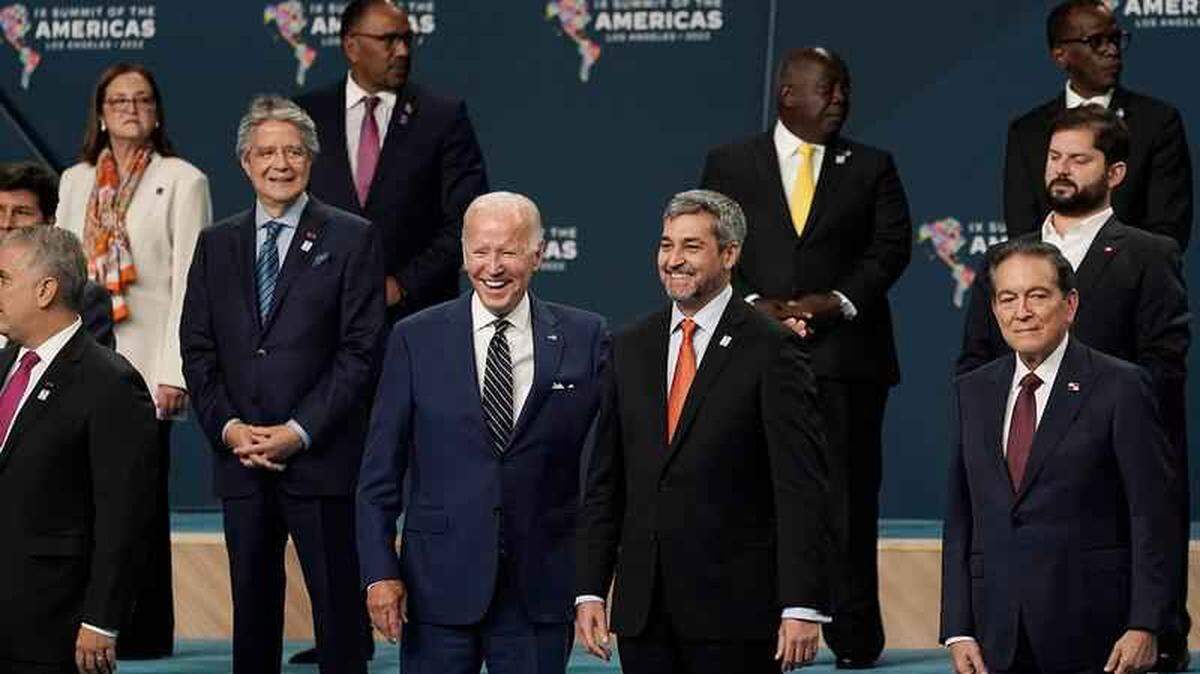
At the Ninth Summit of the Americas, President Biden told Latin American leaders that, “There is no reason why the Western Hemisphere can’t be the most forward-looking, most democratic, most prosperous” region in the world.
Well, there is one reason — rampant populism.
The pathetic roles that the leaders of Mexico, Argentina, Belize and other countries played in the hemispheric summit, which just wrapped up in Los Angeles, is just the latest example of why the region suffers from chronic poverty despite its wealth in natural resources and talented people.
Instead of using this rare occasion of a regional meeting with the U.S. president to push collectively for more exports and investments, Mexico’s President Andrés Manuel López Obrador boycotted the summit. He said he wasn’t going because Biden did not invite the rulers of Cuba, Venezuela and Nicaragua.
While Argentina’s President Alberto Fernández attended the summit, he used his speech to berate Biden for not inviting these dictators from these three countries, as well as to lecture the United States about its alleged wrongdoings.
Fernández used the podium to score political points with his anti-American base at home, rather than to try to advance his country’s interests. It was a major missed opportunity, because the Summit of the Americas takes place only once every three or four years, and is the only hemisphere-wide meeting where Latin American leaders meet with the U.S. president.
Biden, of course, did the right thing not including the Cuban, Venezuelan and Nicaraguan regimes. First, as the summit’s host, he had the right to invite whomever he wanted to his party.
Second, under a 2001 Summit of the Americas resolution, the meeting is reserved for countries that respect democratic rule.
And third, if invited, these tyrants would have hijacked the summit’s agenda with preposterous claims and precluded any chance of serious talks on migration, trade and climate issues.
“There is a time and place for everything, and for Fernandez to use his speech to try to embarrass his host was unfortunate,” says Eric Farnsworth, head of the Washington office of the Americas Society, a New York-based business-centered think tank. “It may have been good politics for domestic reasons, but was it worth it?.”
Still, the absence of leaders of Mexico, Bolivia, Honduras, El Salvador and Guatemala, who were represented by their foreign ministers, and the confrontational speeches by other presidents did not prevent the summit from reaching some potentially meaningful agreements.
The summit concluded with a “Los Angeles declaration” on migration that was signed by 20 countries and that provides for a “shared responsibility” by all nations to deal with migration flows.
Among other things, Washington and regional financial institutions committed themselves to helping countries such as Mexico and Colombia deal with the influx of Venezuelan or Haitian refugees, and Latin American countries promised to help Washington vet foreign migrants planning to seek asylum in the United States.
But Latin America squandered its biggest opportunity in decades to use the current world crisis to negotiate better access to the U.S. market and more U.S. investments in the region. The pandemic and the Russian invasion of Ukraine have disrupted U.S. supply chains from China and caused a world shortage of food, oil and other commodities that abound in Latin America.
It was a unique opportunity for Latin American countries to offer a trade and investment deal to get U.S. multinationals to move some of their factories from China to Mexico, Brazil and other countries in the region.
It would have helped Latin America reverse its nearly 35% drop in foreign investments over the past 10 years. And that, in turn, would have helped stop the growing numbers of poor in the region, which have risen from 176 million people in 2010 million to 201 million last year, according to United Nations figures.
But instead of pursuing long-term economic deals to strengthen their countries’ economies and reduce poverty, some key Latin American leaders used the occasion for political grand-standing for their home audiences.
Biden got it wrong: There is a big reason why the region is not one of the world’s most prosperous, and it’s because of its many small-minded leaders.
Don’t miss the “Oppenheimer Presenta” TV show on Sundays at 7 pm E.T. on CNN en Español. Twitter: @oppenheimera

This story was originally published June 11, 2022 at 1:17 PM.