Russia’s invasion could set a precedent for superpowers to attack wherever they want | Opinion
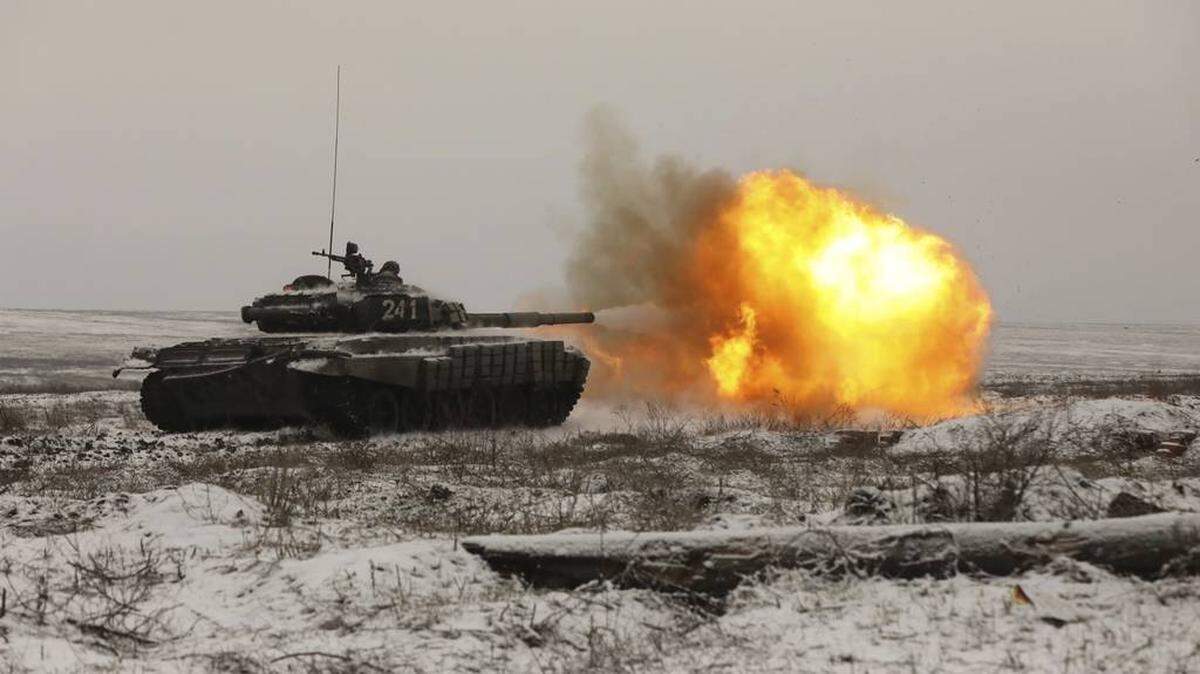
The Russian invasion of Ukraine, a sovereign country, threatens to create a new world order in which superpowers — including the United States — would have the right to attack countries in their neighborhood whose governments they dislike.
Ironically, this could come back to haunt Cuba, Venezuela, Nicaragua and other Latin American countries that either supported Russian dictator Vladimir Putin’s invasion or — like Mexico in the first hours after the attack — failed to condemn it categorically.
In Putin’s view of the world, superpowers have the right to have “spheres of influence” around their borders, effectively controlling neighboring countries.
By that measure, the United States would have the right to invade Latin American countries. If Putin’s logic prevails, the United States could theoretically recognize the independence of a potential separatist area in Yucatan, Mexico, and send its troops there.
Vladimir Rouvinski, a Russia expert who heads the Politics and International Relations Lab at the ICESI University in Cali, Colombia, told me that Russia would be perfectly comfortable with dividing the world into geopolitical blocs run by the United States, Russia and China.
“From the perspective of the Russian elites, the ideal world would be one that is divided in spheres of influence,” Rouvinski told me. “Ukraine, Belarus — and even Central Asian republics — would belong to the Russian sphere, and Latin America would be an exclusive zone of influence of the United States.”
He added that Russia is now playing a “reciprocity game” by stepping up its presence in Latin America, as a response to what it claims are offensive moves by the United States and NATO in Eastern Europe. Under this logic, Russia is effectively saying, “If America increases its influence in Eastern Europe, we’ll do the same in Latin America.”
On Thursday, hours after Russia invaded Ukraine, despite Putin’s previous claims that it would not do so — and that President Biden’s warnings about an imminent Russian invasion were part of an alleged campaign of U.S. misinformation — Mexican President Andres Manuel Lopez Obrador spoke at length about world peace and the need for a peaceful resolution to the crisis, but without criticizing Russia’s attack.
It was an incredibly lame statement at a time when Russian bombs were falling on Ukraine. It was only after countries around the world condemned Russia’s attack that Mexico changed course and “categorically” condemned Russia’s attack.
The Cuban, Venezuelan and Nicaraguan dictatorships predictably sided with Putin, and — this is no joke — blamed the United States for the invasion.
Colombia, Brazil and Uruguay, on the other hand, criticized Russia by name, and — with various degrees of assertiveness — called on it to cease its non-provoked attack against Ukraine. Likewise, Chile’s left-wing President-elect Gabriel Boric tweeted that, “Russia has opted for war as a way to resolve conflicts.”
Argentina, whose President Alberto Fernandez met with Putin in Moscow earlier this month — and offered to become Russia’s “entry door” to Latin America — called on Russia to “cease military actions,” but without openly condemning Putin’s offensive.
There is no excuse for any country to not condemn Putin’s invasion of Ukraine, much less for U.S. politicians, such as disgraced former President Trump, to praise Russia’s dictator, as he has done. (By the way, Trump may have weakened the Western NATO alliance and emboldened Putin to invade Ukraine since he explored a U.S. pullout of NATO in 2018.)
Putin claims that Ukraine was about to join the NATO alliance, and that this would pose a threat to Russia. But the fact is that Ukraine has not joined NATO, and neither NATO, nor Ukraine has invaded Russia.
By launching an unprovoked invasion of a sovereign country, Putin has broken the foundation of international law since the creation of the United Nations after World War II — that territorial disputes should be resolved through peaceful means.
There are dozens of such unresolved disputes around the world, including those between China and Taiwan, South Korea and North Korea, and Colombia and Venezuela. Will Russia’s invasion of Ukraine set the precedent for these countries to invade one another?
Russia’s idea of “spheres of influence” would destroy small countries’ right to exist and democratically decide their future. It’s a threat to the world order, and to world peace.
Don’t miss the “Oppenheimer Presenta” TV show on Sundays at 7 pm E.T. on CNN en Español. Twitter: @oppenheimera