
Chile’s new leftist president could make history by keeping Cuba, Venezuela at arm’s length | Opinion
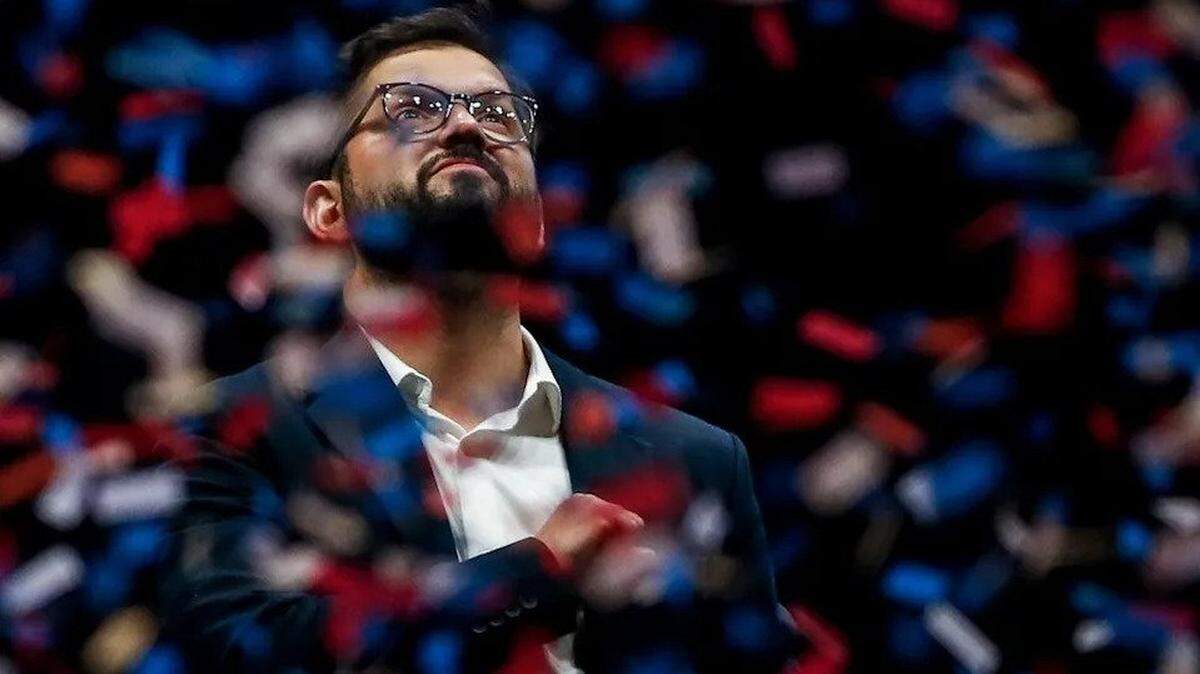
Chile’s president-elect, 35-year-old leftist Gabriel Boric, has a historic opportunity to create a new left in Latin America — one that promotes social justice without becoming an ally of the dictatorships in Cuba, Venezuela and Nicaragua.
It sounds naive, but it could happen.
Boric has recently criticized Nicaragua’s sham elections, Venezuela’s human-rights abuses and Cuba’s repression of peaceful protesters. He probably did so — against the wishes of many of his radical leftist supporters — because he needed to win moderate votes, but his criticism of these regimes may last.
Heraldo Muñoz, a former Chilean foreign minister who supported Boric, told me after the election that he’s confident that Boric will maintain his most recent foreign-policy stands on these regimes once he takes office.
“He has referred to Venezuela’s regime as a dictatorship, and has been very critical of Nicaragua’s electoral fraud,” Muñoz told me. “He has pretty solid convictions regarding democracy and human rights.”
Boric tweeted on Nov. 12, shortly after its rigged Nov. 7 elections, that “Nicaragua needs democracy, and not fraudulent elections nor persecution of political opponents.” Chile’s Communist Party, a major member of Boric’s coalition, had earlier supported Nicaragua’s dictator Daniel Ortega’s so-called election victory.
In July, during the massive social protests in Cuba, Boric had also voiced his solidarity with Cuba’s protesters. “I have one single standard regarding human-rights violations, and it’s that they are unacceptable,” he said at the time.
In 2019, changing course from his previous support for the Venezuelan regime, Boric tweeted that, “The government of Nicolás Maduro is seriously violating human rights. From the left, we must condemn it without ambiguities nor shades.”
Boric may turn out to be less of an activist in the fight to restore democracy in Venezuela and Nicaragua than outgoing President Sebastian Piñera, but probably he won’t abandon Chile’s defense of basic freedoms in those countries.
First, Boric is likely to run foreign-policy himself, more than the Communist Party or any other member of his coalition. The tradition in Chile is that the president — and not the ruling coalition — is in charge of foreign policy. That’s not likely to change.
Second, Boric will face a strong right-of-center opposition in Congress. Opposition parties will control 25 of the Senate’s 50 seats, and Boric will need to reach out beyond his coalition to advance his ambitious social agenda. Supporting Venezuela or Nicaragua would do him more harm than good in luring moderate legislators to his camp.
Third, Boric will need to show independence from the Communist Party. His rival in the presidential race, right-wing candidate Jose Antonio Kast, claimed during the campaign that Boric would be controlled by the Communist Party. Boric would hurt himself with his newly won moderate voters if he proved Kast right.
Most likely, Boric’s foreign-policy priorities will be to join international treaties to combat global warming and to improve ties with neighboring Argentina. He may even go on a peace offensive with Bolivia, which maintains a long-time territorial dispute with Chile.
Regarding Cuba, however, he may not be as openly critical as with Venezuela and Nicaragua. Many old-guard members of Chile’s left still have a romantic view of Cuba’s dictatorship, and Boric may not want to antagonize them. He may try to stay far away from Cuba, without praising or criticizing it.
Boric certainly runs the risk of scaring away investments. The Chilean stock market plunged 7% on Monday — the day after his victory — triggering more capital flight and creating more poverty.
But if he avoids these pitfalls, Boric could become a much-needed role model for the region. He won by an overwhelming almost 12-point margin — 55.8 percent to 44.1 percent — and he can claim a mandate like few presidents before him.
If Boric embarks on social changes while defending democracy at home and abroad, he could become the hero of a new, democratic, modern left. That would be great news, because Latin America’s left in recent years has been hijacked by Venezuela and its allies, and they have brought about nothing but human-rights abuses, corruption and greater poverty. Let’s cross our fingers that he takes that route.
Don’t miss the “Oppenheimer Presenta” TV show on Sundays at 7 pm E.T. on CNN en Español. Twitter: @oppenheimera; Blog: www.andresoppenheimer