
We know how Venezuela’s elections will end. Will foreign observers endorse the farce? | Opinion
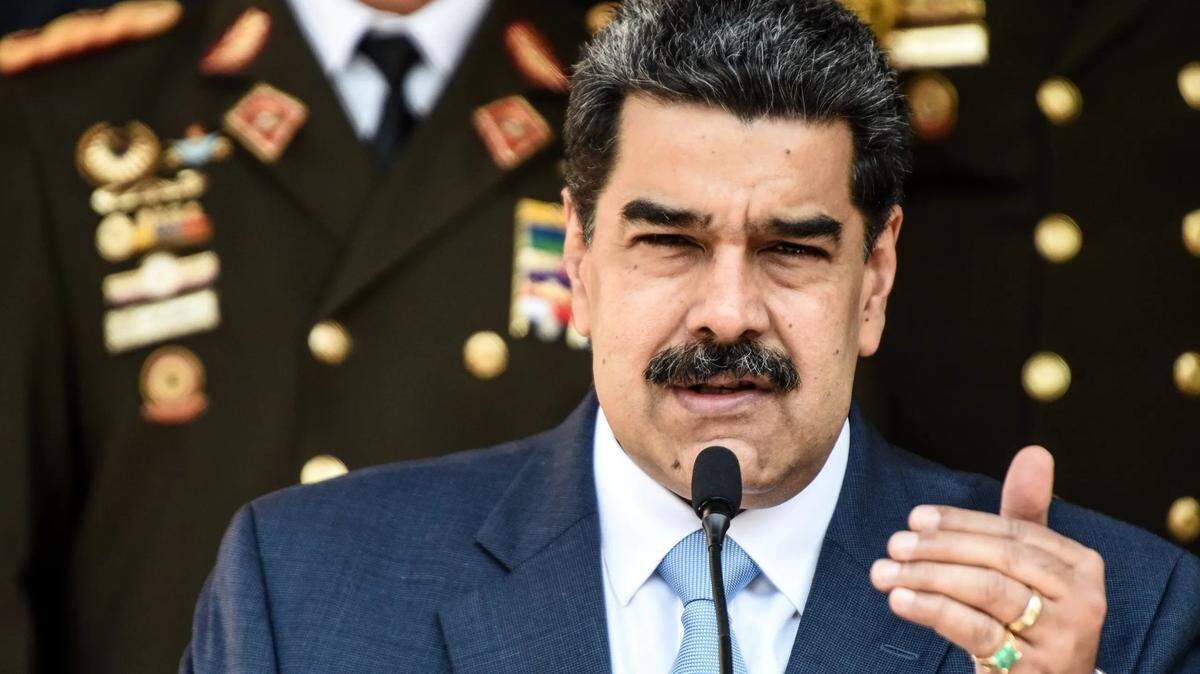
The official campaign for Venezuela’s Nov 21 regional and local elections has just begun, but I can save you the suspense: Barring an unlikely last-minute deal with the opposition to agree on fair electoral rules, Venezuela’s dictatorship will claim a landslide victory on election night.
The question is whether Venezuelan dictator Nicolás Maduro’s latest effort to legitimize his regime will be validated by international election missions.
The 27-country European Union, the United Nations and the Carter Center, among others, have announced that they will send missions to observe the elections, in which more than 3,000 state and local candidates are running. Maduro is seeking to portray the elections as fair.
But there are big fears in pro-democracy circles that some of these missions may give Maduro a huge propaganda victory if they put out a statement shortly after the election that focuses just on the vote counting, instead of evaluating the months-long electoral process.
That’s because the fraud may not be in the vote counting, but in the lack of a level playing field during the race.
When I asked Venezuela’s opposition leader Juan Guaidó in a telephone interview whether there are conditions for a free election on Nov. 21, he responded, “Today, there are no conditions.”
Guaidó, who is recognized by the United States and several other countries as interim president after Maduro’s fraudulent electoral victory in 2018, reminded me that Maduro still controls Venezuela’s electoral tribunal; the largest opposition parties have been declared illegal; hundreds of opposition candidates have been banned from running for office; there are political prisoners; and the opposition has little access to government-controlled media.
“Nov. 21 can be an option for Venezuelans to mobilize and organize,” Guaidó told me. “We are living in a dictatorship, and we must seek secure spaces to express ourselves.”
He added, “Eighty-five percent of Venezuelans reject Maduro, but in recent years we have protested, and they killed us; we have created opposition parties, and they declared them illegal. We have to take advantage of any space that allows us to mobilize.”
Asked whether he fears that the electoral missions from the European Union, the U.N. and the Carter Center may help legitimize a fraudulent election, Guaidó said he hopes that they will focus on the entire election process, rather than on what happens on election day. Otherwise, it will be “electoral tourism,” and the foreign electoral missions will delegitimize themselves, he said.
There are fears in opposition circles that the EU’s High Representative for Foreign Affairs and Security — Spanish Socialist Party politician Josep Borrell — may validate a fraudulent Maduro-regime victory.
On Oct. 12, The Financial Times reported that Borrell overruled an internal report from his own staff that recommended to not send observers to Venezuela. The newspaper quoted an internal document from Borrell’s office saying that deploying an electoral mission in Venezuela “is likely to have an adverse impact on the reputation and credibility of EU (observers) and indirectly legitimize Venezuela’s electoral process.”
The more-than-70-member EU mission is headed by Isabel Santos, a Portuguese Socialist Party politician. She said recently that her mission won’t deploy any observers in Venezuela’s Amazonas state “because of security reasons.” Several other parts of the country are also expected to be off limits for foreign observers.
Jennie Lincoln, head of the Carter Center’s six-person mission to Venezuela, told me that her group will focus on the pre-election and post-election conditions.
“We will analyze the entire electoral process, including the government’s disqualifications of candidates and parties, and the restrictions to opposition candidates’ access to media,” Lincoln told me.
If that’s what the international electoral missions do, it would call Maduro’s bluff and put pressure on Venezuela’s dictatorship to allow more even-handed conditions for the 2024 presidential elections.
But if the international monitors say anything that Maduro can use as a validation of his fraud, they will be shameless accomplices of an electoral farce.
Don’t miss the “Oppenheimer Presenta” TV show on Sundays at 8 pm E.T. on CNN en Español. Twitter: @oppenheimera