
Youths who neither work nor study are fueling Colombia’s street protests | Opinion
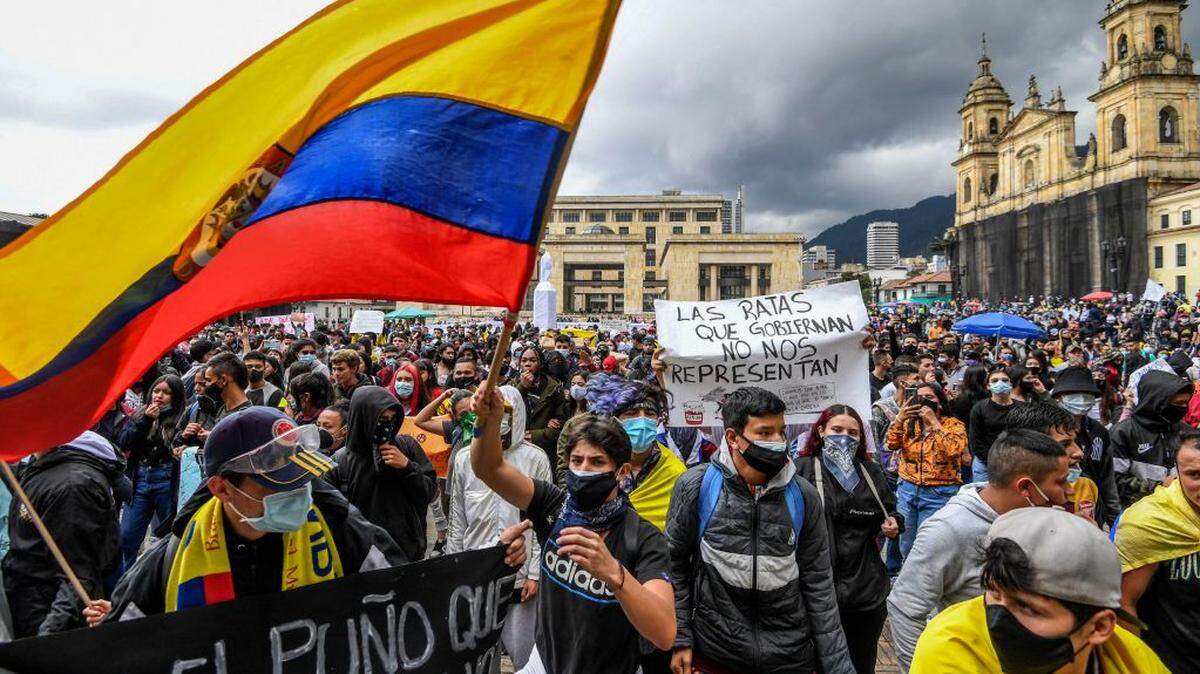
There are several theories about what’s behind the violent anti-establishment protests in Colombia, Chile and other Latin American countries. The explanations go all the way from a significant rise in poverty caused by the COVID-19 pandemic to a possible plan by Venezuela’s leftist dictatorship to destabilize the region.
But, looking at the protests that have paralyzed Colombia in recent days, the most important — and often overlooked — factor may be the dramatic increase in the number of youths who neither work nor study. They are known as the “ni-nis” (neither-nors,) and they have multiplied during the pandemic.
What’s especially worrisome is that the number of “ni-nis” has also risen dramatically in Argentina, Brazil, Mexico and other countries, which could cause similar instability across the region. Latin America is one of the regions of the world hardest hit by the pandemic, which has resulted in massive youth unemployment and a big increase in school dropout rates.
One of the most interesting things I noticed while watching a May 20 panel on Colombia’s turmoil, organized by the Washington-based Inter-American Dialogue think tank, was that all of the participants singled out the “ni-nis” as the key protagonists of the protests.
The vast majority of the protesters who are blocking roads leading to Cali, one of Colombia’s most prosperous cities, are unemployed youths, they said. Seventy percent of the businesses in Cali have been forced to close, and the city is virtually paralyzed.
“The ni-nis have lost their hopes, they’re desperate,” said former Cali mayor Maurice Armitage. “They are youths who have lost faith in the institutions, in the government, in the mayor, in police, in private companies. They don’t trust anybody.”
They also have led more than 1,000 spontaneous protests across Colombia in recent weeks, other panelists said.
The percentage of Colombia’s youths who neither work nor study has risen from 19 percent in mid-2019 to 33 percent in mid-2020, according to Colombia’s official DANE statistics agency. That percentage is likely to be higher today, because the pandemic’s economic impact worsened in the latter half of 2020.
And the number of youths who dropped out of school since the start of the pandemic is staggering, according to World Bank officials. Most often, they quit studying because after their schools closed, they didn’t have a computer or internet service at home to study remotely.
Making things worse, most of these youths get their news from Whatsapp or Youtube, and it’s often unverified or fake news. “Ni-nis” with smart phones can organize demonstrations in a matter of minutes, popping out of nowhere and outsmarting police forces.
According to a recent national survey of Colombia’s youths by the University of Rosario and the daily El Tiempo, 51 percent of young people in the country get their news from social media. The combination of a pandemic-triggered increase in youth unemployment, school closings and an unprecedented consumption of fake news is an explosive cocktail.
Much of the media coverage of Colombia’s turmoil has centered on charges of excessive police force against the protesters and — from the other side of the political spectrum — accusations that violent protesters are shutting down the country to bring down a democratically elected government and pave the way for a Venezuelan-styled regime.
But neither much-needed police reforms nor harsh sentences against violent protesters will defuse the “ni-nis” problem.
President Iván Duque should find non-government mediators who these youths can trust, to find a way out of the crisis. Duque has already rolled back his unpopular tax plan and offered free college education to most students at public universities. But the protesters don’t trust him, or other government officials.
Colombia and other countries facing similar youth protests should be innovative and create more — and more massive — public-private apprenticeship and internship programs for unemployed youths.
Colombia’s protests may be a symptom of the coming COVID-19 pandemic social aftershocks throughout the region. Unless they address the “ni-nis” crisis, no Latin American country will be safe.
Don’t miss the “Oppenheimer Presenta” TV show on Sundays at 8 pm E.T. on CNN en Español. Twitter: @oppenheimera