
Leftists scored big victory in Chile, but Venezuela’s Maduro is celebrating too soon | Opinion
Chile, Latin America’s most successful economy in recent decades, made a sharp turn to the left in the May 16 elections for members of an assembly that will draft a new Constitution. Independent leftists and the Communist Party were among the largest minorities elected to the 155-seat body and will have a veto power in drafting the country’s new charter.
It’s too early to speculate that Chile will go downhill like Venezuela or that it will follow in the footsteps of its populist-run neighbors Argentina and Bolivia. It’s possible, but there are some reasons to hope that it won’t happen.
To be sure, Venezuelan dictator Nicolas Maduro was among the first to celebrate the election results. Before election day was over, a euphoric Maduro tweeted his congratulations to the Chilean people for “this great historic step,” which,he said, marked a “categorical rejection to savage neo-liberalism.”
On Monday, the first business day after Chile’s vote for its Constitutional Assembly, Chile’s stock market tumbled by almost 10 percent.
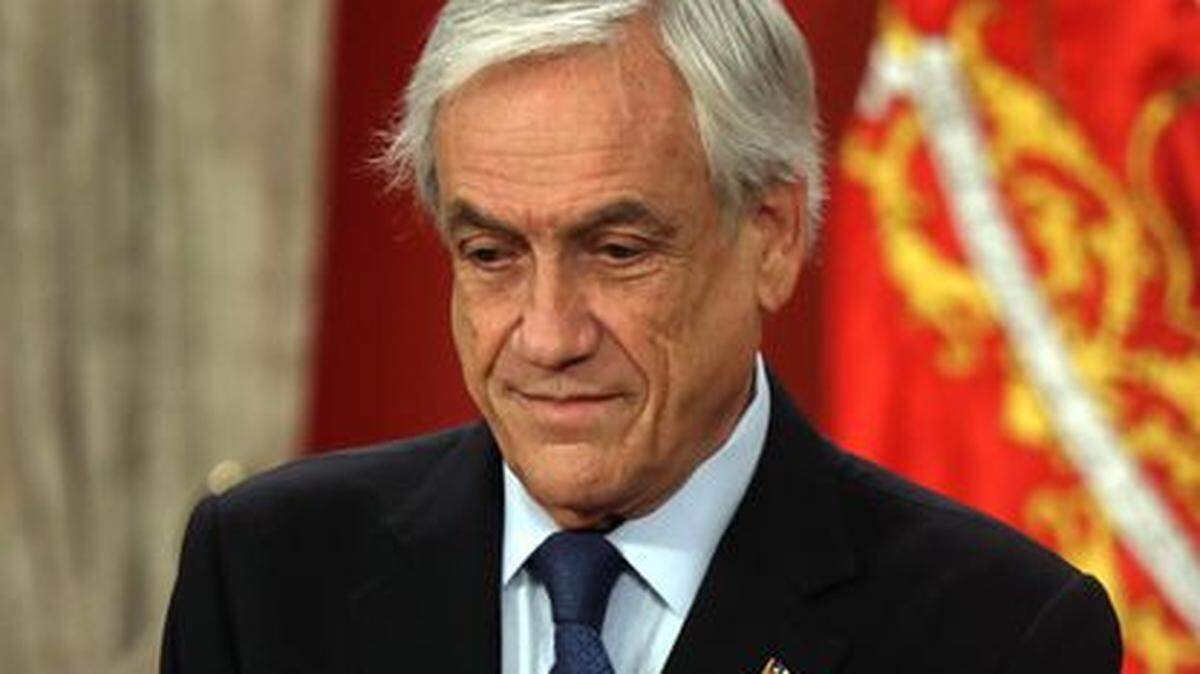
There was a consensus in Chile that the election results were a strong rebuff to the political establishment that has ruled Chile for the past three decades. President Sebastian Piñera conceded that, “We have not been adequately tuned in to the demands and wishes of citizens.”
Piñera’s center-right coalition won only 37 seats, falling short of the 55 seats it would have needed to have veto power over articles in the constitution.
The election for a Constitutional Assembly to replace the one in existence since the dictatorship of Gen. Augusto Pinochet was decided in a national referendum after massive street protests in 2019. At the time, millions of Chileans demonstrated against the country’s social inequalities.
Paradoxically, Chile has reduced poverty from 7 percent to 40 percent of the population over the past three decades, more than any other Latin American country. Extreme poverty has fallen 2 percent from 34 percent over the same period, according to Libertad y Desarrollo, a pro-free-market think tank.
There are serious issues pending in Chile, such as a state-run pensions system to protect the most vulnerable, but inequality has been diminishing in recent decades. While the income of the wealthiest 10 percent of Chileans grew by 30 percent between 1990 and 2015, the income of the poorest 10 percent rose by 145 percent, according to the United Nations Development Program.
This week, I talked to Patricio Fernandez, a writer and founder of The Clinic, one of Chile’s most successful digital political magazines. He has just been elected to a seat on the Constitutional Assembly, as an independent.
Asked about Maduro’s celebratory tweet and about fears in business circles that Chile will shift to the radical left, Fernandez told me that none of that is likely to happen.
“Nobody here campaigned with an image of Hugo Chavez, or of Maduro. That would have been a recipe to lose votes,” Fernandez said. “Chile is a country that has capitalism in its veins. Our public squares, where people go on Sundays, are the shopping malls.”
Still, he told me, “There’s no question that the neo-liberal period is over.” Chile’s new constitution will have to guarantee a social-security system for pensioners and other safety nets for the poor, which will require increased social spending, he said.
“Is it naive or stupid to be fearful about Chile’s future? No! Is it naive or stupid to be hopeful for a better future? No!” Fernandez said. “I’ll concede to you that, for now, there’s a high degree of uncertainty.”
Indeed, many things may happen, including a not-so-bad constitution. Moderates across the political spectrum may still find common ground to draft a reasonable charter.
In the worst-case scenario, Chile will go downhill, like Venezuela did. In the best-case scenario, Chile will keep growing, perhaps at a slower pace but more equitably, while becoming a model for other countries on how to overcome social upheavals within the rule of law. But don’t cry for Chile yet — it’s in uncharted political territory.
Don’t miss the “Oppenheimer Presenta” TV show on Sundays at 8 pm E.T. on CNN en Español. Twitter: @oppenheimera