Venezuela, Argentina should follow Ecuador and base their economies on the U.S. dollar | Opinion
BUENOS AIRES — Jan. 9 will be the 20th anniversary of Ecuador’s decision to dollarize its economy as a way to end with chronic overspending and recurrent economic crises. Sooner or later, Venezuela and Argentina will have to do the same, or something similar.
It is likely to be their best antidote against populist presidents who spend beyond their countries’ means, then print local money to pay the bills, producing sky-high inflation rates and periodic devaluations.
It’s a movie we have seen time and again in Latin America.
Venezuela already is moving toward a de facto dollarization, relaxing currency controls that the country’s dictator Nicolas Maduro had earlier resisted. Venezuela has the world’s highest inflation rate, estimated at between 200,000 percent and 1 million percent this year.
Growing numbers of Venezuelans already are using U.S. dollars for everyday transactions. With the country’s oil exports a fraction of what they were, U.S. dollar remittances from the more than 4.7 million Venezuelans who have fled the country in recent years have become — much like in Cuba — one of Venezuela’s main sources of income.
Panama and El Salvador have long dollarized their economies. In Argentina, recently inaugurated President Alberto Fernandez is going in the opposite direction, wanting to move away from the U.S. dollar.
Fernandez said recently that, “We need to end with the habit of saving in (U.S.) dollars.” But his chances of convincing Argentines to do that are close to zero. Since the 1950s, Argentines have seen their savings in local currency wiped out by successive devaluations, which have left them increasingly poorer.
Argentina ranks second after the Democratic Republic of Congo in the world ranking of countries that have had the most recessions since 1950, according to a 2018 World Bank Study.
But Fernandez is trying the same formula that has failed so many times in the past: trying to maintain massive social subsidies by postponing payments of the country’s foreign debts without making substantial cuts in public spending.
Argentina will remain an economically unviable country as long as its 9 million private-sector workers continue to pay for a combined total of more than 15 million government employees and pensioners. That’s unsustainable, and there are few signs that Fernandez is inclined to change course.
Visiting my native Argentina for a week, during which I talked with relatives, friends, economists and people on the street, I didn’t meet one single person who didn’t laugh when I asked them if they would heed Fernandez’s recommendation to start saving in Argentine pesos.
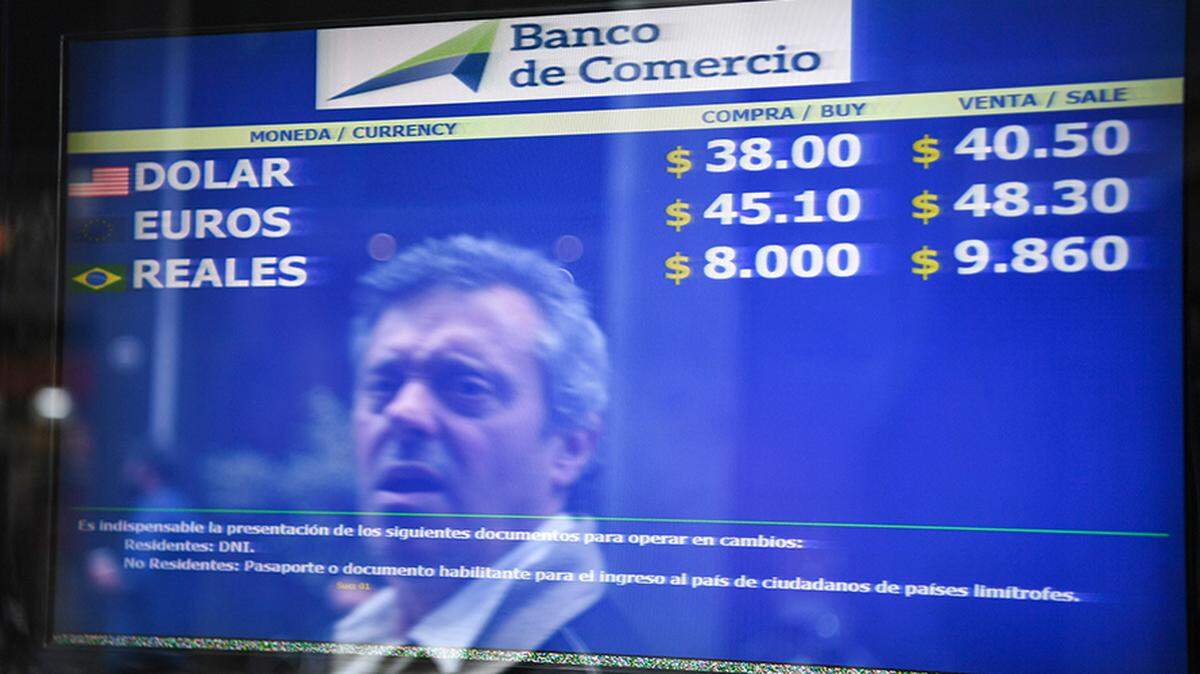
The annual inflation rate is close to 50 percent. Already, it’s hard to buy an apartment or a car in Argentina unless you pay in cash, under the table, in U.S. dollars.
Earlier this week, I asked Ecuador’s former President Jamil Mahuad — who dollarized that nation’s economy in 2000 and now is writing a book about it — whether he recommends that Argentina and other inflation-ridden countries adopt the U.S. dollar.
He was reluctant to opine about other countries, but said it certainly worked in Ecuador. “Every economy needs an anchor, something to generate trust in it,” Mahuad told me.
I also sat with former Argentine economy minister Domingo Cavallo, who became famous for tying the Argentine peso to the dollar between 1991 and 2001. He now teaches at Harvard. Cavallo recommends that Argentina adopt a Peruvian-style dual-currency system, allowing people to save both in local currency and U.S. dollars. He calls it a “bi-monetary” economy.
Granted, as Cavallo warned me, dollarization alone won’t stop populist presidents from overspending, because they could still borrow money from abroad. But foreign lenders are unlikely to pump money into a bankrupt economy unless there is a clear path to economic sanity.
Several populism-cursed Latin American countries need an economic straitjacket to stop printing money and generate investors’ confidence. European countries have the European Union and the euro currency, which serve that purpose.
Venezuela and Argentina may need to adopt the U.S. dollar, or a dual or multicurrency system, as politically incorrect as that may sound. Otherwise, unless they take drastic steps to reduce public spending, they will keep re-arranging the deck seats on the Titanic.
Don’t miss the “Oppenheimer Presenta” TV show at 8 p.m. E.T. Sunday on CNN en Español. Twitter: @oppenheimera

This story was originally published December 24, 2019 at 1:55 PM.