With Parnas, Fruman pot plan up in smoke, Russian money man turned to California
When Rudy Giuliani associates Lev Parnas and Igor Fruman set out in 2018 to obtain marijuana licenses in Nevada and other states, they were bankrolled with $1 million from an unnamed Russian businessman, according to federal prosecutors.
That pot plan failed and alleged political straw donations connected to it were part of federal campaign finance charges brought against Parnas, Fruman and two other men.
Parnas and Fruman went on to become key figures in the drama that surrounded Donald Trump’s impeachment, and their messy business affairs and personal lives have become fodder in the news media.
But for the Russian businessman believed to have bankrolled their efforts in Nevada, it’s been business as usual. Andrei, or Andrey, Muraviev wasn’t charged with any crimes or publicly identified — the federal indictment instead referenced an unnamed “Foreign National-1.” And a McClatchy review of public records and financial documents shows that he is now deeply involved in the California pot industry — more so than was previously known.
He appears to have a financial stake in at least one and possibly several businesses in California that hold active cannabis licenses.
Because marijuana is still illegal at the federal level, many commercial banks are wary of working with pot-related businesses in the 11 states that have legalized recreational marijuana and 22 others that have legalized medical marijuana. Foreign investors, including wealthy Russians, are among the non-traditional sources of capital marijuana businesses have turned to in the absence of mainstream banking options.
Parnas, who was born in Ukraine when it was part of the Soviet Union, raised the issue of easing restrictions on capital while at a private dinner he and Fruman attended with President Trump in April 2018. A video of him doing so has been widely viewed.
California’s marijuana market presents an attractive target. While it’s had some stumbles since opening in 2018 and has fallen short of expectations on revenue, it’s still estimated to be the largest legal marijuana market in the world. And while a few of the states that have legalized marijuana limit investment in cannabis businesses to local investors, California has no such restrictions.
“We have little-to-no barrier to entry,” said Hilary Bricken, a California attorney at Harris Bricken specializing in cannabis. “We are a bit of a free-for-all.”
‘Russian roots’
McClatchy’s analysis of state and local records in California, Nevada and Delaware, along with federal trademark records, shows that Muraviev’s involvement in the California businesses appears to have started soon after the Nevada scheme fell through in early 2019.
He’s connected to the 2ONE2 California Dispensary, which proclaims itself the only cannabis dispensary in San Francisco’s busy financial district. The store is in a cluster of bistros and skyscrapers a few blocks from San Francisco’s ferry building. A neon pot leaf beckons customers inside. The store’s offerings include cannabis products with names like Sticky Fingers’ Gutbuster and City Haze Jah Goo.

One of Muraviev’s business partners, Dmitry Kasatov, is listed as the CEO of the company behind the 2ONE2 California Dispensary, CSBB, Inc., on the company’s most recent corporate filing in California. And Muraviev and Kasatov are the only two officers listed on the California and Nevada corporate documents for Inter Reserve Enterprises LLC, which registered multiple trademarks for the Sticky Fingers and City Haze brands in 2019. Kasatov is also listed as an officer on the most recent California corporate filing for Rx Flowers, LLC, a marijuana delivery service with a business address next door to the dispensary.
Muraviev, whose name sometimes alternately appears as Muravyov or Mouraviev, is the former CEO of the Russian cement company Sibir Cement and co-founded the Russian investment fund Parus Capital Limited in 2008. Muraviev was on the board of directors and had significant holdings in the Russian online payment company QIWI. He has ties to San Francisco, having obtained a bachelor’s degree in business administration from the University of San Francisco in 1998.
The indictment that doesn’t name Muraviev cites four other men: Parnas, Fruman David Correia and Andrey Kukushkin. The indictment refers only to a “Foreign National-1,” who prosecutors said is a Russian citizen and businessman, and is believed to be Muraviev.
Prosecutors wrote that the unnamed foreign national intentionally obscured his involvement in the marijuana investment because of “his Russian roots and current political paranoia about it.”
McClatchy is among several news outlets that have reported Muraviev is likely the foreign national. Muraviev has been involved in several other marijuana ventures with Kukushkin, a Ukrainian-born U.S. citizen based in California, some of which involve Sacramento pot king Garib Karapetyan.
Muraviev similarly acted as a silent partner in one of his investments with Kukushkin, providing $1 million to fund an entity called Venture Rebel, Inc., which then invested in a marijuana-related business. Muraviev’s involvement only emerged in subsequent court records.
Kasatov was previously an executive for the U.S. affiliate of the same Russian payment company, Qiwi, for which Muraviev served on the board. Kasatov was listed as the company’s chief operating officer on a 2013 corporate filing in California.
Kasatov first appeared on a July 2019 corporation filing for CSBB, the company behind the dispensary, but the company’s former CEO, Tara McKnight, is still listed as the owner of the business in filings with state and local cannabis regulators. The company holds a medicinal cannabis license and a temporary permit to sell recreational marijuana, according to records obtained by McClatchy through a public records request from San Francisco’s Office of Cannabis.
Ownership questions
California’s rules require that beneficial owners with a stake of at least 20 percent to be identified and pass a background check. The rule also applies to corporate entities that own a 20 percent stake or more, who must reveal the identity of their owners and directors, meaning that investors in a marijuana company can’t obscure their identity through shell companies.
“If you’re playing the game, the state wants you to wear a jersey,” said Omar Figueroa, a cannabis attorney in Northern California.
It isn’t clear whether Muraviev holds a greater than 20 percent stake in the companies connected to the dispensary, the marijuana brands or the marijuana delivery service. A McClatchy request for state records connected to the businesses is pending.
The company connected to the dispensary began the process last September of modifying its ownership structure, said the San Francisco Department of Public Health, but hasn’t completed the necessary paperwork to make a change. If McKnight were to shed a majority ownership stake, the company would need to apply for a new license, which would put it at the back of the applicant line, according to the Department of Public Health.
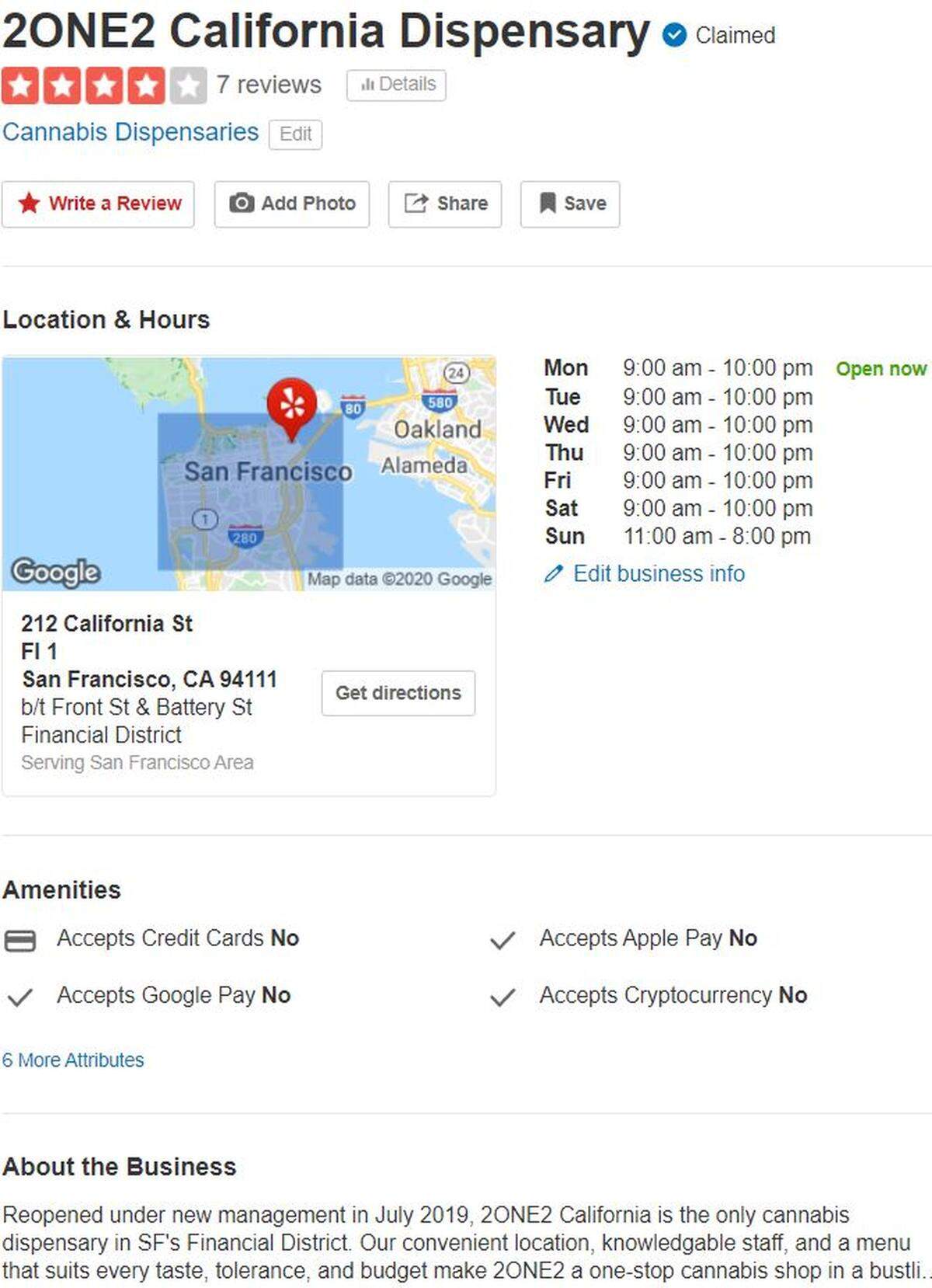
Reached by phone, McKnight declined to say whether she is still connected to the business. Multiple online listings for the dispensary indicate that it’s under new ownership and an employee who answered the phone recently confirmed that the store is under new ownership.
The corporation documents also listed Alexander Mikhalev and Lawrence Michelson, as additional directors. Mikhalev has identified himself on LinkedIn as the chief financial officer of Muraviev’s Parus Capital, while Michelson has been involved with a number of cannabis investment ventures.
The store has also been listed online under the name Sticky Fingers, using the same logo trademarked by Inter Reserve Enterprises LLC. That company also holds an ownership stake in Cali Distribution Inc., a California company that holds a temporary cannabis distribution license, according to records from the San Francisco cannabis office. Cali Distribution’s most recent California filings show Kasatov, Mikhalev and Michelson as the company’s officers and directors.
The trademark documents and related company registrations were processed by lawyers at Greenspoon Marder, Parnas and Fruman’s go-to law firm as the pair ascended into the inner circle of Republican political donors. The Florida-based firm, with offices around the country, appears to have cut ties with Parnas earlier this year, but its attorneys continue to do business on Muraviev’s behalf.
The license for the marijuana delivery service Rx Flowers, meanwhile, is still connected to the original owner of the business, Penelope DeVries, who was still listed as a manager of the business on the most recent filing. She told McClatchy that she is still involved in the business, but declined to answer questions about Kasatov and Muraviev’s potential involvement, saying she would pass them on to Kasatov.
Kasatov, Michelson, Mikhalev and representatives for Muraviev did not respond to detailed questions from McClatchy.
The Sacramento Bee’s Dale Kasler contributed to this report.
This story was originally published March 13, 2020 at 8:00 AM with the headline "With Parnas, Fruman pot plan up in smoke, Russian money man turned to California."