
As work permits for Haitians with TPS expire, South Florida rallies to protect them
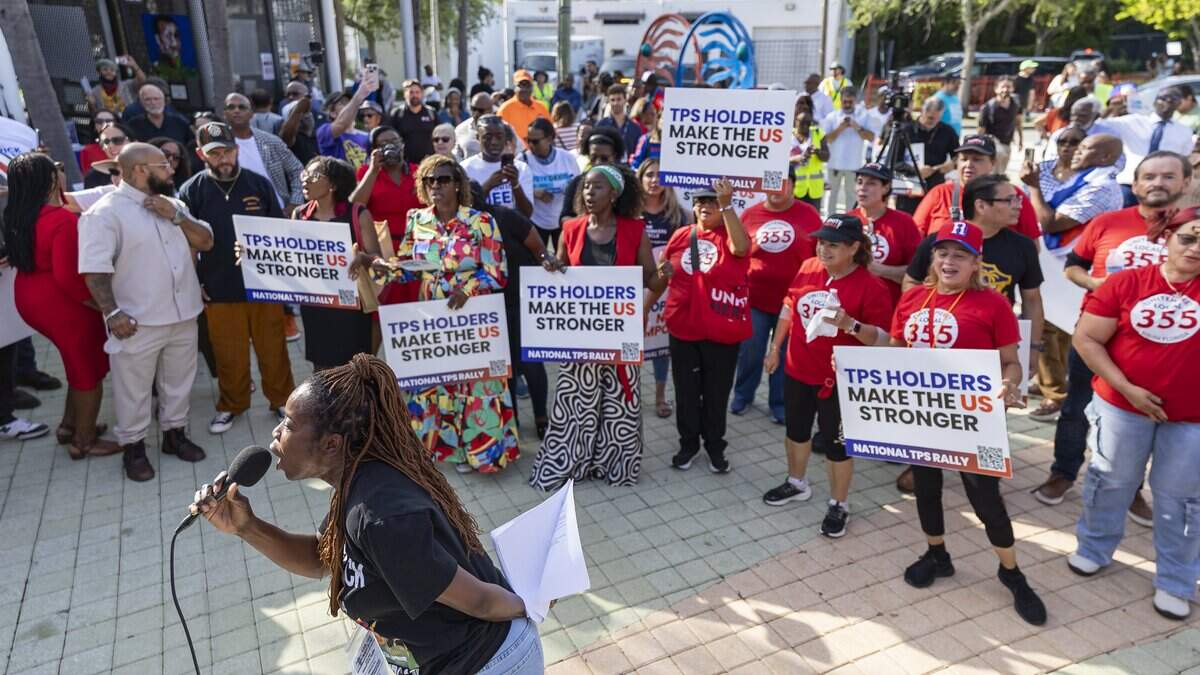
Life as she knows it might end Friday. Lilly, a 33-year-old community organizer, has lived in the U.S. for the last seven years. Like 350,000 other Haitians nationwide, she’s facing the loss of her deportation protections and work authorization under Temporary Protected Status.
“I don’t know what tomorrow holds,” she said, clasping her hands over her chest, during an event Thursday night at the Little Haiti Cultural Center.
More than a hundred community advocates, faith leaders, public officials and South Florida residents gathered in the community space, calling on the Trump administration to maintain the protected status of more than a million people living in the United States, including Venezuelans, Haitians and Syrians.
The crowd turned up as part of a National Day of Action for Temporary Protected Status. Across the country, communities gathered to support people the Trump administration has stripped of their deportation protections and work permits under the federal program for people whose home countries are in turmoil.
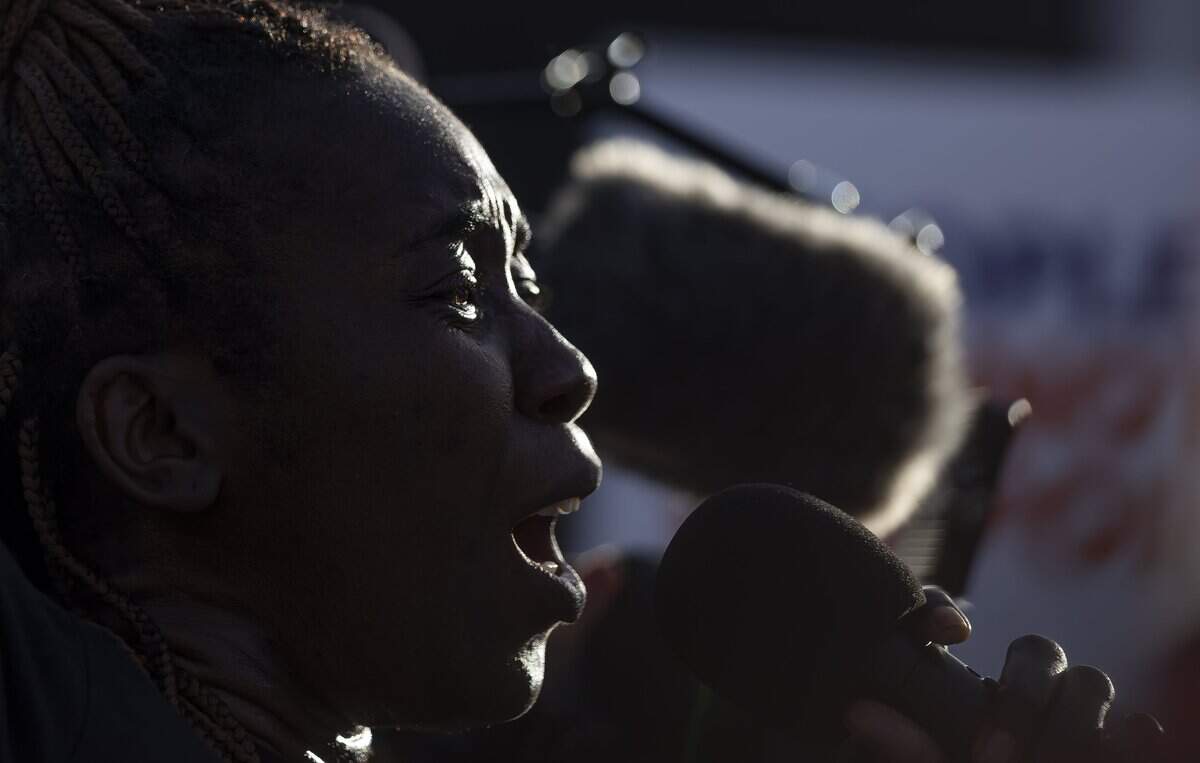
Work permits for TPS holders from Haiti, Syria, and other countries are generally set to expire on Friday morning. Unless it’s extended — which the Trump administration has made clear it will not do — “we no longer have a way of making a living,” said Lilly, who, fearing for her safety, asked only to be identified by her first name.
She’s one of an estimated 90,000 Haitian TPS holders in Florida’s workforce.
“We need to fight for our freedom. We have nothing to lose but our chains!” they chanted, as participants held up posters that said “We need Haitian workers” and “Dignity doesn’t expire.” One woman wore a black shirt that read “Justice, Love, Mercy.”
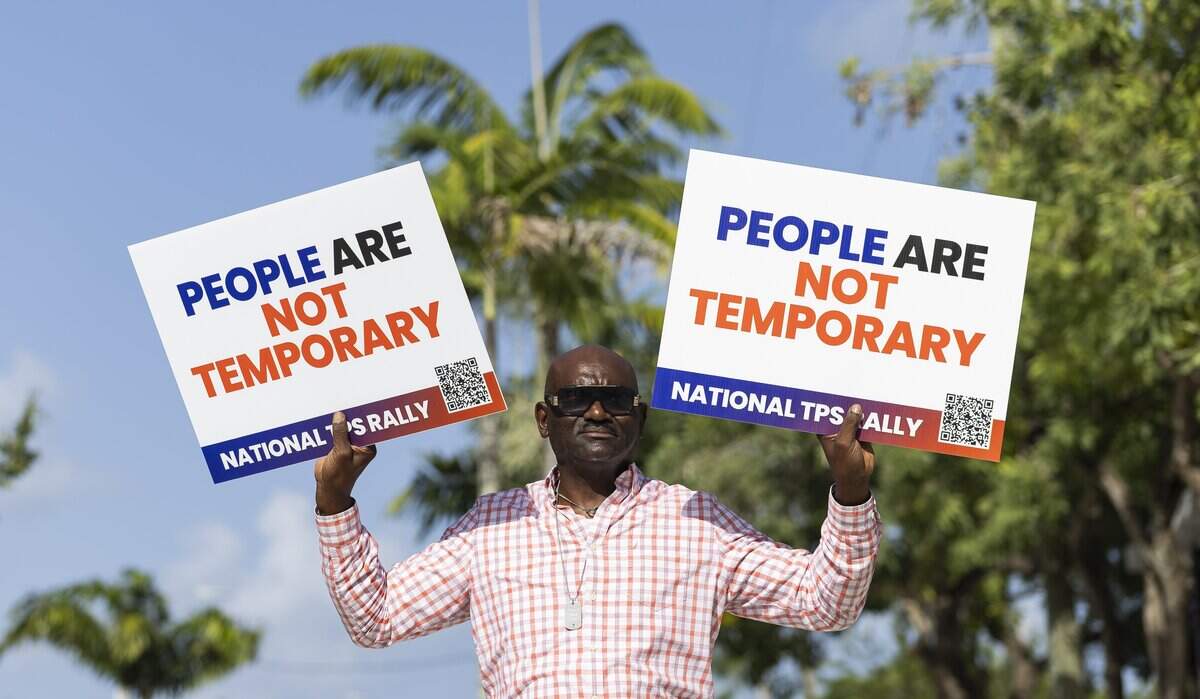
“We are not a burden,” said Mandy, a 26-year-old from Haiti. “We are the backbone of this economy.”
Mandy was a medical student in Port-au-Prince. But with gang members taking over the Haitian capital, the violence around her got worse. She came to the United States two years ago, leaving her parents and siblings behind, hoping for a safer life.
She never had TPS, but arrived through a Biden-era program that allowed Cubans, Haitians, Nicaraguans and Venezuelans to legally live and work in the U.S. Trump ended it last year, leaving beneficiaries without deportation protections or work permits.
Mandy is currently applying to medical schools, but is considering pivoting into community work because she has enjoyed volunteering for local organizations. Moments like Thursday make her feel empowered and embraced despite the uncertainties she’s facing from Trump’s mass deportation agenda.
Since taking office, Trump has aggressively pushed to end TPS for several countries, stripping immigrants residing in the U.S. from their legal status, deportation protections and work permits. That includes many Venezuelans and Haitians, who make up nearly all of the 400,000 plus TPS recipients in Florida. The region is also home to program recipients from Honduras and Nicaragua, whose TPS designation the Trump administration terminated last fall.
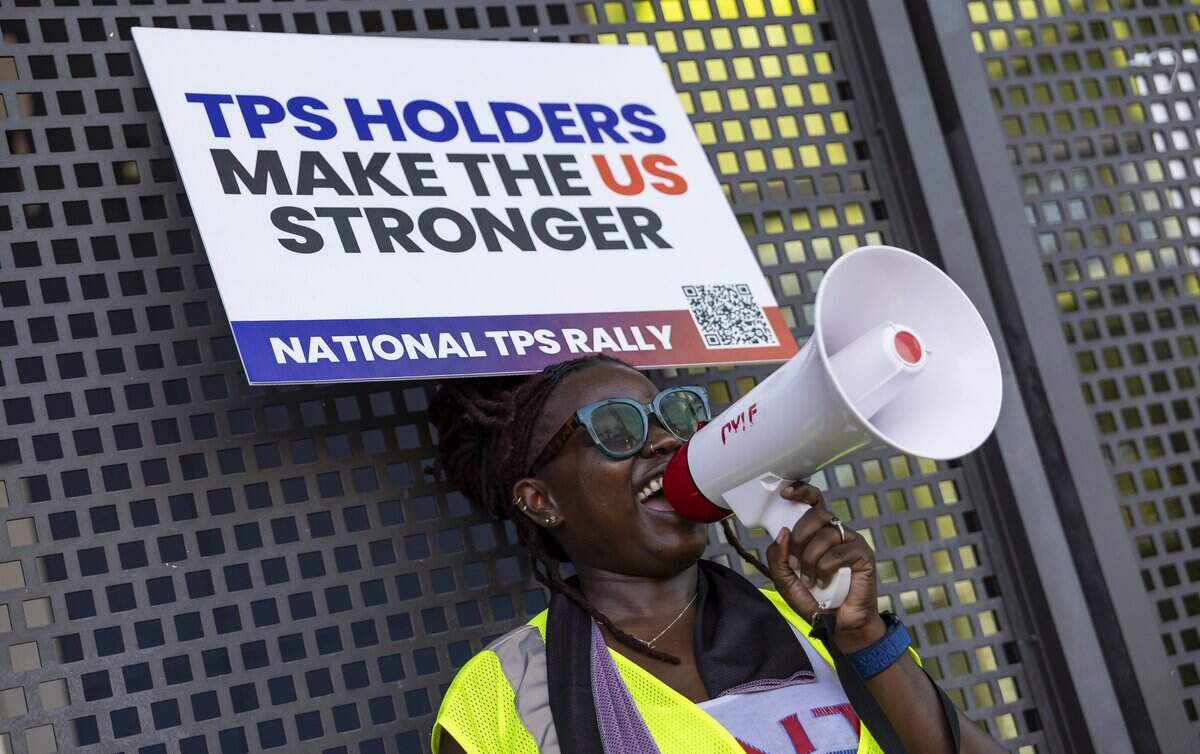
The widespread TPS terminations could force many South Floridians to return to countries in turmoil. That includes Venezuela, where a destructive earthquake that has killed at least 3,800 people has exacerbated the country’s long-established humanitarian and political crisis; and Haiti, where gang violence, widespread hunger and political instability are rampant. It would also deliver a blow to the economy and communities of South Florida, where TPS holders from Haiti and Venezuela have lived for over years, opening businesses, raising families and paying taxes.
Even while protections were active, the administration illegally deported Venezuelan and Haitian TPS holders from Florida. In May, the government returned a Florida Keys resident who had the protections back to the U.S. — two weeks after illegally deporting him to Haiti.
READ MORE: Trump administration deported Florida Keys man with TPS to Haiti. He’s back in the U.S.
The termination of TPS protections has ignited fierce litigations in the federal court across the country.
While some lower courts have upheld the protections, ruling that Trump had shown racial animus towards Haitians and improperly ended the protections for Venezuelans, the Supreme Court intervened in two cases. Last October, the justices granted an emergency request from Trump to end the program while litigation in lower courts unfolded.
And in late June, the Supreme Court gave the federal government the green light to end the protections for Haiti and Syria. It ruled that the Department of Homeland Security’s TPS decisions are not reviewable by a judge unless they violate constitutional rights. That ruling opens the door for the Trump administration to end other TPS designations, leaving limited opportunity for recipients to mount challenges.
READ MORE: Supreme Court greenlights Trump termination of TPS for 350,000 Haitians, Syrians
“Painting them as criminals is not policy, It’s propaganda,” Adelys Ferro, a community advocate with the Venezuelan-American Caucus, said during the Thursday rally. Trump has repeatedly made derogatory and racist comments about immigrants, including calling them criminals and falsely saying that Haitians eat cats and dogs.
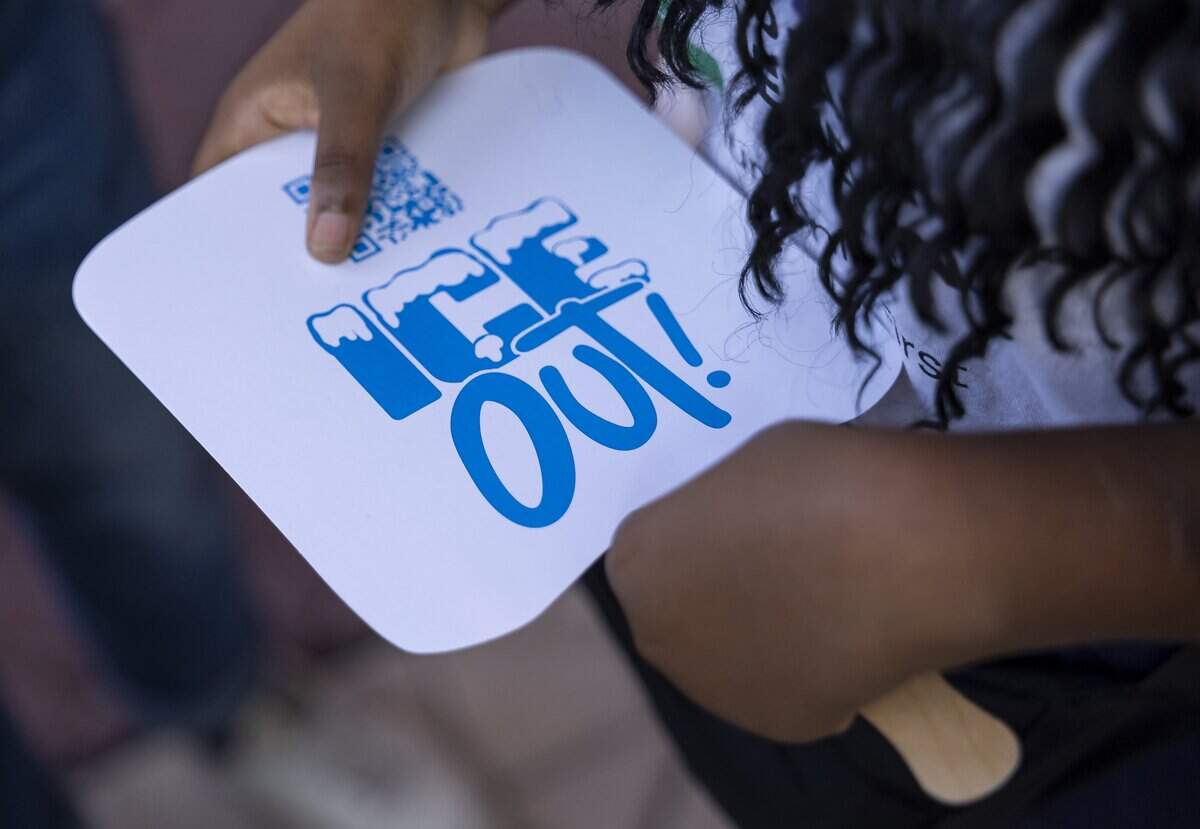
During Thursday’s event, officials, advocates and residents urged the U.S. Senate to pass legislation that would keep the TPS protections for Haiti in place. The measure already passed in a bipartisan vote in the House of Representatives in late March. That would allow the hundreds of thousands of Haitians on the brink of losing their status from being deported back to Haiti, a country that Trump’s own State Department warns Americans to not visit because of the violence.
READ MORE: Effort to force House vote to save Haitians’ TPS secures bipartisan support
“We’re fighting and hoping for an extension, fighting for a better future for our people,” said Lilly. Following the assassination of President Jovenel Moïse five years ago, Haiti has existed in a state of anarchy, with organized crime controlling swaths of the country and subjecting millions of Haitians to deprivation and extreme violence.
“Many of us escaped for our lives,” said Lilly. Going back, she said, is off the table.
“Our lives are being impacted,” she said. “Remember that we are real people.”
This story was produced with financial support from supporters including The Green Family Foundation Trust and Ken O’Keefe, in partnership with Journalism Funding Partners. The Miami Herald maintains full editorial control.