Miami faith leaders unite during holy days to push for immigration reform
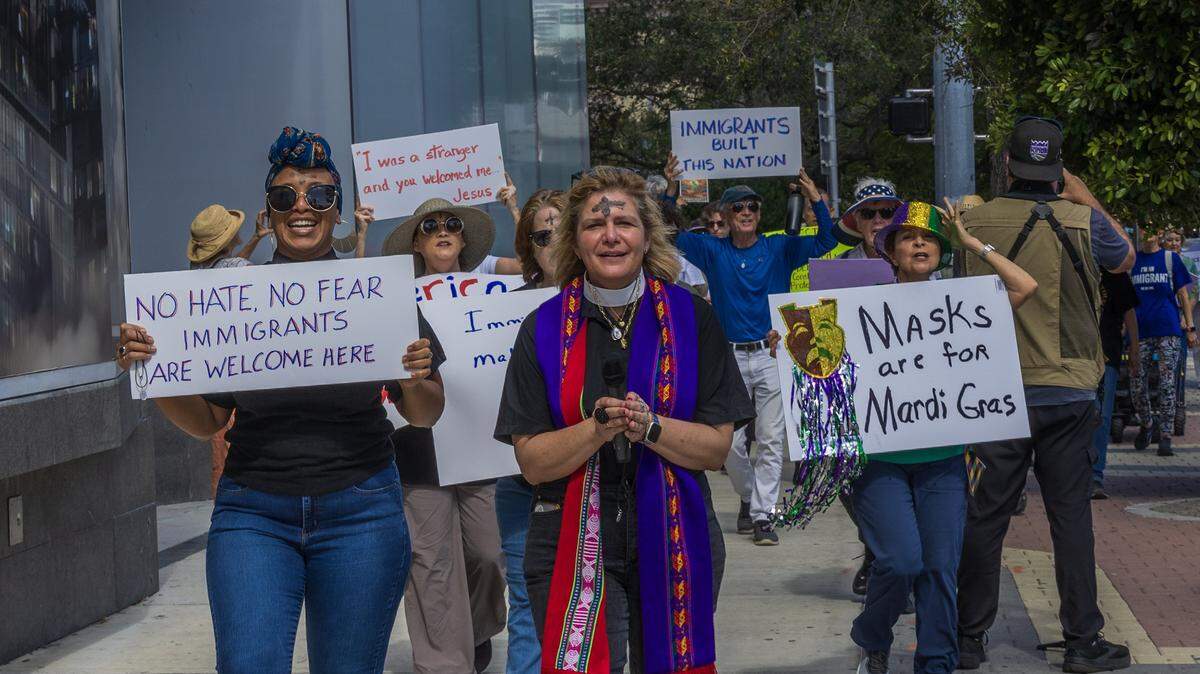
Pastors, people of faith and advocates gathered in downtown Miami for a peaceful protest against immigration policies they believe are inhumane and, for some, against their religious beliefs.
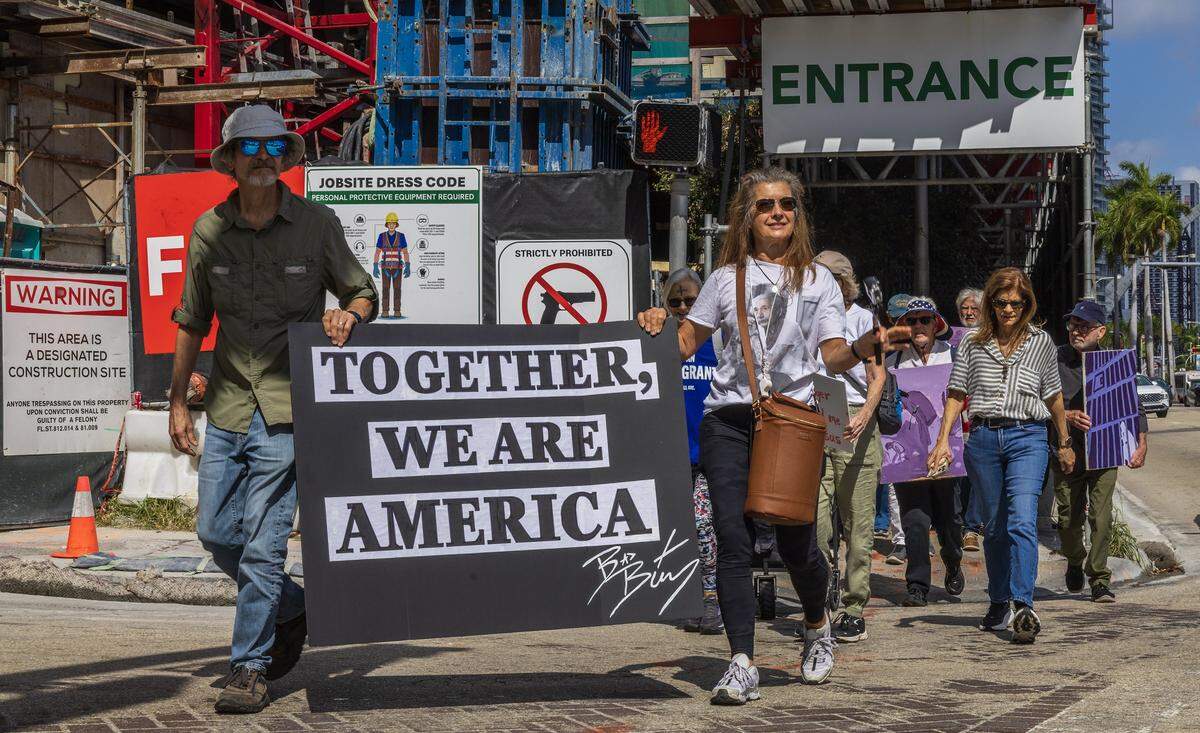
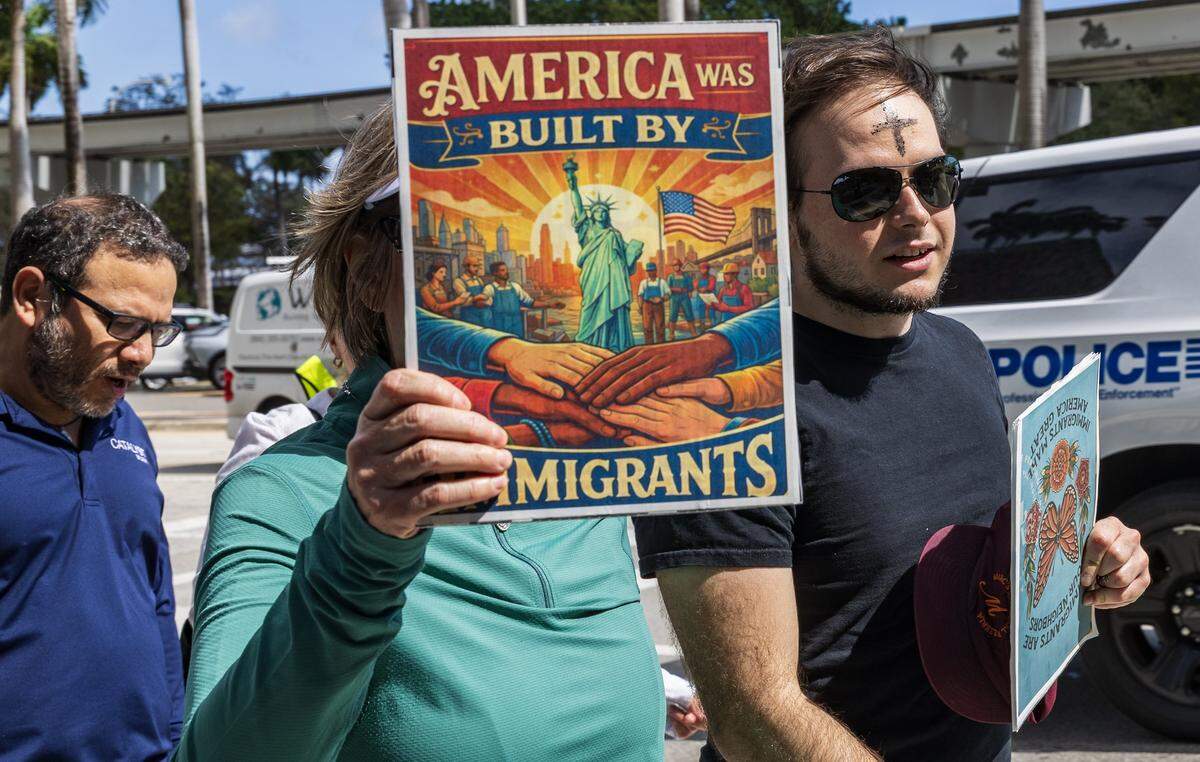
Led by pastors from First Church Miami, a United Methodist congregation, a few dozen people marched from the downtown church to the immigration courthouse holding signs, chanting and passing around pedants of Saint Frances Cabrini, the patron saint of immigrants, engraved with the words “Pray for us.”
Organizers said they purposefully planned the action on Ash Wednesday — a day when many Christian faith traditions mark the beginning of the holy season of Lent, a time of reflection and repentance ahead of the celebration of Easter. The march also coincides with the start of Ramadan, a month-long season of fasting, spiritual growth and reflection for Muslims.
“We enter into these holy seasons together with a similar message — No hate, no fear, immigrants are welcome here,” said Rev. Audrey B. Warren, one of the event organizers and senior pastor of First Church Miami.
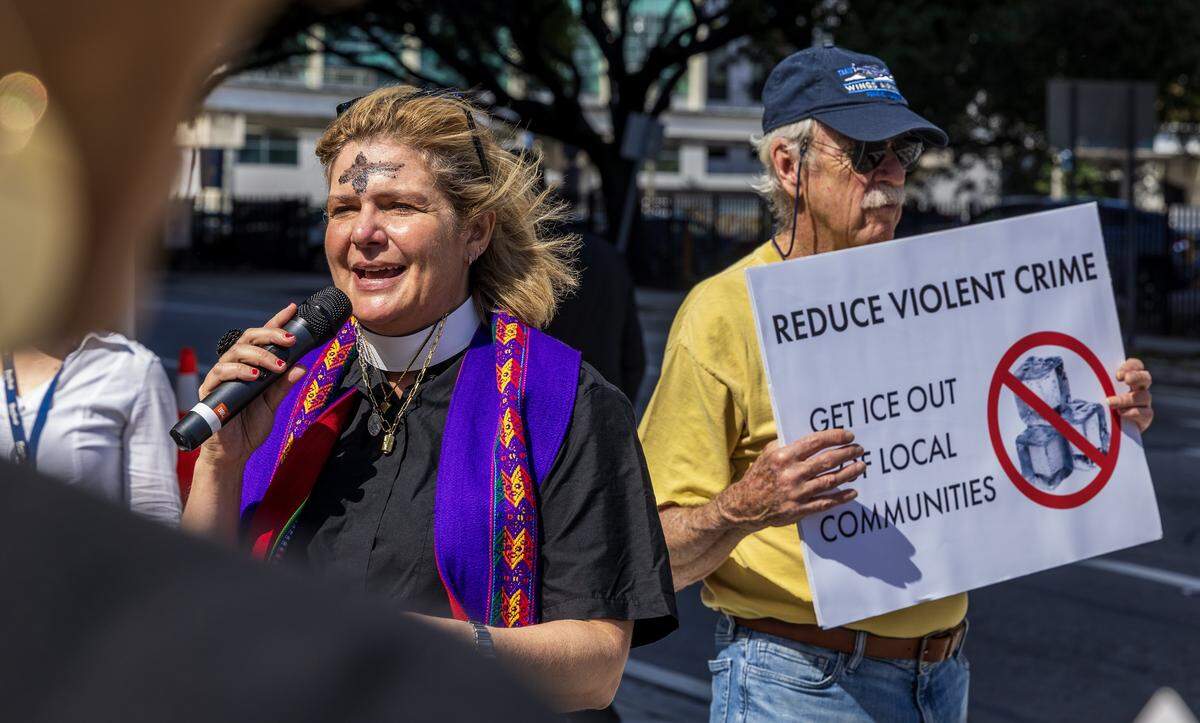
Rev. Laurie Hafner said the scripture often quoted on Ash Wednesday, “From dust we have come, from dust we will return,” is a reminder of the fragility of life itself and a call to action for believers to use their time on Earth wisely.
“So what are we going to do with those days that have been given to us?” Hafner, senior pastor of Coral Gables Congregational United Church of Christ, said as she walked along Biscayne Blvd.
“This march today is a perfect example of what we should be doing. We should be caring for those who need us. We should be a voice for the voiceless ... there’s not a better use of one’s life,” she said.
Call to remove ICE masks
One of the protesters, who was decked out in Mardi Gras-themed gear, carried a festive sign that read “Masks are for Mardi Gras” in reference to the masks often worn by Immigration and Customs Enforcement (ICE) officers.
Advocates from the immigrant rights group, Florida Immigrant Coalition, showed up to the march to call attention to legislation that would restrict the use of face coverings that obscure an officer’s identity.
Nicknamed the Visible Act, the bills (HB 419/ SB 316) would also require immigration officers to more clearly identify themselves by wearing ID badges during enforcement actions. Advocates say the masked agents erode public trust and create unnecessary fear, making people less likely to cooperate with police in emergency situations.
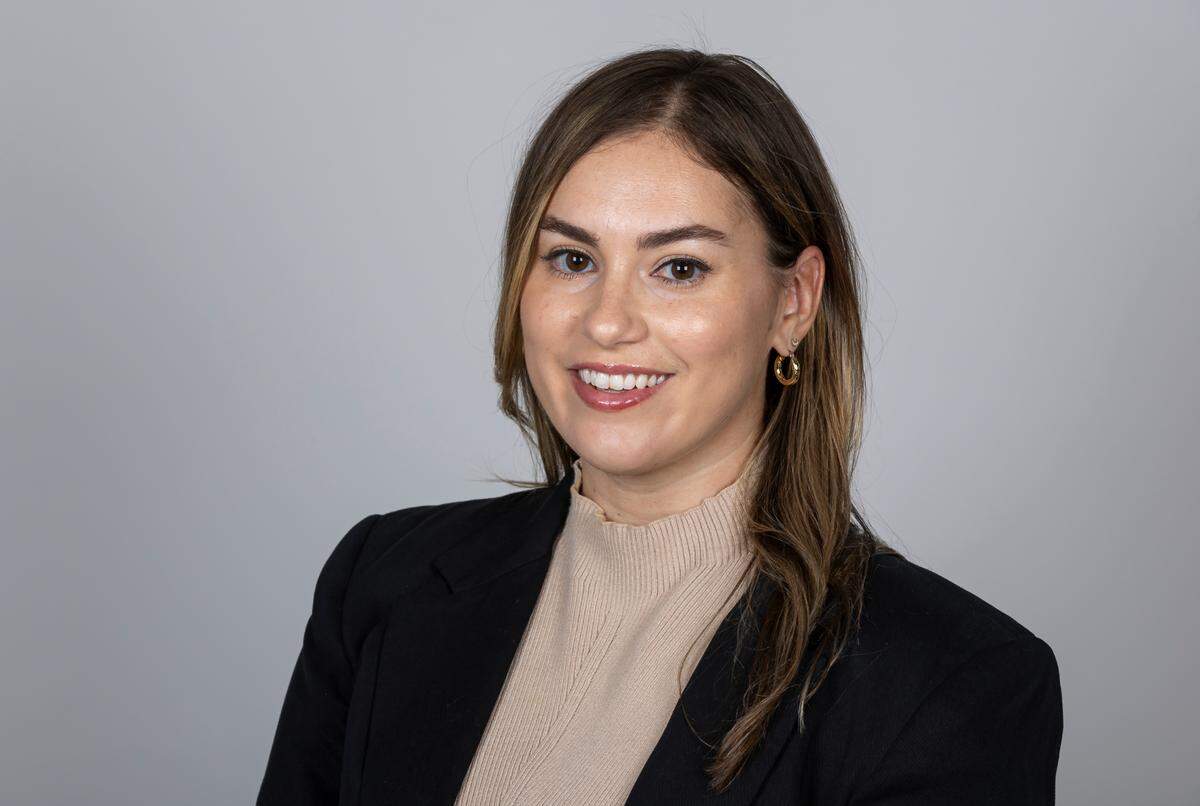
“Imagine that moment — someone approaches your car with no visible badge, no ID, a covered face and orders you to comply. In any other context, we would call that dangerous,” said Alexandra Orellana, the South Florida membership organizer with the Florida Immigrant Coalition.
‘He stood in line’
The march comes amid growing concerns around the Trump administration’s efforts to terminate Temporary Protected Status for Haitians and an escalation of enforcement actions by Immigration and Customs Enforcement (ICE) which have sparked citizen-led protests in cities across the country.
Earlier this month, a federal judge paused the Department of Homeland Security’s termination of Haiti’s Temporary Protected Status, a move that allows Haitian TPS holders to remain protected from deportation and continue to be authorized to work legally in the United States — for now. Litigation remains ongoing.
READ MORE: Next steps: What a judge’s order blocking end of TPS means for Haitians
Miami workers and pedestrians looked on, some recording on their phones and cheering the protesters on as they gathered at the courthouse, which had a line of attorneys and their clients forming nearby.
Arianne Betancourt spoke to the crowd about her father, Justo Betancourt, a Cuban immigrant who is currently being detained at Alligator Alcatraz Detention Center.
“He stood in line, just like the people behind us, not knowing what the outcome of his check-in would be,” Betancourt said about her father, who has lived in the United States for 36 years.
Betancourt expressed concern for her father, a diabetic who requires insulin, who she said has been denied medical treatment at the detention center. She said her father was taken to the Mexican border, but denied entry due to his health condition, and he was sent back to Alligator Alcatraz.
“This is not an issue on immigration anymore. This is an issue on the violation of human rights,” she said. “People are treated inhumanely, they’re denied medical care, they’re denied food ... This is a moral issue.”
Betancourt has been traveling to different cities across the country, talking to families of the detained and to protest what she says are inhumane conditions at immigration detention facilities.
“Every time I see gatherings like this, it gives me and families like mine a little hope, that more people are starting to care,” she said.
This story was produced with financial support from Trish and Dan Bell and donors in South Florida’s Jewish and Muslim communities, including Khalid and Diana Mirza and the Mohsin and Fauzia Jaffer Foundation, in partnership with Journalism Funding Partners. The Miami Herald maintains full editorial control of this work.