‘We celebrate, but we do not stop:’ Advocates vow to keep fighting after Haiti TPS ruling
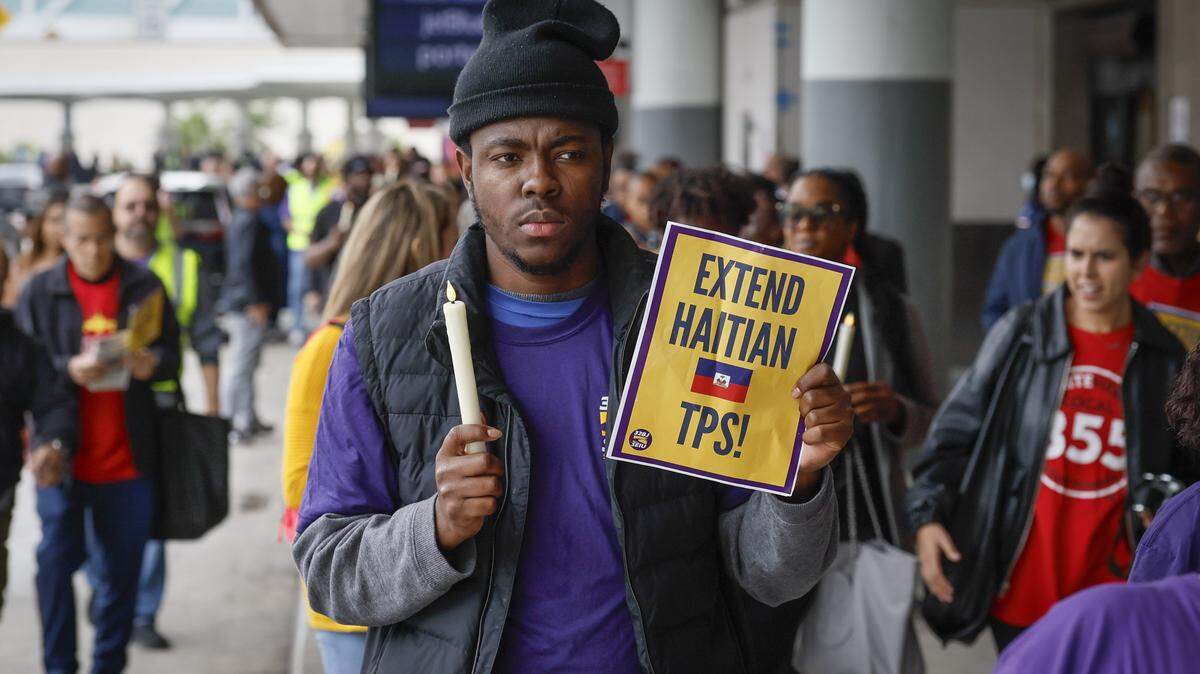
As they brace for a legal fight with the Department of Homeland Security over immigration protections for Haitians, advocates and elected officials urged the Trump administration on Tuesday to allow a federal judge’s decision pausing the termination of Temporary Protected Status to remain in place.
TPS holders “are our doctors, nurses, teachers, caregivers, entrepreneurs and homeowners and ending TPS will devastate families and damage our economy,” Miami-Dade County Commissioner Marleine Bastien said.
Bastien spoke at a press conference in North Miami, the largest Haitian-run city in the United States. She was joined by other elected officials and immigration rights advocates as she pleaded for compassion and thanked the lawyers and plaintiffs in the case, which remains far from over. Although U.S. District Judge Ana C. Reyes ruled in favor of Haitians’ request for a stay of DHS’s order to end TPS on Tuesday, the merits of their lawsuit still need to be litigated in the courts.
“Tell the Trump administration, let this decision stand,” Bastien said. “Congress must also enact bipartisan, permanent protections for Haitian TPS holders. This moment demands leadership, not politics; courage, not cruelty, humanity not fear. It is a pause, but we are not done.”
The call came amid relief and celebrations in households across Florida and in cities where TPS holders are employed. The possible termination threatened to remove billions of dollars out of local economies. As they spoke, the advocates and the room were unaware of the fact the Trump administration had deployed a warship, the USS Stockdale, off the coast of a political troubled and gang-ridden Haiti as the country heads for another political transition after Saturday.
“This is not an end,” Miami-Dade Country Mayor Daniella Levine Cava said. “We will continue to stand. Will continue to fight until the path forward is clear for those who are suffering, for those who are waiting, for those who are in living in uncertainty and who cannot safely return — let’s just be clear, who cannot safely return to Haiti, exactly the purpose of the TPS program.”
The greater Miami area is home to the largest Haitian community in the United States, and Miami-Dade County, Levine Cava said, “is the most diverse community in the nation.”
“Diversity is our greatest strength. Embrace our Haitian brothers and sisters,” she added. “Haitians and Haitian Americans have strengthened our local economy.”
The county officials were among dozens of Haitian advocates and Democratic lawmakers in Florida and across the country who welcomed Reyes’ ruling late Monday pausing the termination of immigration protections for more than 300,000 Haitians, who vowed to fighting “until protection turns into permanence.”
“We celebrate, but we do not stop,” said Nancy Metayer Bowen, the vice mayor of Coral Springs and a vice chair of the Florida Democratic Party, speaking at a news conference earlier in the day. “What we need are real pathways to citizenship for people who work hard, pay taxes and follow the rules.
“Today we breathe, tomorrow we organize, and tomorrow we keep moving.”
Metayer Bowen, a first-generation Haitian American and the first Black woman of Haitian descent elected to the Coral Springs City Commission, was joined on the call by Nikki Fried, the chair of the Florida Democratic Party, and Daniel Henry, a party vice chair who is also of Haitian descent.
“Our country is in chaos right now,” Fried said. “We’ve got neighbors that are scared to leave their homes, families that refuse to send their kids to school, all because of the terror that we’re seeing in our communities across this country, and one of those issues is right here in the state of Florida.”
Of the more than 300,000 Haitians who held Temporary Protected Status as of last year, according to the Department of Homeland Security, at least 158,000 of them were residents of Florida. More than 93,000 are part of the workforce, contributing over $1 billion in taxes annually and $2.6 billion annually to local and national taxes.
Many businesses in elder care, hospitality and construction were bracing for the loss of workers, who despite Monday’s reprieve are still not out of danger. DHS has signaled its intent to appeal the ruling by Reyes in the case brought by five Haitians with TPS. The plaintiffs include a neuroscientist researching Alzheimer’s disease; a software engineer at a national bank; a laboratory assistant; a college economic major and a full-time registered nurse.
In her remarks, Fried noted that many of the Haitian TPS holders have been in the United States for years. “Ending TPS for our Haitian neighbors is not just cruel; it’s inhumane, knowing what is happening back on the island itself, knowing that Haiti is ..being run by gangs, political violence,” she said.
Metayer Bowen said the Trump administration’s decision was not about rule of law but about “political theater” and “cruelty.”
“Today, cruelty lost,” she said. “America has long claimed to be a beacon of hope for people fleeing violence, persecution and instability. TPS is one of the ways this country has honored that promise; ending it would have forced families to make the impossible choices, choices no parent would ever want to face.”
She and other advocates say that at least 50,000 U.S.-born children depend on at least one Haitian parent on TPS, and ending their ability to work legally would have pushed at least half of those children into poverty.
“This is not policy; this is punishment, and today that punishment was stopped,” Metayer Bowen said. “This needs a full stop.”
But for now, TPS holders say they have a short reprieve. “I woke up on Tuesday with a sense of revival after suffering extreme anxiety, fear and uncertainty for many weeks,” said Farah Larrieux, a communication strategist and community organizer who has had TPS since it was first granted after the 2010 Haiti earthquake. “The court ruling is a confirmation of the injustice that Haitians have been victims of from the Trump administration. We understand this is the first phase of a long and intensive battle for our right to exist and to thrive and for our honor, respect and dignity.”
This story was originally published February 3, 2026 at 12:34 PM.