
Federal judge denies another request to shut down Alligator Alcatraz
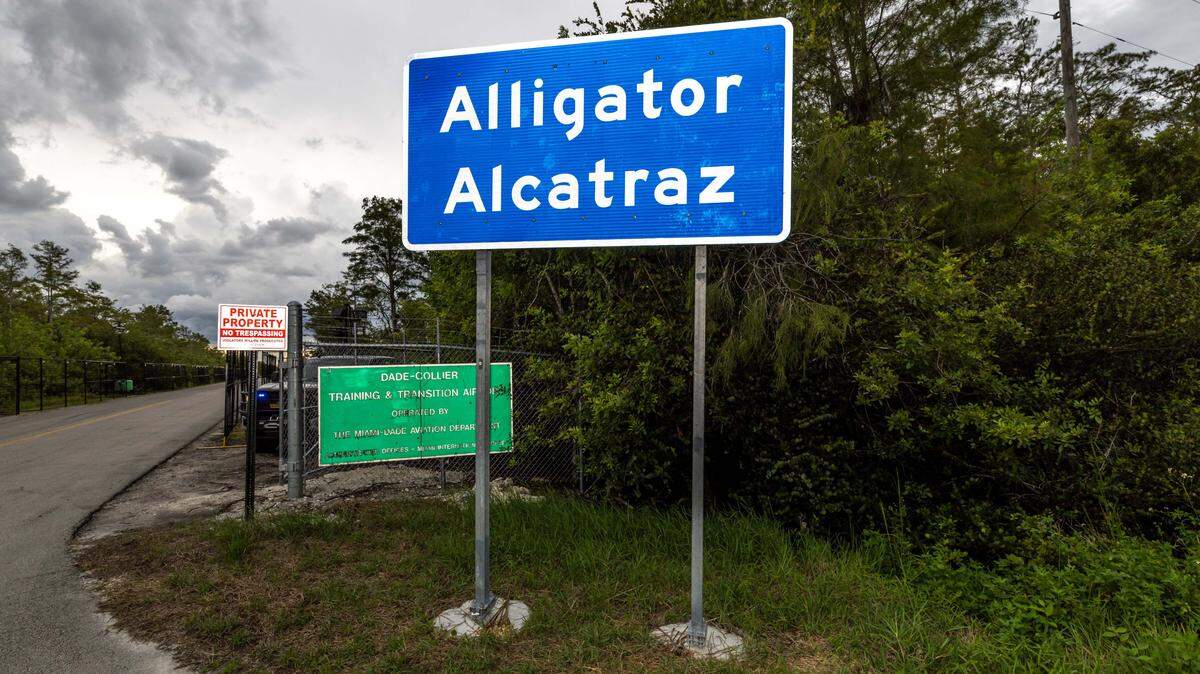
A federal judge on Thursday denied a request by a detainee at Florida’s state-run immigration detention center in the Everglades to stop the DeSantis administration from holding immigrants at Alligator Alcatraz, dealing another blow to the civil rights groups that have been trying to shut down the facility.
In a six-page ruling, U.S. Middle District Judge Kyle C. Dudek said the plaintiff had not shown that he or other detainees faced “irreparable injury” while being held at Alligator Alcatraz.
“Plaintiff must show that his confinement at Alligator Alcatraz, and not the detention itself, constitutes irreparable injury,” Dudek wrote.
In the lawsuit filed in August, the plaintiff, M. A., represented by the American Civil Liberties Union Foundation, disputed the state’s legal authority to operate the immigrant detention center, arguing that immigration enforcement is a federal responsibility. The plaintiff also alleged that detainees at the site lacked adequate access to lawyers, could not be tracked on the ICE online locator, and were living in unsafe and unsanitary conditions.
The lawyers had requested a preliminary injunction to bar the state from holding detainees at the site.
The state argued that the Department of Homeland Security had authorized it to assist in the detention of immigrant detainees through its 287(g) agreements. These agreements allow state and local governments to carry out immigration enforcement, including housing detainees.
The DeSantis administration also argued that Immigration and Customs Enforcement had inspected the facility and found it to meet its standards.
“Alligator Alcatraz is a lawful effort by Florida to assist the federal government with immigration detentions,” the DeSantis administration wrote.
Dudek, who was appointed to the bench by President Donald Trump, did not find the evidence provided was “sufficient to warrant a preliminary injunction.” He ruled that it was “many months old and largely stale.” He pointed to the petitions submitted by attorneys on behalf of clients as evidence of attorney access and noted that detainees at the facility now appear on ICE’s online locator.
“Plaintiff is essentially asking this Court to close a sizable and expensive detention facility, all before any decision on the merits of its legality,” he wrote. “While there may indeed be deficiencies at Alligator Alcatraz that ultimately justify its dissolution, Plaintiff has not made the extraordinary showing needed to justify immediate relief of such magnitude.”
When the facility initially opened, lawyers were unable to access their clients and were turned away at the gate. Since then, the facility has been setting up video conferences and, at times, in-person meetings. In October, the Department of Homeland Security confirmed that detainees being held at the site were appearing on the ICE locator.
The lawsuit is one of several legal challenges that have targeted the site. In August, a federal judge in another case brought by environmental groups ordered the facility shut down, citing environmental harm, but an appeals court reversed the order and kept the site open. In December, the appeals court reopened the environmental case after a pause due to the federal government shutdown.
Lawyers in another lawsuit argue that the detainees’ First Amendment rights at the site are still being violated and that there is no confidential access to their attorneys.