Belonging in Transit: Exhibit offers glimpse into life of Miami migrant communities
Belonging is what everyone seeks—even in transit, as people move in search of opportunity and a better life.
The recently opened HistoryMiami exhibit, “Belonging in Transit,” highlights the Redland Market Village in Homestead as a vibrant, living space full of stories of labor and sacrifice, where both migrants and locals navigate constant movement while building livelihoods. It stands as a source of joy for those who have created new beginnings.
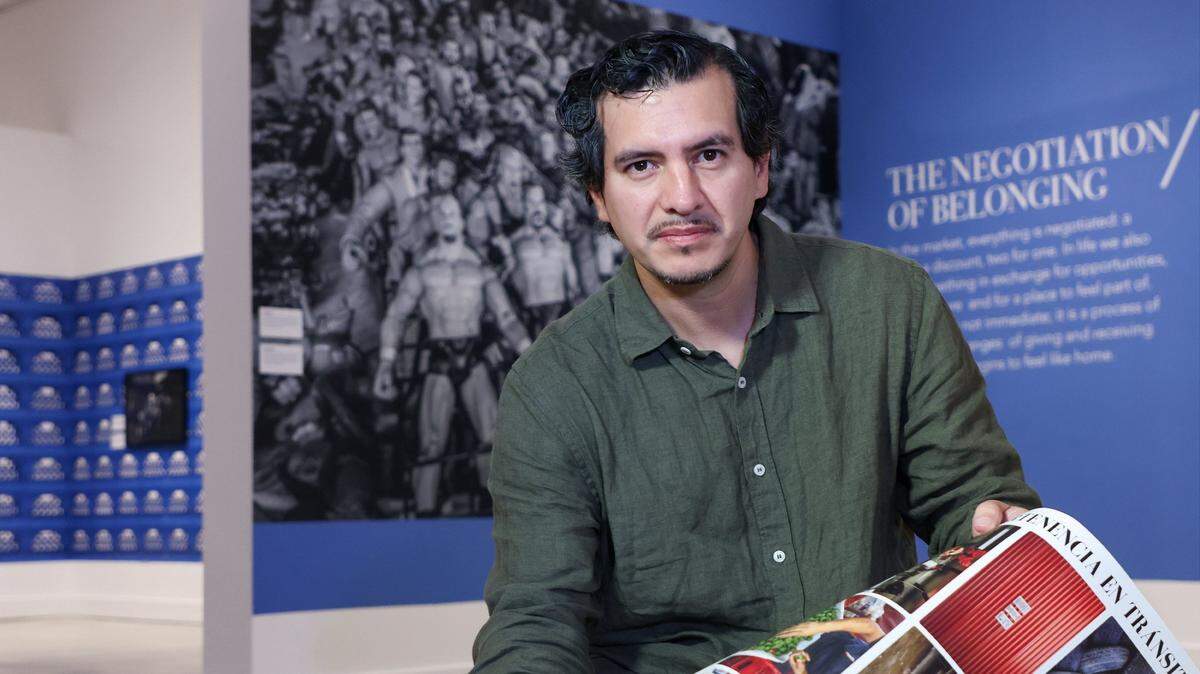
Through his lens, photographer Carlos “Cali” Muñoz captures life at the market, revealing communities defined by endurance, resilience and the relentless pursuit of opportunity—a mirror of shared humanity. The exhibit highlights communities in constant negotiation with their lives and the opportunities they pursue, shaped by journey and endurance.
Muñoz, 39, a migrant born in Venezuela to Colombian parents, first felt a connection to the people who work at Redland when he visited the market in 2021. He said it recalls his childhood in Bogotá, where he shopped at a fruit market called Paloquemao with his grandmother. The textures, the smells, the colors, the flavors, he said, reminded him of his parents’ country and, in essence, his own roots.
For him, the Homestead market is not merely a subject to document but a mirror, where anyone from South America, like him, as well as the broader Hispanic community, can see themselves reflected. As someone shaped by migration who later had to flee too, Muñoz recognized the resilience and hope the Redland Market embodies for a transient community pursuing opportunities and livelihoods their home countries could not provide.
Cali, as he is known due to his Colombian heritage, said that portraying Redland became almost an obsession. When he began visiting the market with his camera and connecting with the community that works there, he was confident he had a documentary photographic project in mind, but he could not have imagined that it would earn him the 2023 HistoryMiami Museum Photography Fellowship, which allowed him to exhibit the series.
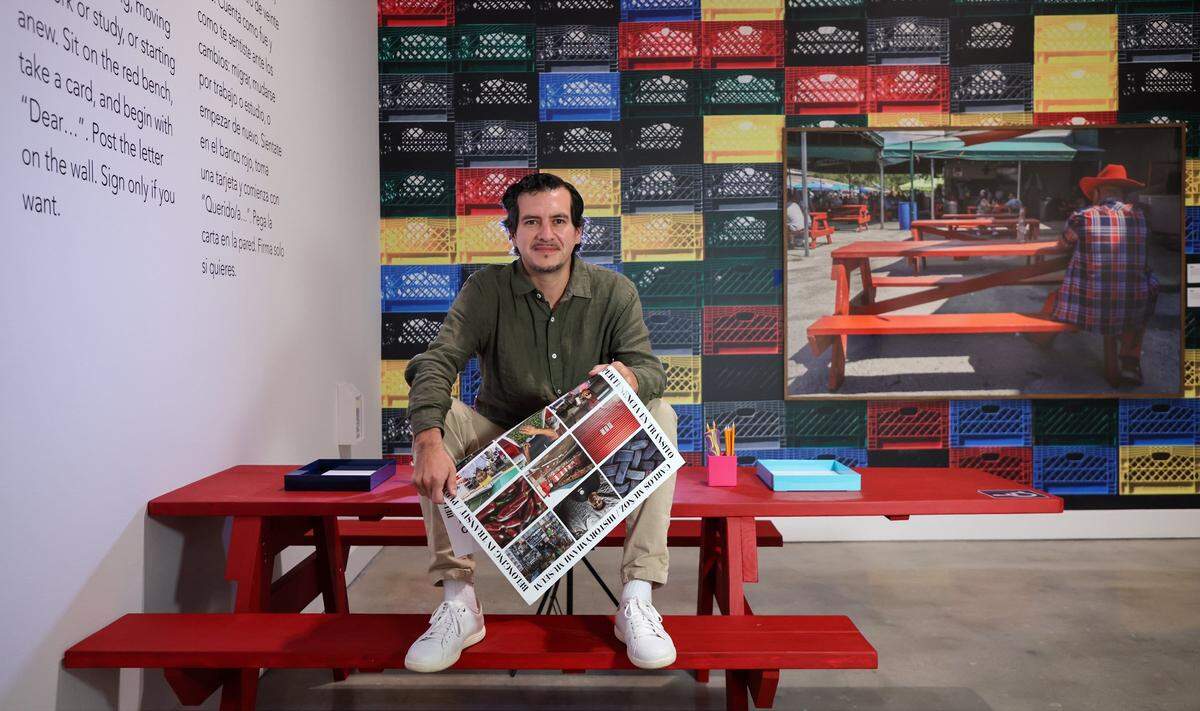
He took over 5,000 pictures in three years, talked to dozens of people and visited many homes of the Redland workers once they opened their hearts to share their stories, Muñoz said. He spent almost 10 months working with his curators, Lucia Marcano and Roberto Mata, to present the photographs in a way that not only makes sense but allows the audience to understand the message he intended to tell.
What do a nopal (a prickly pear cactus) a bicycle stand, crates, a wooden bench, a plastic table and worn knives have in common? Perhaps nothing if seen as mere objects, but together, they tell the story of Hispanic communities across 27 acres of the flea market. Each item reflects the sacrifice of someone who left a life behind—their family, their culture—often fleeing violence, persecution or poverty. Yet they remain in transit. This movement is symbiotic: the customers who visit the market weekly are also part of these shared stories, connected not only by the desire to belong but by the drive to move forward while honoring their origins.
“The driving force for the communities I photographed,” Muñoz said, “is the pursuit of a future for their children, those who sacrifice themselves to bring opportunities to their families.” He spent three years documenting the multicultural market and its community, highlighting migration not as a statistic but as a deeply human experience shaped through everyday life, work and relationships. The exhibition is on display at HistoryMiami from Nov. 19 through March 28, 2026, and several of the photographs are being added to the museum’s permanent collection, ensuring these stories become part of South Florida’s historical record.
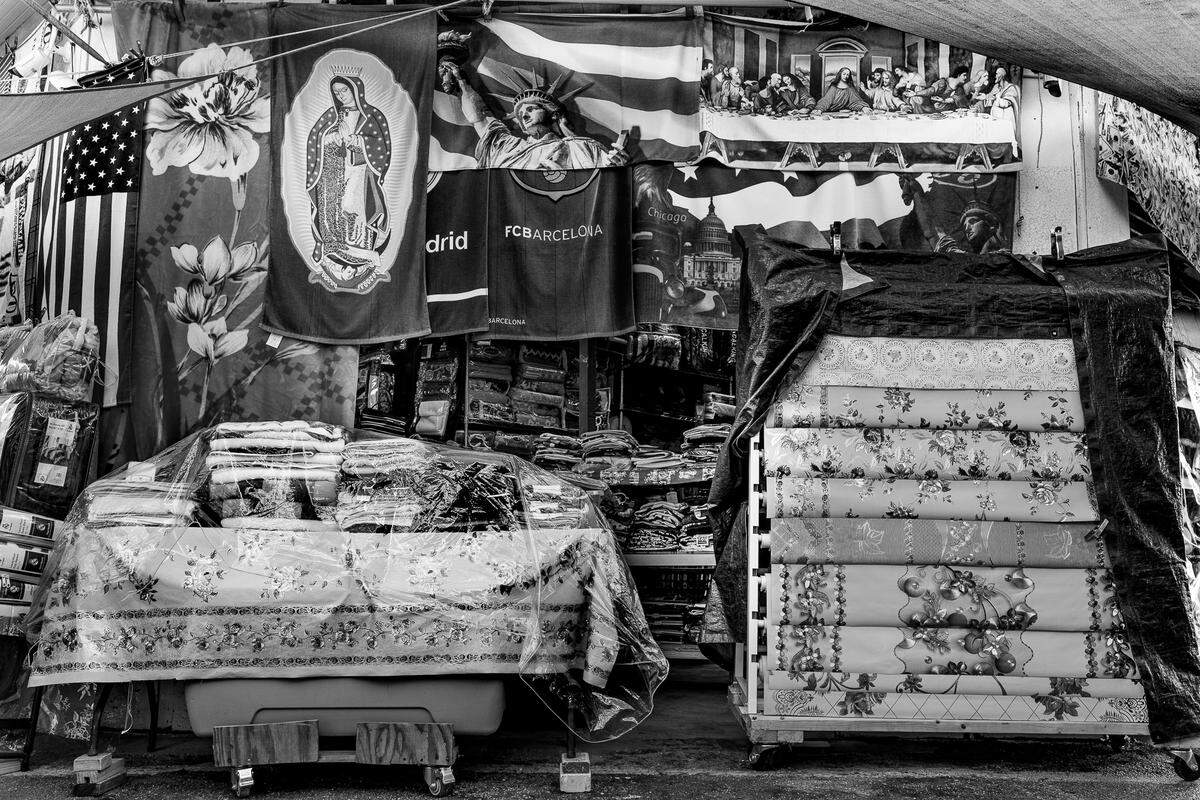
Belonging in Transit is designed to tell a story through 49 photographs divided into chapters, exploring gestures of labor, mirrored lives and the negotiation of belonging. The exhibit challenges the false dilemma of seeing migrants as “them” when, in reality, it is about “us” as shared humanity: the pictures capture objects, actions, faces, colors, and grays, but most importantly, the stories of people full of resilience, pursuing dreams.
One chapter of the exhibit reads, ‘Belonging ... is a process of constant exchange, of giving and receiving, until the new begins to feel like home.”
Natalia Crujeiras, executive director and CEO of HistoryMiami Museum, said that Muñoz’s exhibit embodies the museum’s mission, telling Miami stories lived by its people and reflecting their experiences.
“It shows migration not as a political issue but as a profoundly human one,” she said. “It explores how migration shapes movement and memory, leaving things behind, starting anew, seeking connection, and finding one’s place. Belonging is not a fixed state, it is shaped over time, negotiated, influenced by political circumstances, and determined by whether one is accepted in a community.”
The exhibit was scheduled long before the climate for migrants in the United States got more tense toward Hispanic communities, but its timing perhaps serves as a recognition of the thousands—if not millions—of migrants pursuing one goal: an honest life, working and building communities. Muñoz took his last photograph for the exhibit on Jan. 31, but he continues to visit the market. Over the past 10 months, he said, the underlying fear that has always existed has remained palpable, but he points out that the migrants’ fear go beyond deportation.
“As migrants, we carry many fears: fear of succeeding, fear of achieving our dreams, whatever those dreams may be, and often these fears are interconnected,” Muñoz said. “There are even deeper: whether your children will truly thrive here, fear of not earning enough to cover next month’s rent, or not having good health.”
Crujeiras said that cultural experiences open hearts, emphasizing that Miami-Dade is a county of immigrants, with more than 54% of residents born in another country and nearly 70% of whom are Hispanic. From its beginnings, Miami has been shaped by a continuous wave of newcomers, political exiles, migrants fleeing economic crises, people feeding devastation after hurricanes, or seeking new opportunities, even from other parts of the country.
“Let us remember that these people are human beings with the same aspirations we all share: the safety of our children, the desire to move forward, and the pursuit of a better life,” said Crujeiras, the first woman directing HistoryMiami Museum. “The intention is not to politicize, but to encourage reflection on this complexity, discovering what we have in common despite different experiences, fostering critical thinking about what it truly means to be part of a community, and inspiring empathy for others.”
The exhibit is dynamic. At the conclusion of the four chapters, visitors are invited to write a letter to a child—a son or daughter, niece or nephew, or grandchild—to be read 20 years from now. The exercise prompts reflection on change, migration, moving for work or study, or starting anew. It creates a space to honor the past, acknowledge the present, and envision the future for those they love and hold dear.
“This exhibition reminds us that Miami is always in motion: people striving to belong, bringing their original identities, which then evolve within the communities where they settle. We are all Miamian in this process,” Crujeiras said.
For Muñoz, the exhibit is an acknowledgment of the Hispanic community in Miami.
“The easiest way would be to hide Latinidad,” he said, “but this is an even greater moment to showcase the Latino community honestly and openly.”
This story was originally published December 22, 2025 at 10:06 AM.