
Immigrants seeking legal work, citizenship now subject to ‘anti-American’ screening
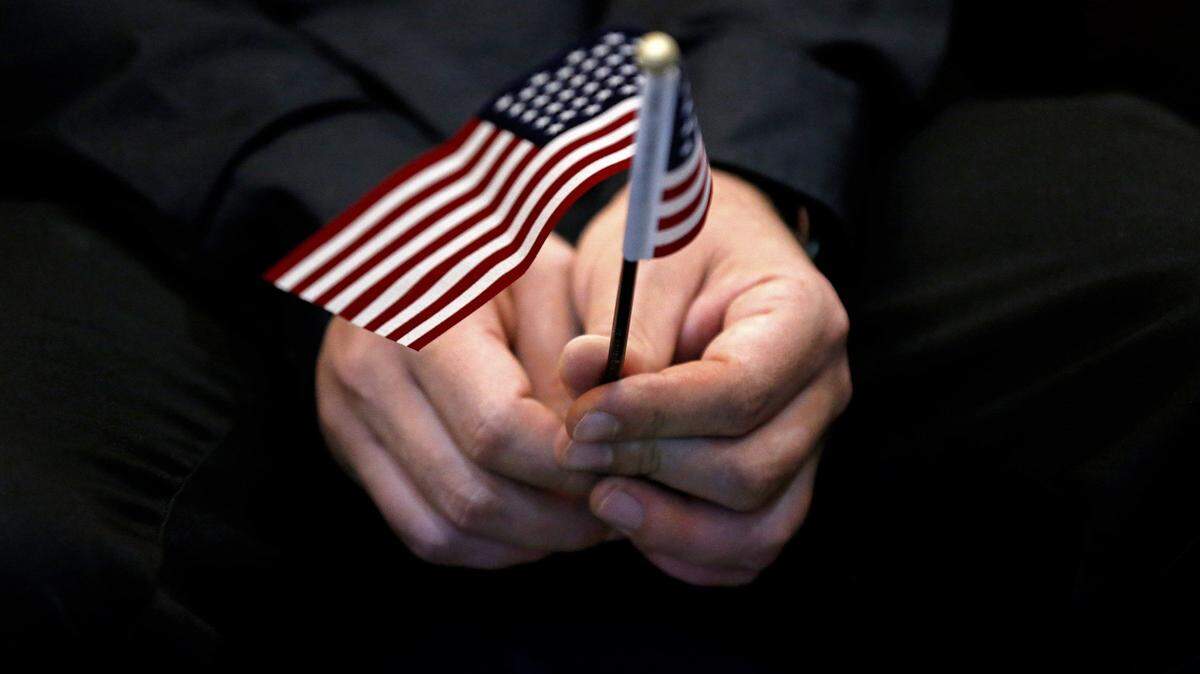
Immigrants seeking a pathway to citizenship or a legal right to work in the United States will now be screened for “anti-American” behavior, the Trump administration said Tuesday, in a move that could affect thousands of Florida residents.
The announcement raised concerns about the subjective nature of the new policy, which will be a heavy factor in deciding whether a migrant can be given a green card or parole from incarceration.
“Anti-American activity will be an overwhelmingly negative factor in any discretionary analysis,” U.S. Citizenship and Immigration Services said in a statement.
The agency, in an update to its policy manual, also said it would include “social media vetting” in its background checks.
But it doesn’t specify what constitutes anti-Americanism, only saying the officer should check for it.
The new policy is part of President Donald Trump’s heavy crack down on immigration. His administration has taken a multi-faceted approach in targeting both undocumented immigrants and legal immigration programs.
It could have major consequences for Florida, which is home to a large number of migrants, 55 percent of whom are naturalized citizens.
Experts raised concerns about the subjective nature of the rule, its effect on free speech and potential delays on the application process.
Aaron Reichlin-Melnick, a fellow at the American Immigration Council, an immigration advocacy group, called the new rule “McCarthyism.”
“The term has no prior precedent in immigration law and its definition is entirely up to the Trump admin,” he wrote on social media.
Citizenship and Immigration Services defended the rule, arguing it’s a “privilege” to live and work in the United States.
“America’s benefits should not be given to those who despise the country and promote anti-American ideologies,” said USCIS spokesman Matthew Tragesser in a statement. “Immigration benefits — including to live and work in the United States — remain a privilege, not a right.”
USCIS has instituted other rules for immigrants trying to build lives in America, even when it comes to things like marriages between a principal asylee or a refugees.
The agency is part of the Department of Homeland Security, which has taken the lead on Trump’s immigration policy with a series of moves, including taking away legal protections for youths and allowing the government to detain children until they can be deported.
About 22.1 percent of Florida’s residents are foreign-born, and 10.3 percent of its U.S.-born residents live with at least one immigrant parent, according to the American Immigration Council. Additionally, immigrants make up 27.4 percent of Florida’s labor force.
The rule goes into effect immediately and will be applied to current applications.
“This new rule is yet another insidious tactic by the Trump administration to trample on peoples’ First Amendment right to free speech under the guise of targeting ‘anti-American’ sentiment,” said Heidi Altman, vice president of policy at the National Immigration Law Center. “All Americans should take notice of this arbitrary directive that smacks of authoritarianism and will only serve the administration’s homogenous and predominantly white view of America.”
But Elizabeth Jacobs, director of regulatory affairs and policy at the Center for Immigration Studies, a group that advocates for immigration restriction, notes officers have always had discretion when it comes to immigration applications.
“This doesn’t really change a lot,” she told McClatchy. “The difference really is the tone and the explicitness of the administration with regards to what they’re concerned about. But immigration officers have always been able to deny on the basis of discretion for those benefits that are discretionary, for a variety of reasons.”
She advised waiting to see how the rule is implemented given that “what is considered anti-American is complicated, different from person to person.”
“I think the positive effect, though, is that it’s forcing immigration officers to look more closely at people’s activities outside the United States and inside the United States, and it’s going to enhance security vetting.”
The new policy instructs officers to exercise their own discretion when determining what makes an anti-American statement or show of support for a terrorist group. Officers are also instructed to look for any “evidence of antisemitic activity.”
All those factors will be weighed for any migrant seeking “application for admission or parole.”
This story was originally published August 20, 2025 at 1:08 PM.