Trump suggests zigzagging your way out of a gator’s path. Bad advice, experts say
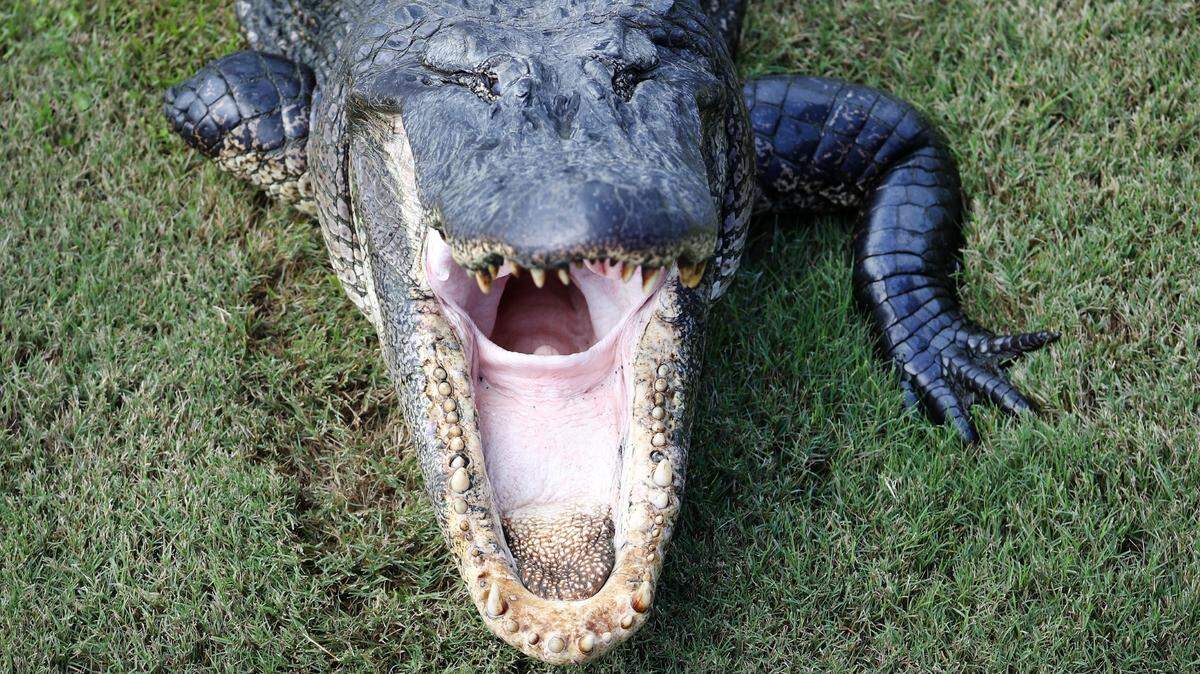
President Donald Trump told reporters before leaving the White House Tuesday for his visit to the new ICE detention center in the Everglades, dubbed “Alligator Alcatraz” by state officials, that if immigrants housed there find themselves near an aggressive gator, they should run away in a zigzag pattern.
But whether the president was making a flippant joke or not, wildlife experts say that’s the wrong advice: You should run in the opposite direction as fast as you can, and in straight a line as possible.
“An alligator won’t chase you very far,” said Frank Mazzotti, professor of wildlife ecology at University of Florida.
Trump said in a briefing that officials are “going to teach them how to run. Don’t run in a straight line. Run like this,” he said motioning his arms in a zigzag.
But, doing that is counterproductive and dangerous, said Daniel Parker director of media for the reptile advocacy group, United States Association of Reptile Keepers, Florida, and a former biologist at the University of Central Florida and the Ashton Biodiversity Research and Preservation Institute.
“Trying to zigzag is a distraction that you don’t need at that moment,” Parker said.
And, instead of getting yourself farther away from the gator, you’re actually spending more time in front of it, Mazzotti said.
“You want to get out of range the fastest you can,” he said.
The scenario of being chased by an alligator is also an unlikely one, said Mazzotti. Gators are ambush predators. If they know people see them, they are unlikely to attack. That’s why visitors to Shark Valley in the Everglades National Park aren’t mauled to death by the dozens of gators that are regularly found lounging besides the 15-mile loop road, feet away from pedestrians and bicyclists.
The most likely case that an alligator will go after people is if they come across a female gator’s eggs, and even then, the reptile will likely lunge a few yards, rather than give chase, Mazzotti said.
And, people typically aren’t on their menu, so the pursuit won’t be long.
“They have no interest in you,” said Mazzotti.
This story was originally published July 1, 2025 at 2:59 PM.