
‘Death sentence’: CHNV ruling upends lives of South Floridians from troubled nations
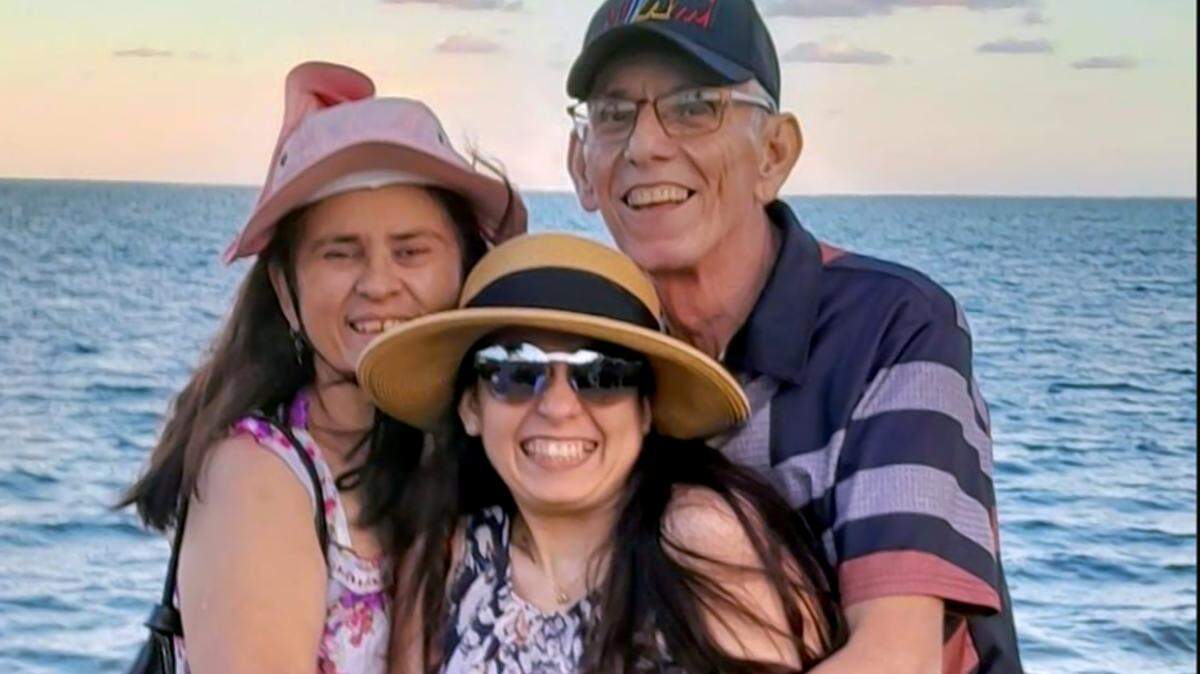
Activists, lawyers and elected officials warned Friday of chaos and devastation to come after a Supreme Court decision upended the lives of half a million migrants from Cuba, Nicaragua, Haiti and Venezuela, many living in South Florida, who could face deportation to their troubled nations after losing legal protections under a Biden-era parole program.
The Supreme Court granted the Trump administration’s request to lift a lower court order that protected immigrants coming through the Biden-era parole program from being potentially deported, following an earlier administration decision to strip them of their legal status. The program is known as CHNV, for the Cubans, Haitians, Nicaraguans and Venezuelans protected under the Biden administration policy.
Kenny Francois, the CEO of LETS Community Center in Miami Gardens, which serves the Haitian immigrant community, was shocked to learn of the Supreme Court’s decision. On Friday morning, while he was at a graduation, he didn’t know why he was getting so many phone calls.
“So basically, whatever Trump wants to do, he can just do it,” Francois said. “You know that was the little hope people had, the Supreme Court. That was the only little hope people were holding on to.”
The litigation in the case continues, but in the short term, many migrants will be left with difficult choices.
According to some estimates, as many as half of the migrants who entered the United States through the program have applied for other immigration benefits to adjust their status and may have a path to remain in the country –for example, those who had already applied for asylum or for a green card under the decades-old. Cuban Adjustment Act. But others will need to decide whether they will remain in the U.S. without documentation — potentially facing detention and deportation proceedings — or voluntarily returning to countries wracked by violence, hunger and human-rights abuses.
The ruling “sets a dangerous precedent by allowing the Trump administration to dismantle longstanding humanitarian protections for people fleeing persecution and abuse in countries in crisis”, said Ida Sawyer, the director of the Crisis, Conflict and Arms division at Human Rights Watch. “This marks a shameful betrayal of U.S. commitments under international law and human rights norms. The U.S. should be expanding protections, not closing the door.”
Ending the protections granted to Cubans, Haitians, Nicaraguans and Venezuelans under CHNV will force many to return to countries experiencing “widespread violence, repression, and instability—putting their lives at greater risk,” she said.
“Haitians, for example, could be sent back to Port-au-Prince, where they could be subjected to killings, kidnappings, forced recruitment, and widespread sexual violence by criminal groups who control nearly all the capital, and where more than half the population suffers from acute hunger,” she said.
Friday’s decision, potentially green-lighting deportation orders for hundreds of thousands of immigrants, amounts to the “largest…de-legalization in the modern era,” said Karen Tumlin, founder and director of the immigration advocacy group Justice Action Center.
“I cannot overstate how devastating this is: the Supreme Court has allowed the Trump Administration to unleash widespread chaos, not just for our clients and class members, but for their families, their workplaces, and their communities,” she said.
Elected officials from South Florida, where many of the migrants from the four countries have settled, joined in the criticism.
U.S. Rep. Frederica Wilson called the ruling “cruel and inhumane” in a post on X. “These are folks who were escaping brutal dictatorships, gang violence, and turmoil,” she wrote. Wilson noted that the migrants affected by the ruling came to the U.S. legally and have made contributions to South Florida communities. “Deporting them is a death sentence,” she added.
U.S. Rep. Debbie Wasserman Schultz echoed the criticism in a post on X, saying it was “sick and depraved to deport 500,000 people who applied from home, passed background checks, earned work permits, and paid their own way.” She stressed that the migrants are neither criminals nor undocumented. “They came here legally. But Trump and the Republicans who bow to him could care less,” she added.
U.S. Rep. Maria Elvira Salazar, a Miami Republican, said the Supreme Court order must be respected but “was not what many hoped for.” She too said the migrants came legally to the United States.
“One truth remains undeniable: These migrants entered the United States legally, relying on promises made by the Biden administration,” she said. “These individuals are fleeing brutal regimes and life-threatening conditions. That’s why I strongly urge the administration to use its executive authority and grant Deferred Enforcement Departure to prevent them from being sent back to violence and repression.”
Maureen Porras, an immigration attorney and vice mayor of Doral, home to large Venezuelan community, said the decision “is not only devastating but also unprecedented. Its hard to believe that with the stroke of a pen, about half a million people will lose their lawful immigration status and work authorization.”
“It will have a chilling effect on communities across the U.S.,” she added.
Families reel from court decision
In cities like Miami, migrants who came through the program quickly assimilated into the communities here because they were granted legal work permits and had come to the country sponsored by relatives. But Friday’s ruling has left many families again facing separation.
Orlando Valecillos arrived in the U.S. with his wife in August from Venezuela to reunite with their daughter in Miami.
Valecillos and his wife, who live in Homestead, endured the ongoing humanitarian crisis in Venezuela, which forced them to emigrate twice — first to Chile and then to the United States, where they finally reunited with their only daughter.
The couple entered the U.S. under the humanitarian parole program, which initially granted them two years of protection through August 2026. But less than a year after arriving, they received a notice from the Department of Homeland Security that their parole had been terminated, once again throwing their future into uncertainty.
“We had hoped the election in Venezuela would help fix things. Instead, everything is worse,” Vallecillos said. “How are we supposed to go back? If we can’t stay here, where are we supposed to go? There’s so much uncertainty.”
Fear among migrants
Friday news also sent shock waves through Miami’s Haitian community, which finds itself in a particularly troubling situation. Haitians who have fled rampant gang violence and political turmoil say returning to their home country is simply not an option.
Little Haiti native Sammy Lamy, the founder of Jobs4Us, who has helped place more than 600 Haitians in jobs around the country since the Biden-era humanitarian program was launched, said the next few weeks and months are going to be tough.
“The dream has crashed and reality is hitting,” he said. “I, of course, don’t agree with the decision and now we have to figure out what’s next, because a lot of people are in limbo.”
Lamy, whose parents were both Haitian immigrants, said the uncertainty and fear from Friday’s decision will only deepen, especially among Haitians whose country is being gripped by violence and, in some cases, have had armed gangs taking over their homes.
One of the most immediate effects of the ruling is that many migrants will lose their jobs. Amid the uncertainty, companies helping resettle refugees are already refusing to hire migrants whose work authorizations expire in less than six months.
“Even if people have time left on their work permit, they’re being denied work because they don’t have the necessary time,” Lamy said.
Adding to the fear are commercials the Department of Homeland Security is running on popular YouTube programs in the Haitian community, warning folks to leave.
“It’s a very daunting commercial,” said Lamy. “People are scared,”
Leaving the U.S.
Among the four groups affected, Cuban migrants still might end up with better chances to remain in the country, thanks to the Cuban Adjustment Act, Wilfredo Allen, a Cuban-American lawyer, said.
The 1966 law says that after one year in the U.S. migrants inspected by immigration authorities and admitted or paroled into the country are entitled to apply for permanent residency. “It doesn’t matter if their parole is revoked later,” Allen said. Still, he is advising Cuban migrants with several months to go to meet the one-year requirement to apply for asylum if they can, advice he says also applies to Haitians, Nicaraguans and Venezuelans.
Allen said the administration is succeeding “in spreading chaos and panic” among immigrants, and many will likely choose to leave on their own — which the administration has labeled “self-deportation” — even if actual deportation proceedings in court take time.
Some immigrants have already decided that the risk of sudden detention by U.S. Immigration and Customs Enforcement is too much to face, especially when children are involved.
Lilian Bustos, a 42-year-old mother from Nicaragua, had been bracing herself for the termination of the CHNV parole program. She and her two daughters, ages 10 and 17, arrived in the U.S. under the program in August 2023. With less than three months left on their stay, she made the heartbreaking decision to send her daughters back to Nicaragua two days ago.
“It’s been devastating,” she said. “My two daughters have been crying non-stop since they left. My oldest wanted to finish high school here—she was fully adjusted and happy. But I didn’t want to break the law. We couldn’t apply for asylum because we haven’t faced any political persecution.”
Bustos feels heartbroken that her 17-year-old daughter couldn’t finish high school in the U.S. Now, she says, her daughter will likely face delays in completing her education back in Nicaragua. The family is from Chinandega, a rural region known for fishing and cattle ranching.
A trained kindergarten teacher in Nicaragua, Bustos recalls how difficult it was to survive on a single income back home. In Miami, she worked in cleaning services and hoped to save as much as possible before her parole expired. Her goal was to return to Nicaragua and open a small business with her husband—who was unable to join the family in the U.S. under the Biden administration’s parole program.
Now, with the Supreme Court’s ruling casting doubt on the program’s future, she’s unsure what will happen next, but she said she is also planning to return to Nicaragua to rejoin her family.
‘I love being here’
Standing outside a Publix in Doral on Friday, Vanessa Ayala, 37, a Venezuelan immigrant who has lived in the U.S. for five years, said she has seen the impact of the Trump administration’s immigration crackdown on her coworkers at Walmart.
“I just saw the news on my phone,” Ayala, who became a U.S. resident two years ago, said about the Supreme Court ruling. “On the one hand, I agree with all the measures being implemented — but for the people who are really doing things wrong.
“But for the people who came here to work, who follow the rules and pay their taxes, it makes me sad,” she added. “There are many people who are truly in need.”
Ayala and her husband, a professional basketball player, left Venezuela to escape deepening economic hardship and rising street violence. “We felt threatened,” she said.
At her job, she’s seen how immigration policy shifts have affecting those around her. “Almost everyone I work with had to leave,” Ayala said. “Many were Cuban.”
Lucía Ravachi, a permanent resident from Venezuela who has been living in the United States for 10 years, said she found it unfair that people who came to the U.S. for a better life are being punished.
“I think there are people who came that should not be here,” she said. “But there are also many people who need it, who love this country, who have grown fond of it. I owe so much to this country; I love being here.”
This story was originally published May 30, 2025 at 3:47 PM.