Federal appeals court upholds decision stopping Trump revocation of TPS for Venezuelans
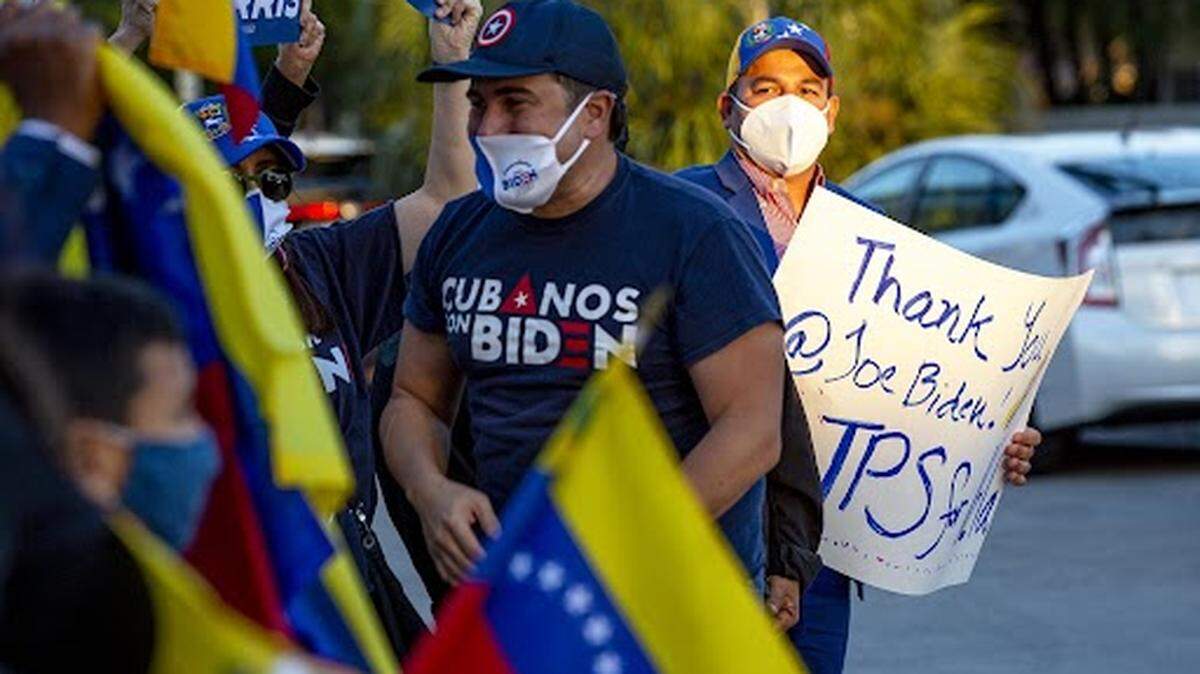
A federal appeals court on Friday upheld a judge’s decision that stopped the Trump administration’s revocation of deportation protections for hundreds of thousands of Venezuelans in Florida and other states.
The appeals court in San Francisco backed U.S. District Judge Edward M. Chen’s decision rejecting the government’s request to lift his stay of the revocation order issued by the Department of Homeland Security. Last month, Chen found that Venezuelan nationals with Temporary Protected Status in the United States could be “irreparably injured” if he did not put a hold on their deportations.
Chen ruled that Department of Homeland Security Secretary Kristi Noem had acted on broad generalizations and stereotypes when she revoked the deportation protections and work permits of about 350,000 Venezuelans benefiting from TPS.
“It is evident that the Secretary made sweeping negative generalizations about Venezuelan TPS beneficiaries,” the judge said in a 78-page order on March 31. “Acting on the basis of a negative group stereotype and generalizing such stereotype to the entire group is the classic example of racism.”
This month, administration lawyers asked Chen to put his stay ruling on hold, so that the U.S. Court of Appeals for the Ninth Circuit in San Francisco could consider the order revoking the TPS extension issued by Noem in February.
On Friday, a panel of three appellate judges ruled: Trump administration officials “have not demonstrated that they will suffer irreparable harm” if a lawsuit brought by Venezuelan immigrants challenging Noem’s order continues in federal court.
Lawyers for the Trump administration argued that Noem has the exclusive power to revoke the Biden administration’s TPS order for Venezuelan nationals in the United States and that the plaintiffs don’t have rights under their “equal protection” argument to challenge her authority.
In their 14-page motion, the government lawyers said Noem’s “determinations are immigration policies rationally related to legitimate governmental interests and were not motivated by racially discriminatory intent,” despite what Chen found in his initial ruling. They said the judge’s postponement of Noem’s order, which was to take effect on Monday, “imposes irreparable injury” to the executive branch and the public, asserting that Venezuelan Tren de Aragua gang members “were covered” along with other Venezuelan nationals by the Biden administration’s TPS order in 2023.
Venezuelans who sued have provided significant evidence that TPS holders and their families would suffer irreparable harm if the revocation was allowed to go forward, Chen found.
“In contrast, the government’s contention that the public interest weighs in its favor is not convincing because the government lacks any evidence of national security harms,” the judge added.
His ruling, stopping the TPS revocation while the lawsuit plays out in his court, was a blow to the Trump administration. It has targeted Venezuelans as part of mass deportation efforts through several policies and argued that allowing people from Venezuela, which is plunged into humanitarian and political crises, into the U.S. goes against American interests.
Days before he left office, President Joe Biden had extended TPS for Venezuela for an additional 18 months, valid until October 2026. But weeks into office, Noem revoked the TPS extension for a large group of Venezuelans, effective April 7. The decision would have meant that as of Wednesday, as many as 350,000 Venezuelans, many of them living in South Florida, would have lost the ability to legally work in the U.S, and a few days later would have been vulnerable to detention and deportation.
A group of seven Venezuelans facing deportation, along with an advocacy group named the National TPS Alliance, sued the Trump administration in the San Francisco federal court on Feb. 19, arguing that its decision to end deportation protections for Venezuelans is unlawful, politically motivated, racially discriminatory, and part of a broader pattern of bias against non-European, non-white immigrants.
The plaintiffs are represented by the Center for Immigration Law and Policy at UCLA School of Law, the ACLU Foundation of Southern California and the National Day Laborer Organizing Network.
This story was originally published April 18, 2025 at 3:48 PM.