Federal courts again stop Trump administration from sending Venezuelans to El Salvador
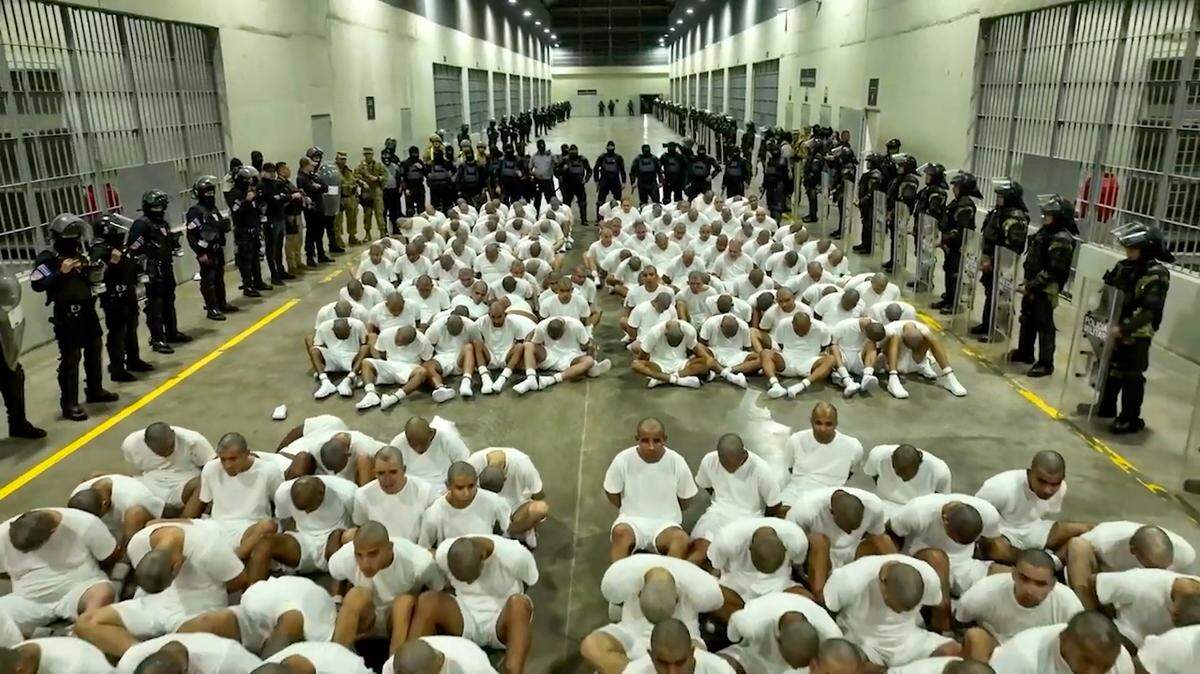
Two days after the U.S. Supreme Court transferred the high-profile case of Venezuelan immigrants facing deportation to an El Salvador prison by the Trump administration from Washington, D.C., to Texas, a federal judge on Wednesday put their removal under the Alien Enemies Act on hold again.
U.S. District Judge Fernando Rodriguez Jr., in Brownsville, Texas, issued a 14-day restraining order that stopped the administration from using the wartime powers act to deport any Venezuelans held at a detention facility near the southern border until at least April 23. His ruling came in the case of three Venezuelans who filed suit to halt their deportations to the mega prison in El Salvador.
“The Court finds that maintaining the status quo is required... to prevent the immediate and irreparable injury that may occur with the immediate removal of any Venezuelan,” said the judge, who was named to the federal bench in Texas by President Donald Trump during his first term.
Meanwhile, New York U.S. District Judge Alvin K. Hellerstein issued a similar temporary restraining order, saying that any Venezuelan migrants in the Southern District of New York, which includes Manhattan, must be protected because there is a “danger of imminent removal” by the Trump administration under the Alien Enemies Act. His decision came in the case of two Venezuelans named as plaintiffs who are being held at a detention center in Orange County, N.Y.
“They need to be protected,” Hellerstein, who was appointed by President Bill Clinton, said at a court hearing on Wednesday. “They need to be guaranteed a notice, guaranteed a hearing before they can be removed.”
All five Venezuelan migrants, who were previously held at the El Valle Detention Center in Raymondville, Texas, had initially filed suit challenging the Trump administration’s use of the 1798 Alien Enemies Act in Washington, D.C., last month. Trump invoked the law in his crackdown on illegal immigration, saying members of the notorious Venezuelan gang Tren de Aragua must be booted out of the country because they were invading the United States at the direction of Venezuela’s leader, Nicolas Maduro.
A federal judge In Washington, James Boasberg, put the removals of the Venezuelans on hold to determine whether they were subject to the archaic law. But the Justice Department persuaded the Supreme Court to lift the 14-day stay imposed by Boasberg, an appointee of President George W. Bush.
In a split 5-4 vote on Monday, the high court ruled the Trump administration could continue the deportations under the Alien Enemies Act, but that the Venezuelan immigrants must first be allowed to challenge their removals on an individual basis by filing habeas corpus petitions in federal court in Texas.
While Trump declared victory over the Supreme Court’s decision, lawyers at the American Civil Liberties Union representing the Venezuelans also touted the court’s decision as a triumph.
The Alien Enemies Act allows the president to arrest, detain and deport immigrants from countries at war with the United States. All citizens of that country in the U.S. who are over age 14 are “liable to be apprehended, restrained, secured, and removed, as alien enemies.”
In mid-March, Trump issued a proclamation that authorized the Alien Enemies Act to deport members of the Tren de Aragua gang. In the proclamation, Trump said the gang was “conducting irregular warfare” against the U.S. in coordination with Venezuela’s leader.
On March 15, the Trump administration flew Venezuelans it accused of belonging to the gang to the Terrorism Confinement Center in El Salvador as part of a deal it had brokered with the country’s leader, Nayib Bukele.
Before Trump’s invocation, the Act had only been used three times, and only during times of war. That includes Japanese-Americans and Japanese immigrants the federal government put in detention camps during World War II.
Last week, lawyers for the Trump administration acknowledged in a separate case involving a challenge to the Alien Enemies Act that immigration authorities mistakenly deported a Maryland man to the mega prison in El Salvador along with members of Tren de Aragua. Despite the admission of an “administrative error,” the lawyers said the government lacks the authority to return him to the United States.
A federal judge in the Maryland case ordered immigration authorities to bring back the man, Kilmar Armando Abrego Garcia, by the end of the day Monday.
But Supreme Court Chief Justice John Roberts issued a temporary stay putting off the Monday deadline, giving the court more time to consider arguments presented by both sides.
Abrego Garcia, who at one time was accused by a government confidential source of being a member of the Salvadoran gang MS-13, was allowed to stay in the United States in 2019 after an immigration judge stopped his removal order to El Salvador.
But in March, Abrego Garcia, whose wife is a U.S. citizen, was stopped by Immigration and Customs Enforcement officers who “informed him that his immigration status had changed,” according to his attorneys. Abrego Garcia, the father of a 5-year-old son, was detained and then transferred to Texas before being sent to El Salvador.
The Miami Herald and other outlets have also published stories showing many of the Venezuelans sent to El Salvador do not appear to have criminal records in the United States or elsewhere. One CBS investigation found three-quarters of the men seemed to lack any criminal history anywhere.
Several had ongoing asylum cases. At least one was granted refugee status after an extensive, year-long plus process, and others had deportation protections and work permits through Temporary Protected Status. Experts have said that the Trump administration appears to be using tattoos and clothing as a way to identify Tren de Aragua members, but noted that the gang does not use such symbols to mark membership.
“It’s not subject to serious dispute anymore that they did this to innocent people who are non-citizens,” Katherine Hawkins, a senior legal analyst at the Project on Government Oversight, told the Miami Herald. “And if there’s no due process, then there’s not really any way for citizens to be safe either.”
Miami Herald immigration reporter Syra Ortiz Blanes contributed to this story.
This story was originally published April 9, 2025 at 4:08 PM.