Judge stops Trump administration from ending TPS for hundreds of thousands of Venezuelans
A federal judge in San Francisco on Monday stopped the Trump administration from revoking deportation protections for hundreds of thousands of Venezuelans, days before their ability to remain and work in the U.S. was set to end.
U.S. District Judge Edward M. Chen said Homeland Security Secretary Kristi Noem had acted on broad generalizations and stereotypes when she revoked the work permits and deportation protections of about 350,000 Venezuelans under Temporary Protected Status in February.
“It is evident that the Secretary made sweeping negative generalizations about Venezuelan TPS beneficiaries,” the judge said in a 78-page order. “Acting on the basis of a negative group stereotype and generalizing such stereotype to the entire group is the classic example of racism.”
The judge also pointed out evidence that suggests discriminatory intent by Noem in her decision-making, with a direct connection to President Donald Trump’s actions and statements.
“President Trump made several discriminatory remarks, not only targeting Venezuelan immigrants or TPS holders but also non-white immigrants in general. His statements included derogatory comments about Haitian immigrants, TPS holders, and other non-white immigrants, such as claiming that Haitian immigrants in Springfield, Ohio, were ‘eating the dogs’ and making disparaging remarks about Venezuelans and other immigrants being responsible for increasing crime,” the judge noted in the ruling.
Venezuelans who sued have provided significant evidence that TPS holders and their families would suffer irreparable harm if the revocation was allowed to go forward, the judge said.
“In contrast, the government’s contention that the public interest weighs in its favor is not convincing because the government lacks any evidence of national security harms,” Chen added.
Monday’s ruling, stopping the TPS revocation while the lawsuit plays out in his court, is a blow to the Trump administration, which has targeted Venezuelans as part of its mass deportation efforts through several policies and argued that allowing people from Venezuela, which is plunged into humanitarian and political crises, into the U.S. goes against American interests.
In the ruling, Chen emphasized the social and economic contributions of Venezuelans, noting their low criminal rates, high education and labor levels, and the hundreds of millions of dollars they inject into the U.S. economy.
The decision is also a relief for the hundreds of thousands of Venezuelans living in the United States who were grappling with the uncertainty of returning to a country where many of them could face political persecution and repression from Nicolas Maduro’s government.
Cecilia González Herrera, 26, who lives in Kissimee and was one of the Venezuelans who sued the Trump administration over the TPS revocation, described Monday’s ruling as a monumental victory for the Venezuelans who rely on TPS “for their security and stability.”
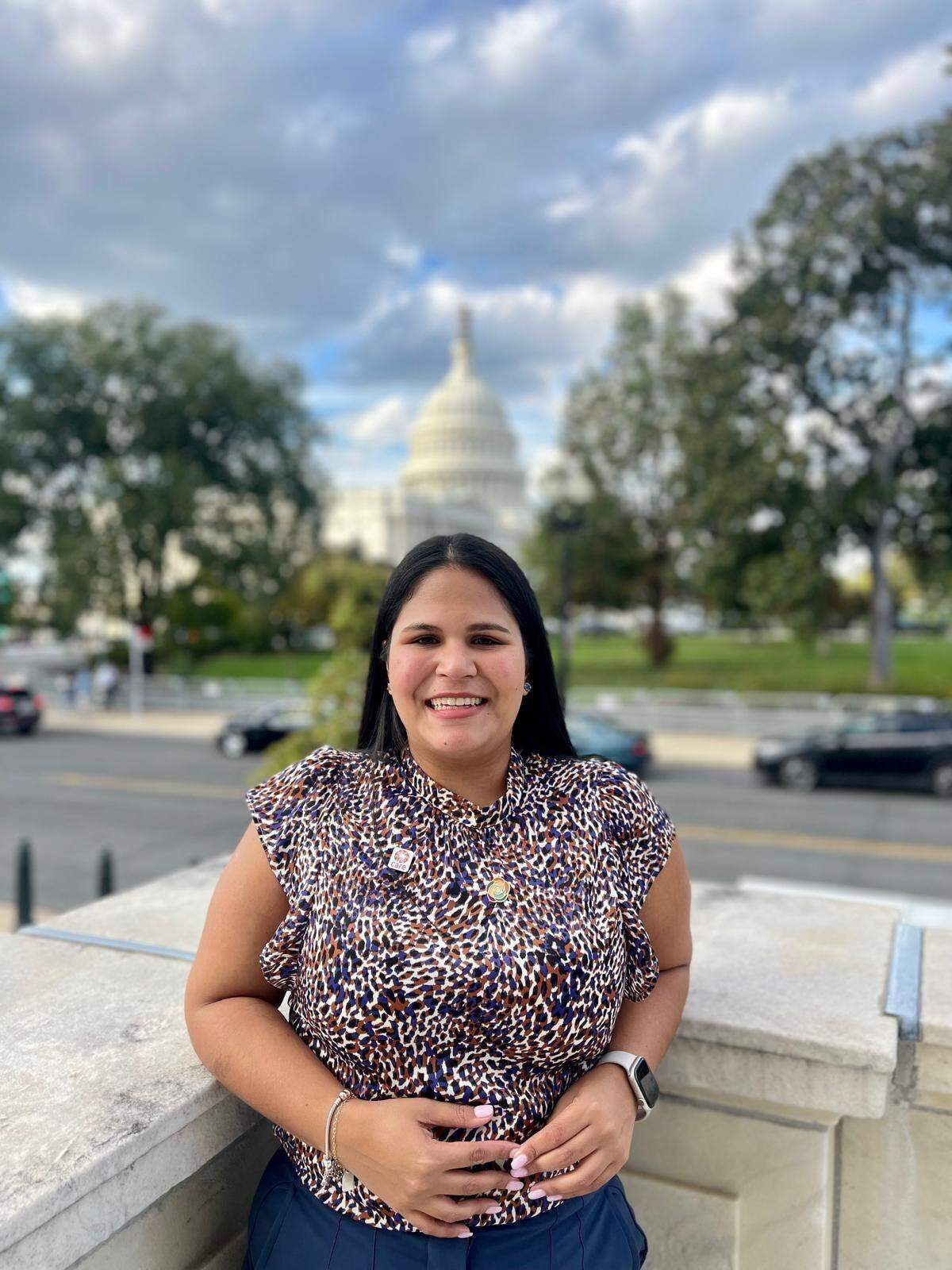
She told the Miami Herald she was relieved and grateful that the court recognized the urgency and seriousness of her struggle.
“This decision reaffirms that TPS is not just a policy, it is a lifeline for families like mine who have built their lives here, contributed to their communities, and cannot safely return to Venezuela.”
Days before he left office, President Joe Biden had extended TPS for Venezuela for an additional 18 months, valid until October 2026. But weeks into office, Noem revoked the extension of Temporary Protected Status for a large group of Venezuelans on Feb. 3, effective April 7. The decision would have meant that as of Wednesday, as many as 350,000 Venezuelans, many of them living in South Florida, would have lost the ability to legally work in the U.S, and a few days later would have been vulnerable to detention and deportation.
A group of seven Venezuelans facing deportation, along with an advocacy group named the National TPS Alliance, sued the Trump administration in federal court on Feb. 19, arguing that the government’s decision to end deportation protections for Venezuelans is unlawful, politically motivated, racially discriminatory, and part of a broader pattern of bias against non-European, non-white immigrants.
The plaintiffs are represented by the Center for Immigration Law and Policy at UCLA School of Law, the ACLU Foundation of Southern California and the National Day Laborer Organizing Network.
Adelys Ferro, executive director of the Venezuelan American Caucus, who advocated for the approval of TPS for years, thanked the U.S. justice system, the Venezuelans who sued and the lawyers who have dedicated themselves to defending the rights of her community.
“Venezuelans are not used to winning, to being recognized, but today a judge in the United States recognizes our contributions and acknowledges that the benefit of TPS should not be taken away because we have no country to return to,” she said.
In his ruling, the judge used as evidence Ferro’s declaration in the case noting the hardships Venezuelan TPS holders face:
“Small business owners unsure whether to sell their businesses or close their doors; employees who will lose their employment authorization, and their livelihood, in a matter of weeks; students fearful of the loss of financial aid which guarantees their ability to pursue their education; individuals terrified that they will be deported without this essential legal status, and trying to determine whether to stay or flee to avoid this outcome... Venezuelans who honestly know they have no grounds to apply for political asylum, and who, wanting to do things the right way, have turned to TPS while they wait for a real solution to the political and humanitarian crisis caused by the dictatorship of Nicolás Maduro.”
More than 900,000 Venezuelans currently reside in the U.S., with more than 607,000 benefiting from TPS in two different groups with different timelines for their protection to end. It is unclear how many would be affected by the ending of TPS, because some of them area also involved in other immigration proceedings, such as petitions for political asylum.
In his ruling, the judge said termination of the TPS for the Venezuelan community would have more than just an economic impact on the United States and the local communities where TPS holders live. There would be other issues of public safety, he said, because fear of detention and deportation can cause undocumented immigrants to forego medical care, such as diagnostic testing and vaccinations, which increases health risks to the broader community.
During a hearing before Chen on March 24, Justice Department attorney Sarah L. Vuong argued that “the harms to the government are that the secretary has reviewed the issue, made a determination regarding the national interest, and has a vested interest in ensuring her orders are executed.”
The judge dismissed that argument Monday, saying “the government simply contends that the public interest weighs against postponement of the agency actions because of national security interests. But the government’s assertion that Venezuelan TPS holders pose some kind of danger to the country or the communities where they live is entirely unsubstantiated.”
The judge said he is halting to the revocation of TPS on a nationwide basis, because Homeland Security’s actions affect Venezuelan TPS holders across the country.
Chen is the same judge who, in October 2018, issued a preliminary injunction halting the first Trump administration’s attempt to terminate the TPS program for immigrants from El Salvador, Nicaragua, Haiti and Sudan. Nearly two years after his initial ruling, a federal appeals court reversed the injunction, though it remained in effect until February 2024, when the judge approved the Biden administration’s motion to dismiss the case.
Venezuela was initially granted TPS in March 2021, enabling more than 257,000 individuals to apply for protection. In 2023, the designation was extended to include an additional 350,000 Venezuelans. This decision was met with widespread approval in South Florida, which is home to one of the largest Venezuelan communities in the U.S.
In his decision, Chen asked the plaintiffs to tell him within a week whether they also plan to challenge the Trump administration’s decision to roll back an extension of TPS protections for Haitians.
A hearing is scheduled for Tuesday in Boston for a joint Venezuelan-Haitian lawsuit aimed at preventing the termination of both countries’ TPS protections. Many activists, lawyers, and community leaders fear that the Trump administration also plans to soon do away with Haiti’s Temporary Protected Status altogether.
This story was originally published March 31, 2025 at 7:11 PM.