
After state’s threats, a Florida city reverses course on immigration enforcement vote
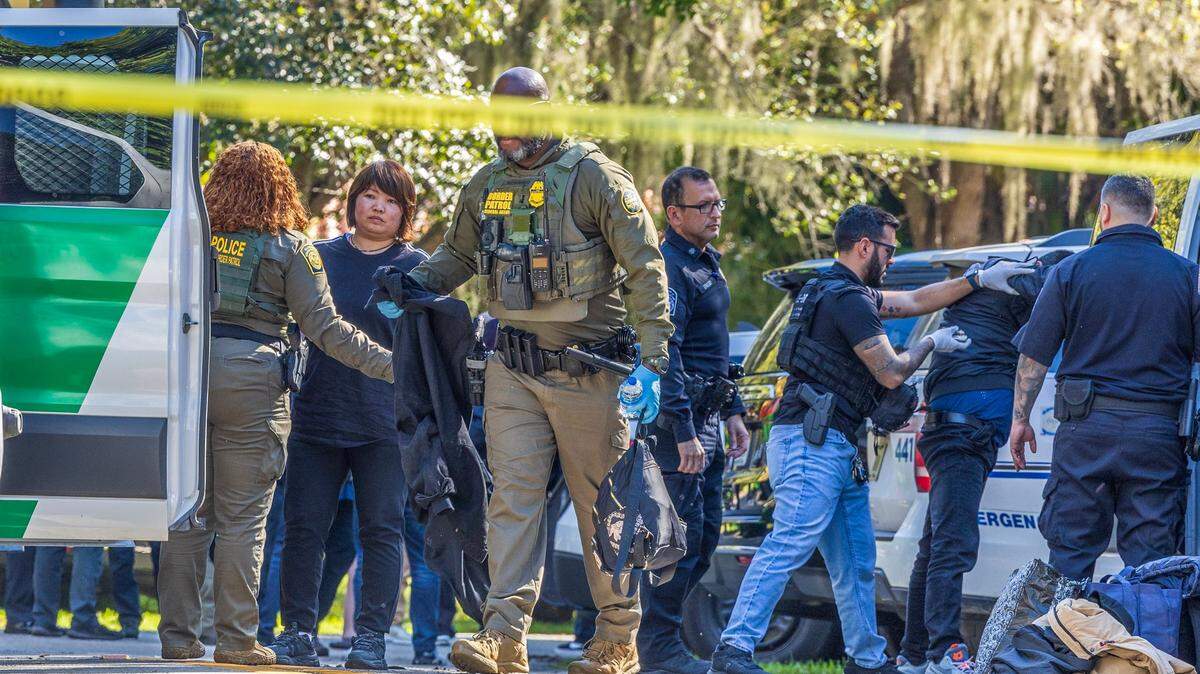
Under political pressure from Gov. Ron DeSantis, the Fort Myers City Council reversed course on Friday and voted to allow local police to act as federal immigration agents — a development that could push other hesitant cities to bring their local police into the fold of Florida’s immigration crackdown.
After a vote Monday when the council rejected the initial federal immigration proposal, the Republican governor raised the possibility of removing local elected officials from office and forcing them into compliance “one way or another.” Florida’s attorney general, James Uthmeier, also told City Council members they were violating Florida’s ban on so-called sanctuary cities.
By Friday, the three City Council members who had voted against the proposal flipped their vote. One of them, Darla Bonk, thanked the attorney general’s office for stepping in and helping them “navigate a complex and sensitive situation” and blamed the city attorney for not advising them correctly.
“You are paid handsomely to protect this council, and you failed us,” Bonk told the city attorney, Grant Alley.
The City Council’s move to rethink its decision underscores how local governments are trying to determine what local actions to take on federal immigration enforcement as they face new pressures from DeSantis as he positions the state to become the most aggressive in combatting illegal immigration in the interior of the country.
“We’ve been doing a lot in Florida, but you’re going to see a lot more,” DeSantis told Trump’s border czar Tom Homan Thursday during a panel discussion at the New College of Florida. “There is no question.”
In Fort Myers — a community with pockets of Democratic voters in an otherwise Republican region — dozens of residents spoke against letting its police department enter into a formal partnership with U.S. Immigration and Customs Enforcement.
An ICE partnership would erode community trust, lead to racial discrimination and unlawful detentions and keep victims and witnesses from reporting crimes, residents told city officials on Friday. They made historical parallels to moments in history that led to discriminatory laws — and raised concerns about state officials’ influence over local decisions and local elections.
One resident, Kathy James, said she was worried that the governor would suspend an elected official she voted for.
“Are you telling me that my vote is going to mean nothing?” James said, while also noting that she was concerned that local police officers would “wear two uniforms.”
“They are either ICE agents or they’re Fort Myers police,” James said.
In South Florida, other municipalities are also mulling how to act on immigration enforcement in the Trump era. South Miami city officials earlier this week said they plan to ask a judge to determine whether its police department is required to enroll in a federal program that gives local police the ability to stop, question — and even arrest — people who are in the country illegally.
The ICE program — known as the 287(g) task force model — is the same one that Fort Myers wrangled with. Across the state, more than 100 law enforcement agencies are participating in the program, including the police departments in Coral Gables, Key West, Tampa and St. Petersburg.
South Miami Mayor Javier Fernandez said the city wants to involve the court to better understand what the law requires them to do. The city is expected to formally request the courts to get involved next week.
“The only safe harbor left for us is to go to court and ask a court to render an opinion on what the law is and what our obligations are. Not the merits of the policy,” he said at a Tuesday night meeting.
Florida law does not explicitly mandate law enforcement agencies that don’t operate county jails to join the ICE partnerships. However, Desantis and the state’s attorney general argue that municipal and city police departments must join because they are otherwise violating a Florida law that bans so-called sanctuary cities.
Under the sanctuary city ban, local governments must use “best efforts to support the enforcement of federal immigration law.”
At the time the law was debated in Tallahassee in 2019, the 287(g) task force model was not active. The model, which is done in the community, was suspended by the Obama administration in 2012 after concerns of racial profiling and a lack of oversight.
During Friday’s meeting in Fort Myers, a Republican state representative from the area told City Council members that they had no choice but to sign on to the task force model. It’s the law, said state Rep. Jenna Persons-Mulicka,
“The people of Florida have spoken through their elected representatives in the Legislature and through the governor, who was overwhelmingly reelected and the people of Florida have said that we are a law and order state and we have preempted local governments,” Persons-Mulicka added.
The Herald/Times asked the governor’s office on Friday whether it intended to remove local officials from office if they declined to enroll in the 287(g) task force model. In response, the office pointed to a recent statement the governor made that told city officials: “govern yourselves accordingly.”