
Forced by Florida, Miami-Dade County jails are now a formal partner with Trump’s ICE
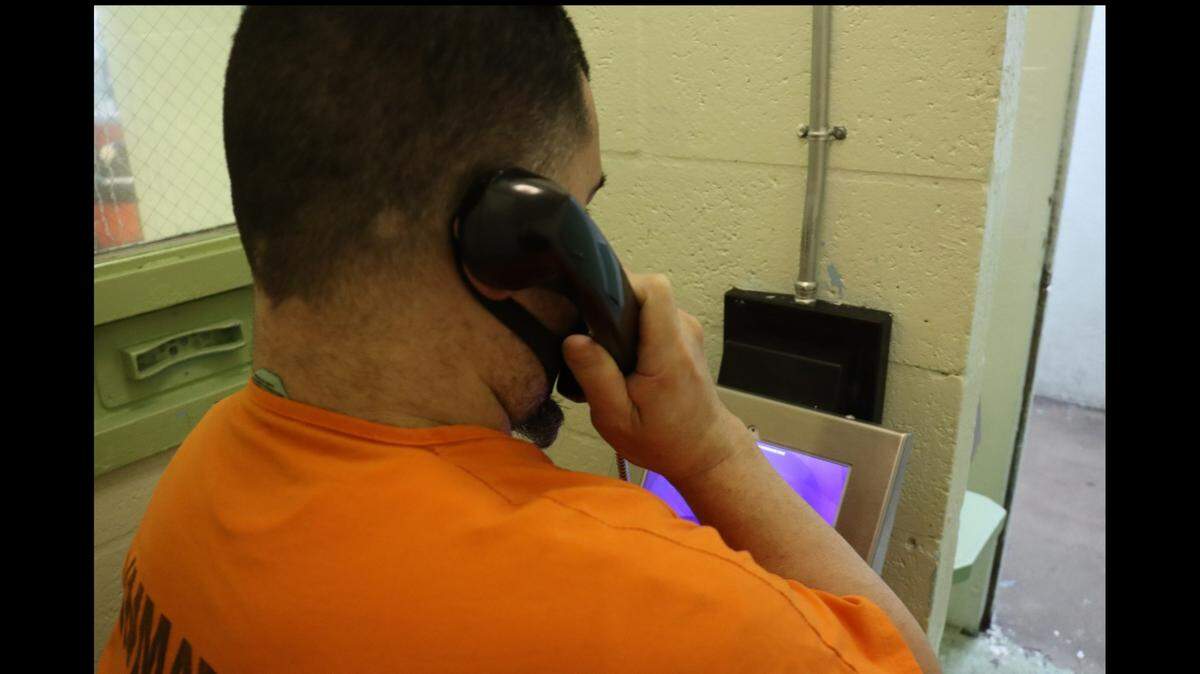
Miami-Dade County jails could soon be handing out deportation orders to inmates under an agreement required under Florida law that won formal approval this week.
County commissioners approved a 287(g) agreement with U.S. Immigration and Customs Enforcement (ICE) that allows Miami-Dade to assign some Corrections Department officers to serve federal warrants for deportation on inmates booked into local jails.
It’s not clear if that will make deportation more likely for people brought to Miami-Dade’s jail system, which has been turning over inmates to ICE since President Donald Trump first took office in 2017. But the new agreement authorizes county officers to serve the deportation orders that they previously had to wait for ICE agents to deliver in person.
Florida’s Republican-controlled Legislature mandated that local jails establish 287(g) agreements in 2022, and Miami-Dade applied for the ICE partnership that year when Joe Biden was president, according to paperwork released by the Corrections Department.
“The law was passed,” Levine Cava told commissioners at a meeting Tuesday. “We’re following the law. Prior to that, we were following the law as well.”
There was no explanation this week for the nearly three-year delay in approving a formal agreement, though a source familiar with the situation said the holdup came from Washington. Levine Cava, a Democrat in a nonpartisan office, signed the 287(g) agreement last month.
County commissioners passed the agreement with one no vote.
Commissioner Marleine Bastien, a Democrat born in Haiti and the commission’s top critic of Trump’s immigration actions, complained the mayor’s administration couldn’t say how much the new partnership would cost Miami-Dade taxpayers. She also criticized the idea of Miami-Dade holding inmates for immigration agents when they’d otherwise be free to go.
“It requires the county to detain people longer, who have served their time,” she said. “Immigrants can be detained because they couldn’t pay their traffic tickets. They can be detained because they didn’t pay child support. But because they are an immigrant, we’re going to sign the [agreement] to keep them in jail.”
County jails have been cooperating with federal immigration agents since 2017 by turning over inmates to ICE when the inmate is subject to a deportation order.
The county’s decision to hold inmates for ICE was made by former Miami-Dade Mayor Carlos Gimenez at the start of Trump’s first term, when the president threatened funding cuts against so-called “sanctuary” jurisdictions. That’s the designation Miami-Dade had earned under the Obama administration for not acting on federal immigration “detainer” requests to hold inmates sought by ICE.
Weeks later, Miami-Dade commissioners endorsed Gimenez’s change, with Levine Cava, then a commissioner, voting against it. But when Levine Cava took office as mayor in 2020, she left in place the Gimenez policy on honoring detainers.
Commissioner Roberto Gonzalez, a Republican and sponsor of the legislation approving the 287(g) agreement, described the vote as formalizing ICE assistance that largely already exists at Miami-Dade jails.
“What we’re talking about here is not controversial. What we’re talking about here is upholding the law,” said Gonzalez, who was born in Guatemala. “Since 2017, we’ve been doing this.”
This story was originally published March 5, 2025 at 12:56 PM.