
El Salvador offers to take U.S. deportees of any nationality – and Americans serving time
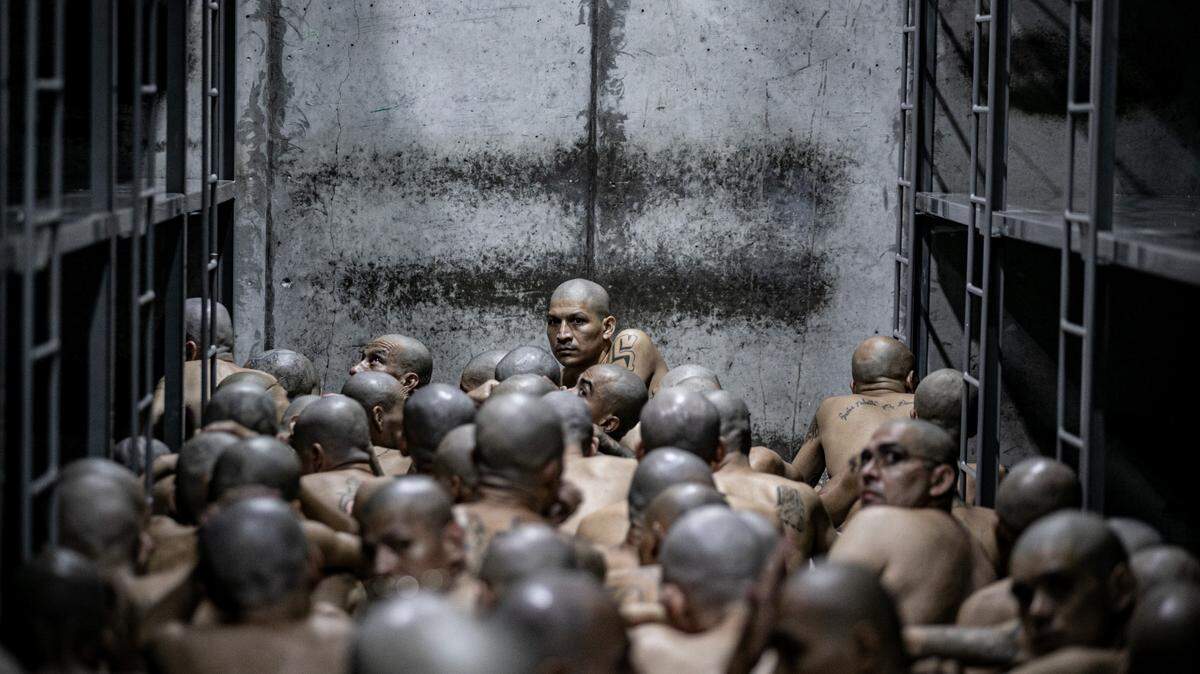
El Salvador has agreed to house in its prisons undocumented immigrants of any nationality with criminal backgrounds who are deported from the United States— a development that comes as the Trump administration seeks to ramp up its mass deportation efforts.
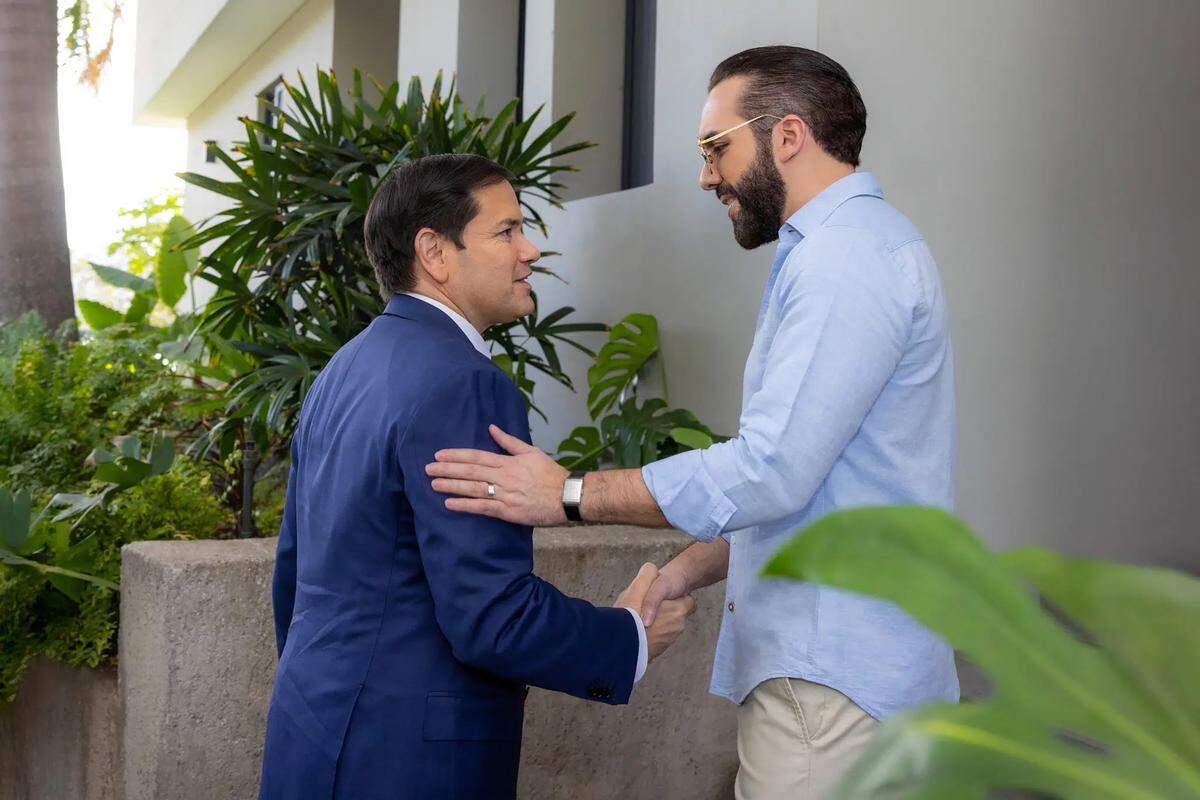
“No country has ever made an offer of friendship such as this,” Secretary of State Marco Rubio announced late Monday during a trip to the Central American country.
The announcement comes while Rubio has embarked on a trip to five countries in Latin America and the Caribbean, a tour meant to highlight the region’s priority in President Donald Trump’s America First foreign policy. Rubio also said that President Nayib Bukele has also offered to lodge “dangerous” American citizens and green-card holders who are currently serving time in the United States in El Salvador’s prisons. Rubio told reporters that more details would be forthcoming.
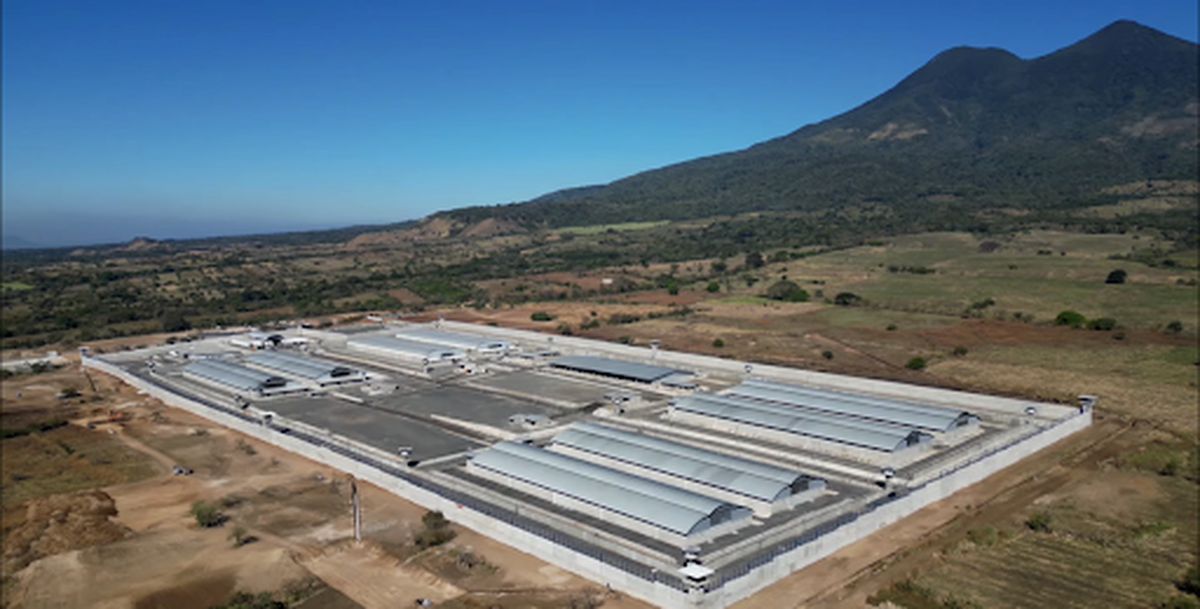
On Monday, Bukele separately announced on the social media platform X that his government has offered the Trump administration “the opportunity to outsource part of its prison system” by putting convicted criminals from the U.S. in the country’s mega prison system.
“The fee would be relatively low for the U.S. but significant for us, making our entire prison system sustainable,” wrote Bukele.
The U.S. State Department confirmed the offer from El Salvador, calling it “an extraordinary gesture never before extended by any country.” The agency said Bukele has agreed to accept all Salvadoran MS-13 gang members who are in the United States unlawfully.
“He also promised to accept and incarcerate violent illegal immigrants, including members of the Venezuelan Tren de Aragua gang, but also criminal illegal migrants from any country,” the statement adds.
Questions over legality
In 2023, Bukele opened a maximum security prison known as CECOT. The initials stand for Centro de Confinamiento del Terrorismo, or Terrorism Confinement Center. The prison, which the Salvadorean government says can hold as many as 40,000 inmates, is part of the country’s crackdown on organized crime. Bukele’s government points to plunging homicide rates as evidence of its successful approach.
But civil rights groups say that conditions in the CECOT mega prison, the largest in Latin America, are inhumane and violate human rights. Journalists have also found evidence of many innocent people getting jailed among the tens of thousands of arrests El Salvador’s government has carried out in recent years.
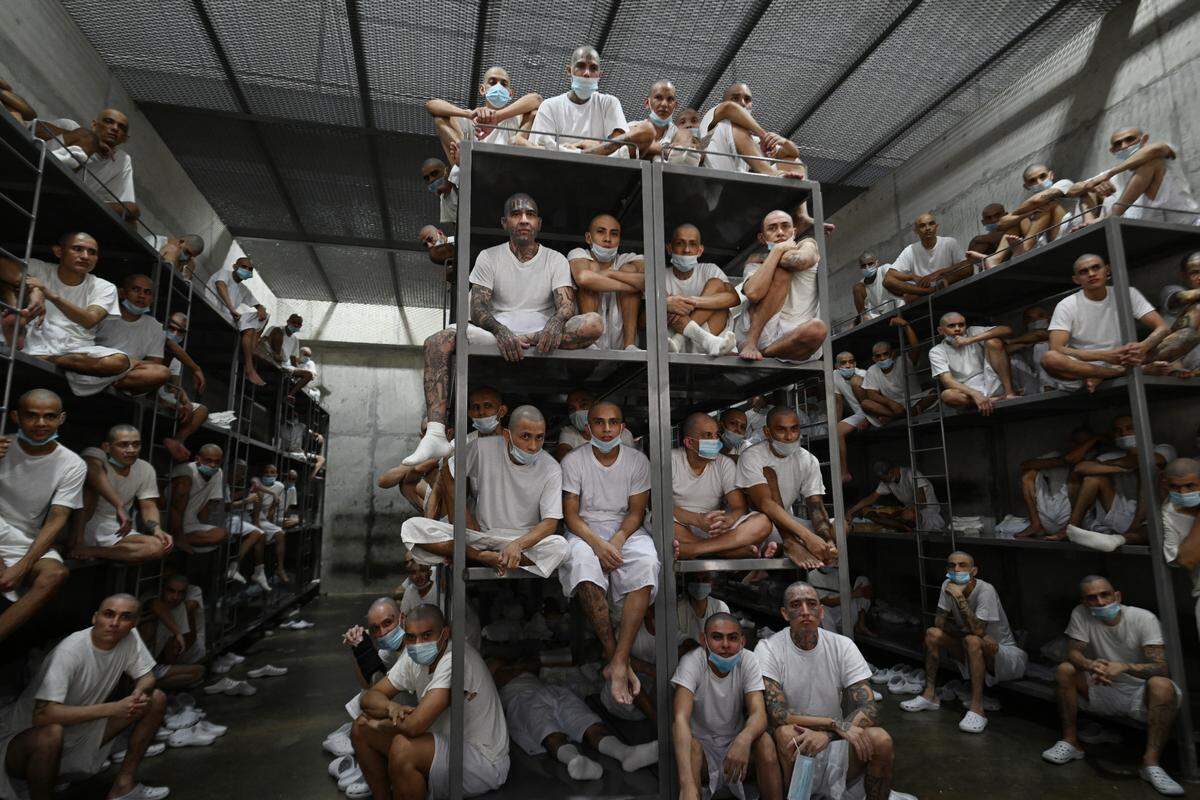
Lee Gelernt, a lawyer with the American Civil Liberties Union who argued high-profile cases in court against the first Trump administration, told the Miami Herald that to deport undocumented immigrants to El Salvador, there needs to be a guarantee that they will be safe there.
“It is difficult to believe Salvadoran prisons can ever satisfy that,” he said. As to deporting a U.S. citizen to serve time in a foreign prison, he said, “that is a non-starter. It is unlawful, point blank.”
On Tuesday during a press conference in Costa Rica, Rubio described Bukele’s proposal as “incredible” but said that the federal government would have to evaluate it.
“Obviously there are legalities involved. We have a Constitution. But it’s a very generous offer,” Rubio said.
Deportation agreements
Trump made mass deportations a cornerstone of his presidential campaign. But delivering on the promise requires staffing and money that the under-resourced federal deportation infrastructure does not have, both advocates and officials have pointed out. It also requires cooperation from countries that are large sources of migration to the U.S., such as Cuba, Nicaragua, Haiti and Venezuela.
Over the weekend, Trump announced on social media platforms that Nicolas Maduro’s government had agreed to take deportees from Venezuela and pay for their transportation back. There have been no deportation flights to Venezuela since a year ago, after they were paused following an escalation in diplomatic tensions with the U.S.
READ MORE: Venezuela agrees to take back undocumented immigrants from the U.S., Trump says
The Department of Homeland Security has previously acknowledged in court documents that its ability to send people back to Nicaragua, Haiti, Cuba, and Venezuela were “generally limited.” In the case of Haiti, the security situation on the ground has previously interrupted deportations.
Under the Biden administration, Mexico had previously agreed that it would take up to 30,000 Nicaraguans, Haitians, Venezuelans, and Cubans a month as long as the United States offered them legal pathways to reduce undocumented migration, according to the court records. The Trump administration terminated that program, which allowed nationals from the four countries to live and work temporarily in the United States for two years as long as they passed background and health checks. That development raises questions about the future of the monthly third-country deportations between the U.S. and Mexico.
El Salvador’s offer to accept migrants from third countries appears to be another way for the U.S. could circumvent possible hurdles to send people back to countries that don’t consistently accept deportees.
In 2023, El Salvador started charging hefty transit fees to passengers from African countries who flew into its international airport. Experts largely understood the measure as an attempt to stem irregular migration, since migrants use Central America as a springboard to the U.S.-Mexico border.
READ MORE: El Salvador imposed a new $1000 fee for passengers with an African passport. Here’s why
This week’s deportation talks come as the U.S. and El Salvador also came to an agreement to foster “peaceful nuclear cooperation” between the two countries, focused on fostering nuclear energy, economic cooperation and nonproliferation of weapons of mass destruction.
On Wednesday, Rubio was slated to visit the Dominican Republic, historically a close partner of the U.S. in Latin America. The two countries will be discussing immigration issues as well as Haiti, a large source of migrants who are displaced across the Western Hemisphere.
Separately, 60 military officers from El Salvador, all aviation specialists, arrived in Port-au-Prince on Tuesday. They will join the Kenya-led, Multinational Security Support mission against gangs in Haiti. The Canadian government facilitated their transportation. Another ten are scheduled to arrive in the evening.

This story was originally published February 4, 2025 at 10:14 AM.