
DeSantis would lose authority over immigration under new plan by Florida Legislature
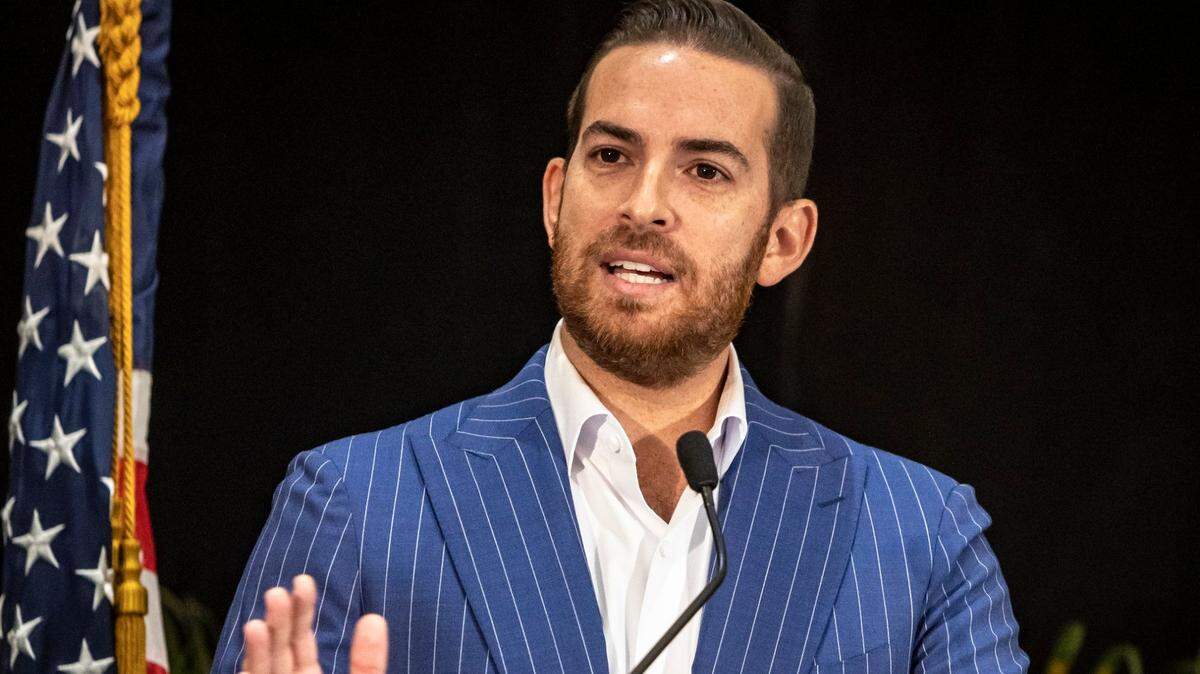
Florida Republican leaders on Monday unveiled a sweeping immigration proposal that seeks to strip Gov. Ron DeSantis of much of his authority to oversee immigration — an opening salvo that sets up a showdown between the Legislature and the once overwhelmingly dominant governor.
If adopted, the legislative changes — pushed by House Speaker Daniel Perez and Senate President Ben Albritton — would render DeSantis virtually powerless over immigration enforcement in Florida. All that authority would go to Agriculture Commissioner Wilton Simpson and his office, which would be armed with more than $500 million to help enforce federal immigration laws in the state.
The 75-page legislative proposal outlines a broad plan to make it easier for local law enforcement officers to get the training they need to support federal immigration agents and make it financially viable for local and state law enforcement agencies to share detention beds with U.S. Immigration and Customs Enforcement.
It would also eliminate a state law that offers undocumented students in-state tuition at Florida’s public universities and colleges — something that has been in place since 2014 and that DeSantis has pushed to repeal in the past.
Perez and Albritton said the legislative proposal — nicknamed the TRUMP Act — would support President Donald Trump’s immigration agenda and rebuke some of the governor’s policy ideas, which they described as too intrusive in part because they would “hijack” local law enforcement operations.
“At one point, he even proposed arresting local law enforcement officers themselves,” Perez told Florida House members on Monday, referring to a privately shared proposal by the governor to criminally charge law enforcement officers that did not comply with state and federal immigration directives.
READ MORE: Goaded to act by DeSantis, Florida lawmakers rebuke governor, unveil own immigration plan
The ongoing legislative fight is by far the most significant act of resistance that DeSantis has faced from Republican lawmakers since he came into office in 2018. But the fact that the fight is over immigration — arguably the governor’s top priority — makes it all the more remarkable.
On Monday, DeSantis came out swinging against it and hinted that he is prepared to veto the proposal. In a post on X, he said it would be unconstitutional to strip him of his authority to enforce immigration laws and that he did not support giving immigration enforcement powers to Simpson’s office, which he said represents industries that “often oppose enforcement measures.”
“In short, it puts the fox in charge of the hen house,” DeSantis said.
Simpson — who is widely believed to be eyeing a run for Florida governor in 2026 — has joined legislative leaders and said he would be “honored” to be the state’s chief immigration officer.
A battle over Trump’s immigration agenda
The legislative fight comes as the Trump administration calls on all 50 states to assist the federal government on immigration enforcement — an issue that the power struggle in Tallahassee may delay.
DeSantis has asked state lawmakers to expand the power of state and local law enforcement to detain, transport and deport undocumented immigrants living in Florida, crack down on remittances and to give him the authority to remove elected officials from office if they did not comply with state and federal immigration directives.
The governor also wanted to require all Florida law enforcement agencies to enroll in all aspects of a federal immigration program — known as 287g — that allows officers to perform some of the functions of federal immigration agents.
The Legislature is not going as far as imposing the requirement. But legislative leaders want to set aside $375 million to support local law enforcement agencies who want to enroll in the program. The money would also be used to support “federal access to training facilities” in Camp Blanding Joint Training Center, which Perez said should be transformed into a “national destination for training law enforcement officers to collaborate with federal immigration officials.”
In a committee hearing on Monday afternoon, Pinellas County Sheriff Bob Gualtieri said that legislative leaders’ proposal was “good policy for the state of Florida.”
Gualtieri, who serves as the legislative committee chair for the Florida Sheriffs Association, said the best way to help federal immigration agents detain and deport criminals who are in the country illegally is by adding detention beds in county jails.
“I really think that the most pragmatic, best thing, and the greatest support, and what I hear again from people at ICE in Washington, is ‘Help us in the jails,’” Gualtieri said. “They’d rather pick up people from the jails than from the street.”
DeSantis said the legislative proposal only aims to “create the illusion of an illegal immigration crackdown, when it does anything but.”
“It is an insult to name such a weak bill after President Trump, who has been so strong on this issue,” the governor said.
RELATED CONTENT: Florida condo costs officially dropped from special session amid Republican showdown
Stripping DeSantis from his authority
The most significant portion of the legislation deals with what the governor would no longer be able to do.
Legislative leaders want to remove the governor’s ability to declare state of emergencies over immigration — a power that he has used over the years to send state resources to the southern border in Texas and to set up a base in the Florida Keys in an effort to stop Cubans and Haitian migrants desperate enough to cross the Straits of Florida.
They also want to give Simpson oversight over a state program that DeSantis used in 2022 to transport migrants from Texas to Martha’s Vineyard. The program drew national attention and headlines as DeSantis prepared to launch his presidential campaign — and with Trump back in office, DeSantis had sought to expand the program to allow the state to detain, transport and deport undocumented immigrants.
Some Republican lawmakers have already expressed hesitance about removing the governor’s executive authority over immigration enforcement.
“I won’t be in support of that. I think it is wrong,” state Rep. Mike Caruso, R-Delray Beach, told reporters. “The governor is the executive of the state and he has executive power and when it comes to national issues such as immigration, I think he should certainly be in charge of that.”
DeSantis and his allies have also said legislative leaders’ proposal is weaker than what the governor had initially proposed. They said it does not include restrictions on money that migrants send to their families abroad, called remittances.
The governor wanted to require businesses to verify that a person trying to send money abroad is living in the country legally and create penalties for businesses that fail to do so. The state would conduct audits on businesses to ensure compliance with those requirements, something that Albritton was opposed to.
“I don’t support creating new mandates on businesses, and I certainly don’t support a big brother database of law-abiding Floridians who want to send money abroad,” Albritton said.
Tampa Bay Times reporter Lawrence Mower contributed to this report.
This story was originally published January 27, 2025 at 4:38 PM.