
Mexico is hosting several countries to discuss regional migration. The U.S. is not among them
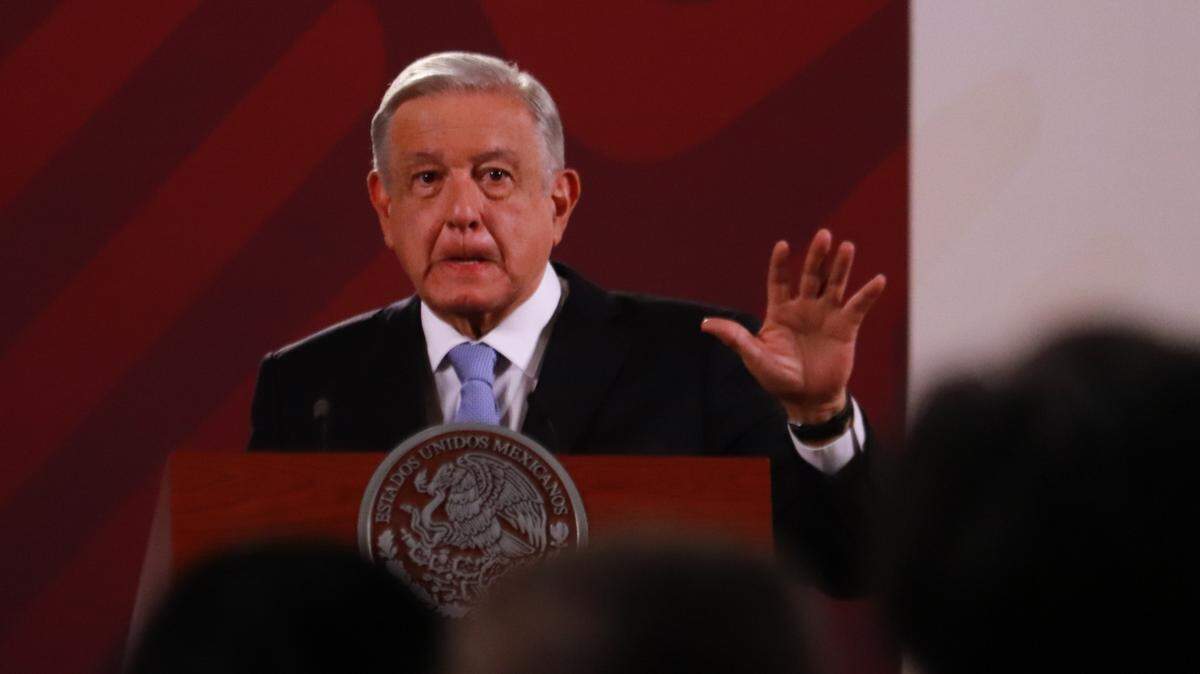
Mexican President Andrés Manuel López Obrador — whose country is a pass-through for the record-number of people trying to reach the United States — has invited Latin American and Caribbean leaders to meet this weekend to tackle the tide of migrants overwhelming governments across the hemisphere.
Sunday’s meeting will take place in Palenque, a city in the southern state of Chiapas, a gateway for migrants coming into Mexico that borders Guatemala. It comes nearly a year and a half after the Biden administration hosted the Ninth Summit of the Americas, in which Mexico, the United States and other countries signed the Los Angeles Declaration on Migration and Protection.
But despite regional agreements and new U.S. policies that rely on Biden’s executive powers, migrants have kept coming to the U.S.-Mexico border. The United States is on track to break records last fiscal year for the number of migrant encounters at the border, which exceeded 2.4 million between October 2022 and August 2023.
The leaders attending Sunday’s summit represent the Latin American and Caribbean countries fueling the record flow of migrants fleeing violence, post COVID double-digit inflation and autocratic regimes. But several are also nations overwhelmed by the number of people moving through their borders, often with the help of human traffickers. The United States is not among the 11 countries invited.
Stephanie Brewer, the Mexico Director for WOLA, a Washington D.C.-based research and advocacy organization that promotes human rights in the Americas, said that Mexico is positioning itself as a key leader on regional migration issues by hosting the summit.
“It reflects the Mexican government’s desire to project an image of being aligned with Latin American countries, to show a network of solidarity among Latin American and Caribbean countries, rather than just responding to the interests of the United States,” she said.
So far, leaders Miguel Díaz-Canel of Cuba and Nicolás Maduro of Venezuela, President Xiomara Castro of Honduras, President Guillermo Lasso of Ecuador, President Gustavo Petro of Colombia, President Alejandro Giamattei of Guatemala and Prime Minister Ariel Henry of Haiti have confirmed that they will be in attendance, López Obrador said during a recent morning conference. He said he was still waiting to confirm whether the leaders of El Salvador, Costa Rica, Panama and Belize can make it or if they would send a representative instead.
“Mexico is well equipped and well positioned to be a leader in the region on migration management. They have relations and diplomatic ties with Cuba and Venezuela, and they do talk to Nicaragua,” said Ariel Ruiz Soto, a senior analyst at the Washington-based Migration Policy Institute.
Ruiz Soto noted that López Obrador is also hoping to address the influx and needs of migrants in his own country, which has overwhelmed local governments and communities on both of Mexico’s borders and swamped their asylum system.
“The summit is a direct response to Mexican concerns about better management of migrants that end up in Mexico,” he said.
The International Organization for Migration, a United Nations agency, reported last month that the Western Hemisphere is seeing an unprecedented surge in migration. More than 408,000 people had crossed the perilous Darién Gap between Panama and Colombia as of September, according to Panama’s National Migration Service. Over half of the migrants came from Venezuela, followed by Haiti and Ecuador.
Tens of thousands of others are bypassing the treacherous Darién, jungle altogether and looking for ways to directly reach Central American countries like Nicaragua. Honduras recorded 19,412 arrivals from African countries at its southern border, while it registered 17,157 Cubans who arrived by land. Many migrants are themselves from Central America, illustrating how countries are often simultaneously transit points and sources of migration.
“The challenges of migration are too vast for any nation in the Americas to tackle alone,” said Marcelo Pisani, the International Organization for Migration’s regional director for South America, adding that the agency seeks “a comprehensive, collaborative regional strategy.”
A contradictory relationship
Both Mexico and the United States want to reduce the flow of migrants from across the region showing up at their borders. Mexico, at the request or behest of the U.S., has in recent years deployed its own national guard to its borders, tightened visa restrictions for Venezuelans, and accepted large numbers of U.S. deportations of non-Mexicans for the first time.
In turn, the U.S. Department of Homeland Security has acknowledged its reliance on Mexico to craft immigration policies. It recently said in court documents that Biden-era parole processes that allow Cubans, Nicaraguans, Venezuelans and Haitians to come to the United States for a two-year period “are dependent on Mexico’s willingness to accept the return” of people from the four countries.
“The U.S. and Mexico are more on the same page than in opposition about what to do,” said Ruiz Soto.
But despite the high levels of collaboration and engagement on border security issues, López Obrador has at times taken up a confrontational stance towards the United States and blasted its immigration enforcement policies.
He said during a press conference Wednesday that militarizing the border and building walls did not solve anything, and that governments should instead focus on fixing the reasons people leave their home countries, a key tenet of his migration policy. Last month, he criticized the U.S. for sending more than $40 billion in military aid to Ukraine while not spending enough on preventing mass displacement across the Western Hemisphere.
The summit “is also a call for nations that have economic possibilities to help and cooperate. Why is so much spent on weapons? Why is so much spent on war, on irrational things, on destruction and not supporting people who need the basics, who need job opportunities, who need well-being? That is what we are proposing and that is what Sunday’s meeting is for,” Lopez Obrador said.
But Mexico’s president largely focuses on development programs and work opportunities, Brewer said, versus focusing on human rights violations and authoritarian governments whose repression has led to people fleeing the countries — another big cause of mass displacement in the region. The country has also agreed to many requests from the U.S. government and been complicit in violating the legal and human rights of asylum seekers and migrants, she added.
“Lopez Obrador seeks to publicly appear to be pushing back and has a different proposal. Yet that is quite contradictory to how he has repeatedly responded to U.S. policy requests,” she said.
Biden signed an agreement at the beginning of his administration to address the root causes of migration in Central America with Vice President Kamala Harris at the helm. He committed $4 billion to the cause. But so far, Congress has not fully funded the plan, according to the Congressional Research Service. Harris has said she’s garnered over $4.2 billion commitments from the private sector for economic development in the region.
The administration is also planning on hosting another Americas summit early next month, focused on regional economic development as well immigration. Mexico is invited.
Charting new ways to work with each other
Experts told the Miami Herald that discussions on Sunday’s summit could focus on strengthening communication among the different countries to handle migration issues, addressing the root causes for migration, tending to the needs of migrants moving across the hemisphere, helping countries that are transit points better manage the flow, and exploring the possibilities of new legal pathways for migrants. But long-term solutions remain elusive.
“If there are incredibly concrete commitments that come out of Sunday’s meeting, I’ll be surprised,” said Brewer.
Ruiz Soto told the Herald that in the best case scenario, countries at the summit will “take responsibility for the conditions that drive migrants from leaving their countries of origin.” But he said research shows that fixing the root causes of migration takes decades to reduce irregular migration, and that evidence is unclear that assistance programs like the one Lopez Obrador supports work.
“I don’t suspect irregular immigration is going to stop in the next few months,” Soto said. “This is about charting a new way to try to work with each other.”
This story was originally published October 21, 2023 at 5:30 AM.