
More migrant boats are crossing the Mona Passage. U.S. air patrols are looking for them
The small U.S. Customs and Border Protection plane took off on a recent morning from the northwestern Puerto Rican town of Aguadilla, the rows of homes against coastal forests and sandy beaches becoming smaller and smaller.
The aircraft flew 11,500 feet over the 80 miles of deep, unpredictable waters of the strait that separates Puerto Rico and Hispaniola, the island shared between Haiti and the Dominican Republic. The regular patrol by CBP’s Air and Marine Operations Caribbean branch roams the Mona Passage, day and night, to detect drug and weapons trafficking, and human smuggling.
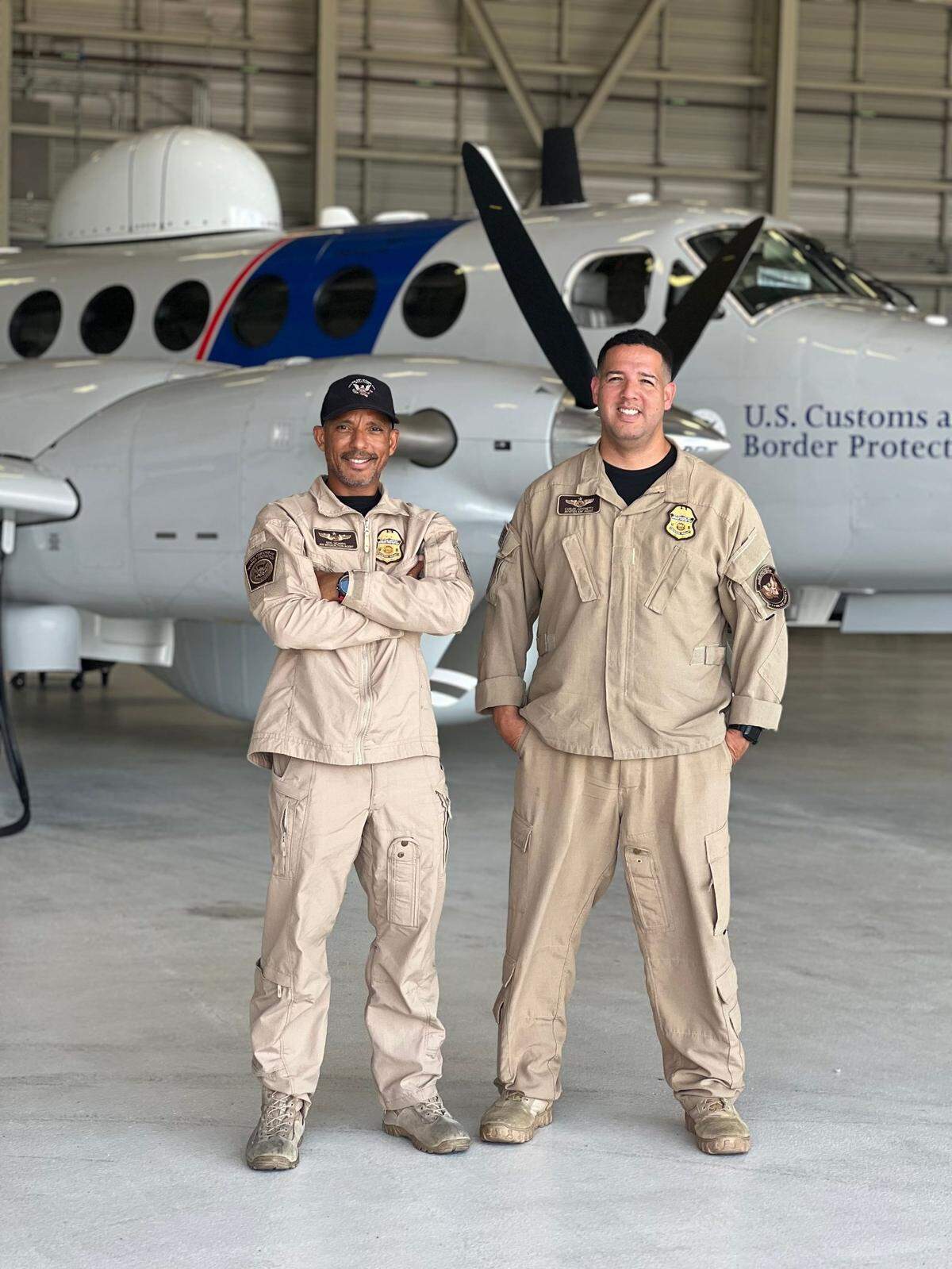
“The number of boats and immigrants in recent months has already been significant,” Carlos Antonetti, an Air and Marine Operations agent, said over headsets that canceled out the plane’s rumble. “Almost every day there is an interception, there is a boat that is seen.”
Over the last year, U.S. Customs and Border Protection in Puerto Rico, along with the U.S. Coast Guard, has detected and intercepted an increasing number of migrant voyages, mostly made up of Dominicans and Haitians, looking to land on Puerto Rico’s shores. And the Mona Passage, a historic migrant route with a deadly reputation for swallowing yolas, or small migrant boats, is at the heart of the activity.
Air and Marine Operations Pilot Otis Sicardo and co-pilot Kenneth Morales, along with Antonetti, took off on a routine patrol Thursday over waters north and south of Puerto Rico and along the Mona Passage.
At about 11 a.m., Desecheo, a tiny national wildlife refuge off Puerto Rico’s western coasts, came into view. A month ago, 11 Haitian women died when their boat capsized in the waters near the uninhabited island. While 38 others from that boat were rescued, several passengers remain missing according to survivor testimonies.
“It is unfortunate that we could not save more. They tell us we cut dreams short, but many times we save people’s lives too,” said Sicardo.
Since the U.S. fiscal year began in October, U.S. Customs and Border Protection in Puerto Rico and the U.S. Virgin Islands has intercepted 1,376 people — an increase of 105% compared to the previous fiscal year. The majority are Haitian migrants, 843, part of the largest migration by boat from Haiti since 2004, according to the U.S. Coast Guard. The next are Dominican migrants, 353. The agency is also seeing an increase in Venezuelans, who instead of Puerto Rico, are making their way to the U.S. Virgin Islands.
The U.S. Coast Guard has repatriated over 5,300 Haitians trying to get to Puerto Rico and the Florida Keys in recent months. In waters near Puerto Rico, the agency has mostly interdicted Dominicans, followed by Haitians.
Antonetti, who is stationed behind the cockpit, watches the constant stream of objects that show up on the plane’s radar and camera to spot suspicious vessels in the waters below. He describes his work as both “rewarding” and “mentally taxing.”
Cargo craft, tankers, tug boats, sailboats, catamarans and U.S. Coast Guard vessels register on Antonetti’s screens. Other objects also show up. Large brown seaweed floating on the ocean called sargassum looks like long strips. Debris and whitecaps can be confused with boats. He once saw a spot that kept bobbing in and out of sight and aggressively tracked it before realizing that it was whales.
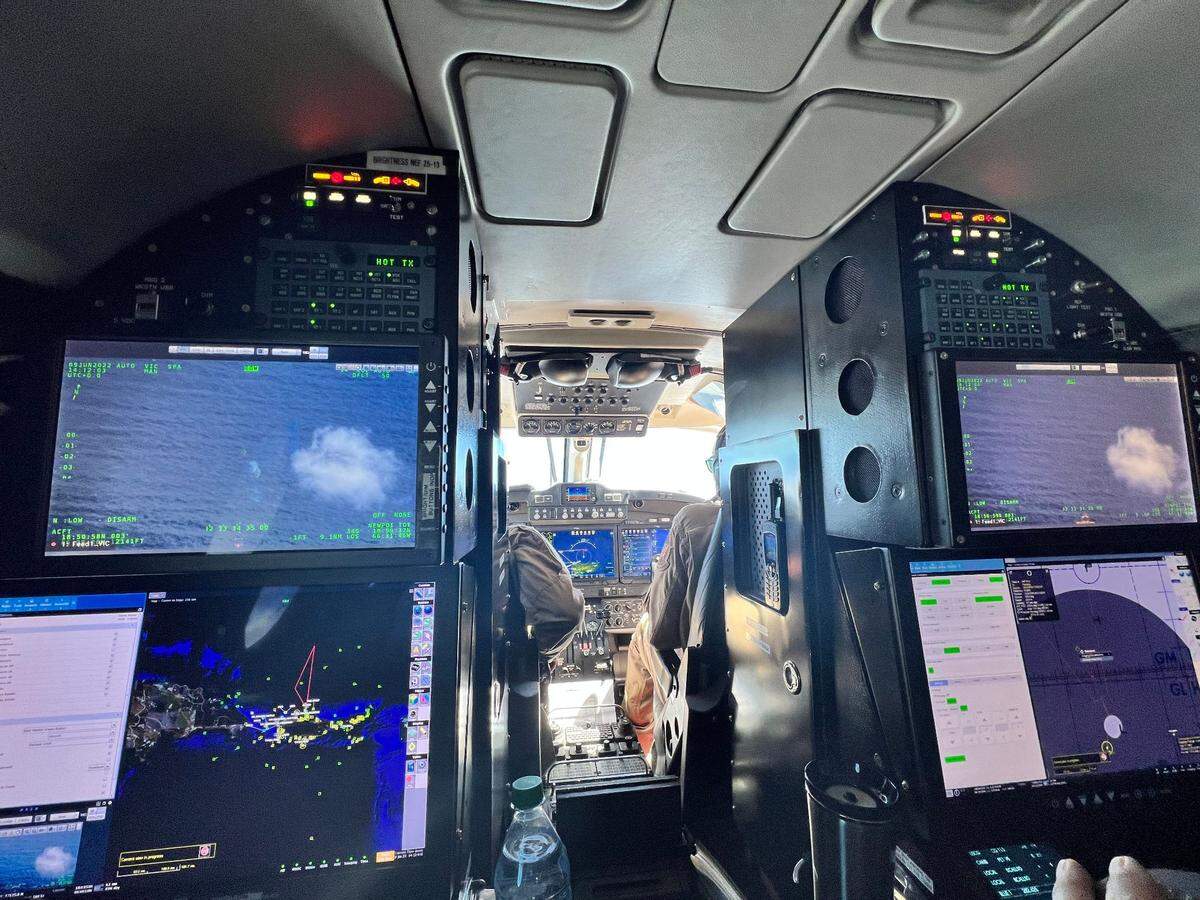
“You have to be on top of the radar all the time to make sure it’s not a boat,’‘ said Antonetti. When plane crews do find suspicious boats, it becomes a logistical flurry of coordinating with the Border Patrol command back in Aguadilla, as well as with the U.S. Coast Guard and other authorities.
Sicardo and Morales monitored the waters from the cockpit windows, giving Antonetti directions of where to zoom in with the camera: “A mile south ... go north of Mona Island ... keep going, going, going.”
“There are like a million boats!” exclaimed Antonetti, who along with the other crew wondered if there was a fishing tournament going on.
Suspected migrant boats are so small that they can be difficult to spot against the vastness of the ocean, but sometimes the crew can see them with their own eyes.
“Most of the time they are bailing out water,” said Sicardo, the pilot.
The plane flew south of Puerto Rico and passed Combate Beach in Cabo Rojo, also the site of migrant landings. Last month, 60 Haitians disembarked at the beach right before the Border Patrol detained them.
Near noon, the cliffside coasts of Mona Island came into view through the cabin windows. Dense swaths of greenery cover its surface. Tiny Islote Monito juts out of the channel. The radar detected a Coast Guard ship near Mona, where a group of 22 Haitians had landed earlier in the day.
Sicardo recalled how Mona Island has historically been a landing spot for migrants. Before President Barack Obama ended the “wet-foot, dry-foot” policy which allowed undocumented Cubans who touched U.S. soil to stay, he recalled that many Cubans would land on Isla de Mona.
Traveling back up the passage, the Dominican coasts of the tourist hub of Punta Cana sparkled from afar. From the window across, Puerto Rico’s western shores were visible.
Toward the end of the patrol, a blue motor boat with what looked like two individuals and three engines sped across the channel’s waters from the west, the direction of the Dominican Republic. Deeming it potentially suspicious, the crew tagged the boat so it would be checked out by the agency once it neared Puerto Rico.
Mona Passage migrant voyages on the rise
U.S. authorities who patrol the area fear the possibility of the overloaded, unsafe voyages turning deadly, such as last month’s boat capsizing where 11 women died. And rescues and interceptions on the open sea can be risky operations for all parties.
“The Mona Channel is very dangerous due to the extreme environmental conditions and the boats, in many cases not equipped to travel in the open sea, that are used for the crossing,” said Edwin Viales, who tracks missing migrants for the International Organization for Migration.
If migrants trying to reach Puerto Rico undetected aren’t detained at sea by American or Dominican authorities, they are dropped off by smugglers on the uninhabited islands in the passage with no food, contact or water, or on the western coasts of the American territory.
“The yolas, nobody is wearing life jackets, they usually don’ t have life jackets on board, it’s got a small engine so that cuts down on noise,” said Scott Garrett, the Ramey Sector’s acting chief patrol agent, “The smaller engine means the less likely of being detected, but it also means they are longer on the water. And the longer they are on the water, the more dangerous it gets.”
Garrett cited the upheaval in Haiti, like the assassination of the country’s former president, Jovenel Moïse, last July and a major earthquake five weeks later, as some of the factors propelling the historic Haitian migration. Haitians have also cited the country’s escalating gang violence and kidnappings, along with deepening poverty.
“Most of them are trying to find a way out,” Garrett said.
Despite not having spotted any suspected undocumented migrant vessels on Thursday’s patrol, the crew said that it’s only a matter of time until they find the next yola bouncing up and down in the Mona currents.
Last week, nearly 50 Haitian migrants landed on uninhabited islands in the Mona Passage. One boat dropped people along the cliffs of Islote Monito. At the U.S. Border Patrol’s Ramey Sector station — the smallest sector within the Border Patrol and the only one outside the continental United States — authorities held the Monito group for processing in air conditioned tents surrounded by wire fences, temporary facilities while CBP remodels.
The group of men and women, separated by gender, slept on cots and walked around the tent. The alleged smugglers from the voyage were in a separate cell. Dressed in blue, the three Dominican men sat around their cell in silence.
The Border Patrol expected the separate group of Haitians who had landed in Mona Island that same day to come into the station for processing, where the agency can provide translators by phone who speak Haitian Creole and paper questionnaires in the language asking basic questions like their name and place of birth and why they had left home in the first place.
“The way the ocean is out there,” said Garrett, “It’s a dangerous journey.”
Correction: This story corrects the U.S. Customs and Border Protection branch that carries out the regular plane patrols to the Air and Marine Operations Caribbean branch.
This story was originally published June 14, 2022 at 4:21 PM.