
At least 11 people dead, 38 rescued after boat carrying Haitian migrants capsizes near Puerto Rico
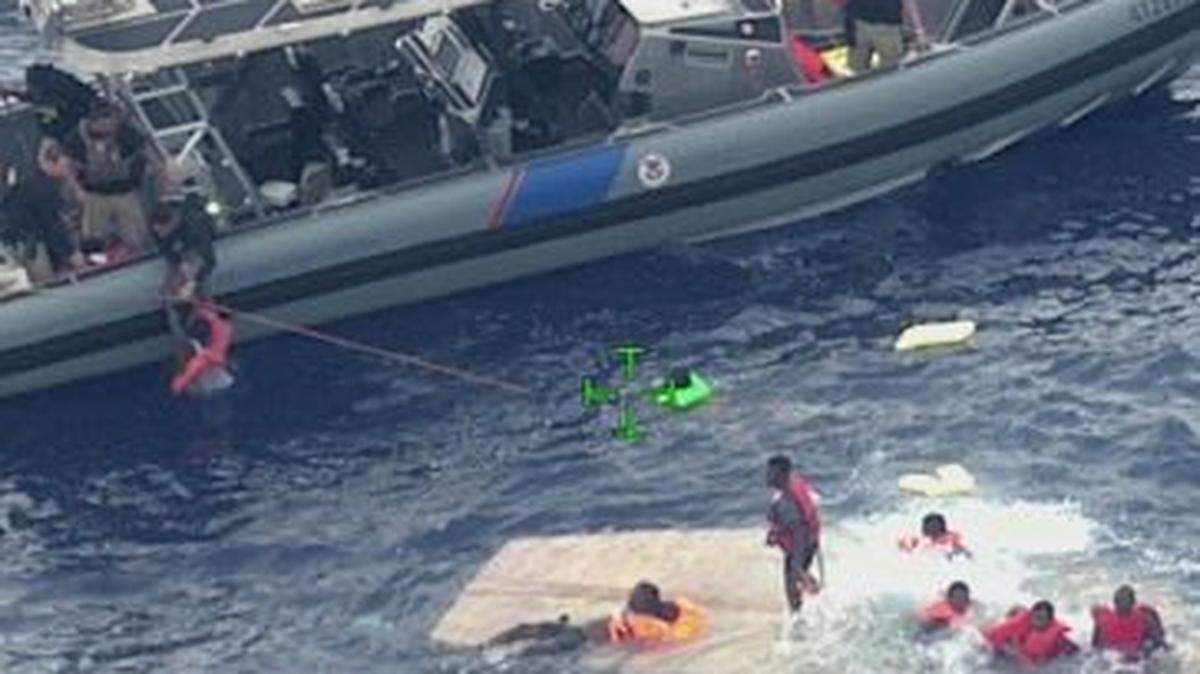
At least 11 people died and 38 were rescued after a boat carrying Haitian migrants overturned Thursday near an uninhabited island off Puerto Rico’s western coast, according to federal authorities.
A U.S. Customs and Border Protection aircraft spotted the capsized vessel and over 20 people in the water near noon about 11 miles from Desecheo Island, a wildlife refuge in the Mona Passage, the treacherous stretch of water between Puerto Rico and the island of Hispaniola. The passengers appeared to not be wearing life jackets.
Customs and the U.S. Coast Guard were collaborating with the marine units of the Puerto Rico Police Department as the search for survivors continued through the night.
“They’re on the scene trying to rescue as many people as they can,” said U.S. Coast Guard spokesman Ricardo Castrodad on Thursday afternoon.
Of the 38 survivors, 36 were Haitian nationals and two were Dominican, Customs said. There were at least five women among the dead.
Eight Haitians were taken to a hospital in the northwestern town of Aguadilla and the bodies of the dead were sent to the Puerto Rico Forensic Sciences Institute.
The Mona Passage is a common route for illegal voyages of vessels often overloaded with migrants from the Dominican Republic or Haiti traveling towards Puerto Rico.
Between Oct. 1 and March 31, the Coast Guard and its partner agencies had intercepted 1,308 undocumented immigrants in the Mona Passage and near Puerto Rico, according to agency data. Most of the people the Coast Guard came across were Dominican, 940, followed by 298 Haitians. The combined number of Dominicans and Haitians the Coast Guard has so far interdicted this year is 158% more than the previous fiscal year. Meanwhile, Customs in Puerto Rico has apprehended 757 Haitians and 292 Dominicans since October.
The capsizing occurred days after a Haitian woman died on an illegal voyage in the Mona Passage Saturday. The Coast Guard and the Dominican navy rescued a group of 68 migrants after they spotted them emptying water out of the vessel. During the rescue, the boat capsized and authorities retrieved the unresponsive woman from the water but were not able to resuscitate her.
Unsafe homemade ships, dangerous ocean conditions and a lack of safety protocols mean that illegal migrant voyages can quickly turn deadly.
“We are always sending the message so that people understand the dangers associated with these trips, but unfortunately in this case we are already in a situation that we have to respond to,” said Castrodad.
The commander of the Miami-based Coast Guard Seventh District told the Miami Herald in a recent interview the agency is “principally concerned with saving lives and preventing the tragic loss of life at sea.”
“When these vessels run into trouble, and people go overboard, my mission is to ensure the Coast Guard is there to assist them, but my real concern is what happens when the Coast Guard doesn’t know about it, or cannot locate them,” said Rear Adm.. Brendan C. McPherson, who is also director of Homeland Security Task Force-Southeast
“Migrant operations on the high seas are challenging and carry risk to our operators just as it does the occupants of the vessels we are trying to rescue and intercept. The weather, the wind, the sea state all incur risk to everyone on the water,” he added. “We want to prevent the tragic loss of life at sea, and often we look at this mission like conducting a major search and rescue case where someone is actively trying not to be found.”
This story was originally published May 12, 2022 at 2:31 PM.