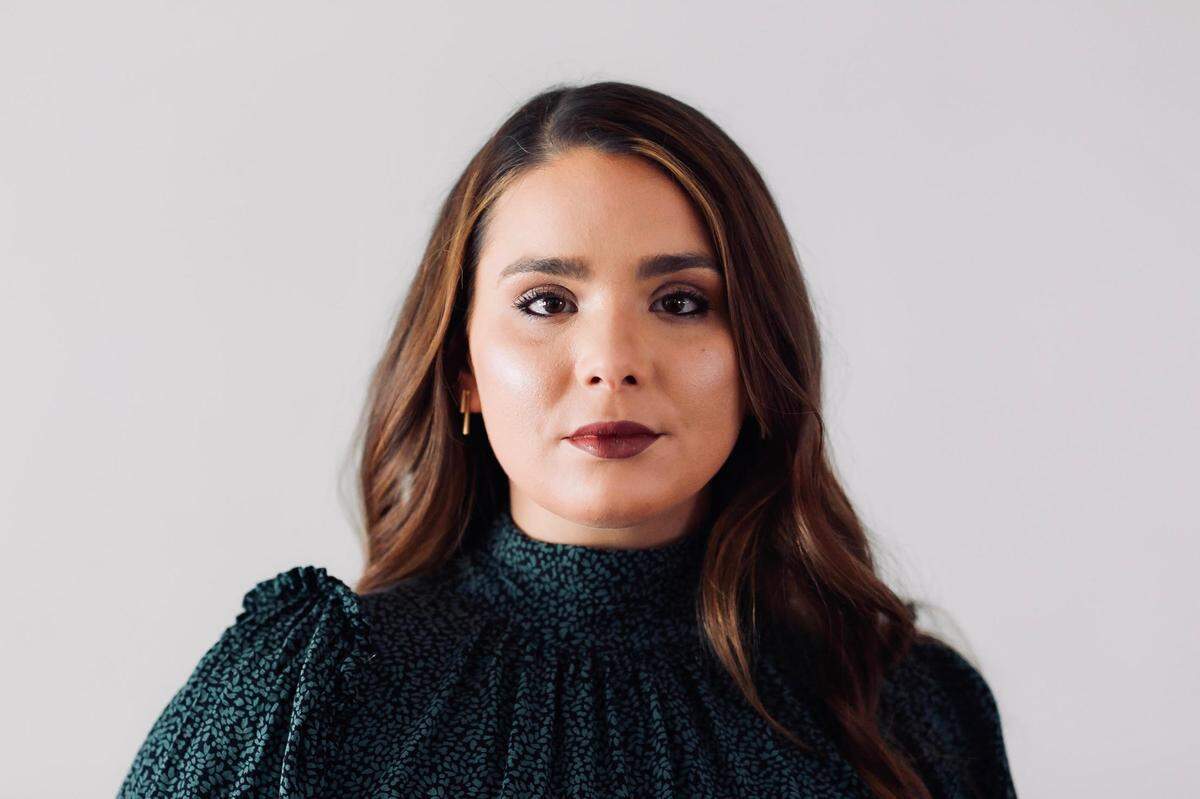
After 11 years in ICE lockup, 72-year-old Cuban has a new life: homeless, haunted but free
Sometimes, mid-flashback, Heriberto Delvalle grips his thin blanket at night.
Sweat pours through. Startled, he lunges out of bed at the thought of waking up in a bright red jumpsuit.
Then he remembers he’s no longer in jail.
The 72-year-old Cuban immigrant sleeps on a hard, barrack-style bunk bed. His days are restricted and regimented. The man snoring next to him once shared his detention cell.
In the dark, he takes deep breaths to remind himself of where he is — and where he is not.
“I’m at a homeless shelter,” Delvalle says in a quiet murmur. Between a toss and a turn, his volume rises: “I’m not at Krome!”
Back in January, Delvalle was released from U.S. Immigration and Customs Enforcement custody after spending almost half his life behind bars. Since then, he’s made one of Miami’s largest homeless shelters, Camillus House, his permanent home.
The detainee’s unexpected release came about three weeks after the Miami Herald published a story chronicling his time inside a place he refers to as “purgatory”– the Krome detention center in West Miami-Dade.
Delvalle — who was convicted of attempted murder in 1994 after shooting the brother of a man he believed to be his wife’s lover — completed a 15-year sentence in a Florida prison, only to be transferred straight into ICE custody, where he remained for more than 11 years. He spent half of that time in solitary confinement.
Because the Cuban government wouldn’t take him back — and still won’t — for more than a decade, the U.S. government cited an exemption that allows ICE to hold “especially dangerous” people they consider a “threat to the public.” In his case, ICE alleged Delvalle suffered from a mental illness — an allegation Delvalle and his lawyers have repeatedly denied.
Delvalle became such a permanent presence at Krome that inmates and guards took to calling him “abuelo.”
“Y el mote lo ha seguido,” said Rolando Guedez in Spanish: “The nickname has followed him.”
Guedez landed at Camillus House after being hospitalized with COVID-19 last year. The remnants of the virus destroyed his lungs and left him in a wheelchair, unable to work.
Now, he and Delvalle have become bunkmates — for a second time.
“At first I thought he was a spy,” said Guedez, 62.
“I mean, that’s the first conclusion you draw when you hear that the guy sleeping in the next bunk over was locked up by ICE for so many years,” continued Guedez, also Cuban-born and undocumented.
In 2017, Guedez was booked into Krome where he spent a few months after being arrested by ICE at a local Walmart. His bed: next to Delvalle’s.
“It’s an eerie, small world. We’re bunkmates here at Camillus’ too,” Guedez said. “It’s like a twisted destiny to find ourselves together again.”
FEELING THE SUN
By this point in his life, Delvalle has spent more time in institutions than as a free man.
A 6:30 a.m. there’s the wake-up alarm. Then the count. Breakfast. Taking a stroll. Some card games. A short lunch break. Dinner. Lights out.
That’s been his life in jail, in ICE detention and now as a homeless man living in a congregant shelter.
But there’s more sunlight here.
“Sometimes I forget that I can go outside whenever I want and feel the sun,” Delvalle told the Miami Herald during an interview at the Camillus House garden.
He pulled out a tiny white towel from his pocket and swiped the sweat from his forehead. It was 97 degrees.
“I guess I’ve been institutionalized so long that I’m pretty good at just staying put,” he said chuckling.
August will mark seven months since Delvalle was returned to the outside world. The Herald has been following Delvalle’s story since December 2019 from behind bars via telephone, video chats, text messaging and snail mail.
Ultimately, Delvalle was released from detention as a result of a California federal judge’s blistering court order back in April — Fraihat vs. ICE — demanding that vulnerable populations that meet a specific age and health criteria be released from ICE detention during the COVID-19 pandemic.
Delvalle has always met those requirements due to his longtime diagnosis of coronary artery disease, congestive heart failure, diabetes and other heart conditions, Kevin Sattler, an assistant field office director for ICE in Miami, wrote in Delvalle’s custody review.
So, on a weekday afternoon, immigration officials told the detainee they were taking him to a doctor’s appointment. However, they instead dropped him off at a cockroach-ridden motel, a place where he said he didn’t feel safe.
That’s when, in his crimson jumpsuit, the dehydrated Delvalle trekked through City of Miami streets until he reached Camillus House, at the advice of a stranger.
“It’s a sad situation because [Delvalle] lost his U.S. residency status when he was convicted of a crime in the ‘90s,” said Juan Carlos Gomez, director of Florida International University’s immigration law clinic, which represents dozens of homeless immigrants who struggle with mental health problems.
Federal law prohibits Delvalle from qualifying for federally funded benefits programs as part of the Personal Responsibility and Work Opportunity Reconciliation Act of 1996.
“Basically, because of his status, he doesn’t qualify for public benefits such as unemployment, food stamps or housing vouchers. The system is broken for people like him,” Gomez said, noting that there is no state, federal or local mechanism in place that provides “ongoing, safe medical care and basic human services” for immigrants like Delvalle needing mental health services.
Undocumented populations are already especially vulnerable to experiencing homelessness. They are often employed in low-paying jobs with high turnover and few benefits. They also face increased access to stable housing and services.
The U.S. Department of Housing and Urban Development found that over half a million people experienced homelessness in a single night in January — of whom a disproportionate amount are people of color. Approximately 47% of people in a shelter were Black and 23% were Latino.
Statistics for total undocumented homeless people are difficult to find. However, Ron Book, chairman of the Miami-Dade County Homeless Trust, which funds Camillus House, said roughly 10% of the estimated 3,500 homeless people countywide are believed to be undocumented.
Sam Gill, a spokesperson for the shelter, said undocumented people who navigate the system face unique challenges that American citizens wouldn’t necessarily have to confront.
“Most of the undocumented folks we see here arrive straight from the immigration detention system,” Gil said. “It’s one of those things that never stops getting old. These are folks who don’t have family, friends, people who have lost pretty much everything.”
ICE officials have called Delvalle’s case “exceptionally rare,” with only a handful of similar cases in existence. Prior to his release in January, the agency said it made repeated attempts to deport him or place him in a facility with “security precautions particular to his needs.”
The agency would not specify what that setting would look like, though immigration experts say it would compare to an independent or assisted living facility. However, because those types of arrangements for undocumented immigrants with significant criminal records don’t exist, Delvalle was left in limbo.
Immigration policy experts and advocates contended that Delvalle’s time in ICE custody was just an extension of his already-served prison sentence and a major gap in U.S. immigration policy, specifically for a subset of undocumented immigrants who struggle with mental health issues.
In 2012, Delvalle was diagnosed with persecutory type delusional disorder and obsessive compulsive disorder, according to federal documents obtained by the Herald.
People with that type of delusional disorder believe that they are being mistreated, or that someone is spying on them or planning to harm them. People with OCD struggle with unwanted obsessions, intrusive thoughts, images, or urges that trigger intensely distressing feelings, according to medical experts.
For years Delvalle has challenged his mental health diagnosis, attributing his “paranoia” to ICE’s “decision to lock me up in isolation for almost half of my 12 years here.”
ICE declined to comment on Delvalle’s account of being placed in isolation, saying the agency “cannot provide any additional information on this case.”
Delvalle — a stickler for keeping several copies of every document about his case — says he has never received an explanation for being isolated.
“I’m still trying to find an attorney to represent me in filing a lawsuit against the government about this,” Delvalle said while sifting through his multiple piles of documents. “Everyone I turn to thinks it’s too much of a complicated case.”
LIVING IN THE AFTERMATH
Most of the undocumented people who navigate Camillus House come through the shelter’s Day Center Program, where people can come in and take a shower, have a meal and pick up needed clothing. In rare cases, immigrants end up making Camillus House a semi-permanent home — like Delvalle.
“We prioritize the most vulnerable cases,” Gill said, adding the COVID-19 pandemic has added an extra series of challenges.
“All the sick detainees are taken to the second floor. Because of the pandemic, we aren’t allowed to leave the property unless we get a pass, which are given for doctor’s appointments or to make a quick run to the nearby bodega,” Delvalle said.
To keep himself busy, Delvalle is teaching himself how to text. The last time he held a cellphone was in the 1990s.
“It sorta feels like time travel,” he said as he accidentally snapped a selfie. “I’m still getting used to this thing.”
Delvalle says he also battles major Post Traumatic Stress Disorder and depression.
The total prison population has exploded in the United States over the last two decades and with it the prevalence of PTSD. According to the most recent studies, inmates have a much higher prevalence of PTSD than the general population, ranging from 4% to 21%.
In the U.S. researchers found that this equates to more than 300,000 inmates battling PTSD based on a custodial population of 2.2 million.
LOVE LETTERS AND LOST TIME
They call it “the hole.”
There are no windows in Krome’s solitary confinement unit, except for the tiny square on the door that slams shut. On one side there are escort guards. On the other, a mattress on a concrete floor. A toilet sits in the center of the room.
The night terrors that consume Delvalle usually include a scene from “the hole,” sending Delvalle into a spiral. Sometimes his yelps in the middle of the night wake up some of the dozens of other homeless men on the floor.
“The only way to calm me down is to write to my daughter, Barbara,” Delvalle said while holding up photos of her as a toddler. “It’s how I get through the day — and night.”
After Delvalle’s arrest in 1993, he never saw his daughter again, who at the time was 2.
Now living in Chicago with a toddler of her own, Barbara Delvalle — who initially had no idea her father was even alive until a Herald reporter called her for a previous story — said she has spent the last seven months getting to know her dad.
She’s currently brainstorming with immigration advocates about finding a way to figure out housing arrangements in Illinois. As part of her efforts, she started an online fundraiser to help buy a trailer so that he can “hopefully rent out a spot at a Chicago trailer park to be closer to each other.”
“The idea is to make up for lost time, to be closer to each other,” Barbara Delvalle said. “However that looks like.”
.jpg "Resized_2 (1).jpg")
Right now, as Delvalle navigates his order of supervision through the immigration system, what that looks like are random texts, Facetime chats and love letters in the mail.
They still have yet to meet in person.
“Dearest Barbie: Just writing your name sweetens my day. I love you above everything else. Kisses to the little mermaid. Dad,” Delvalle hand wrote in Spanish on a piece of notebook paper.
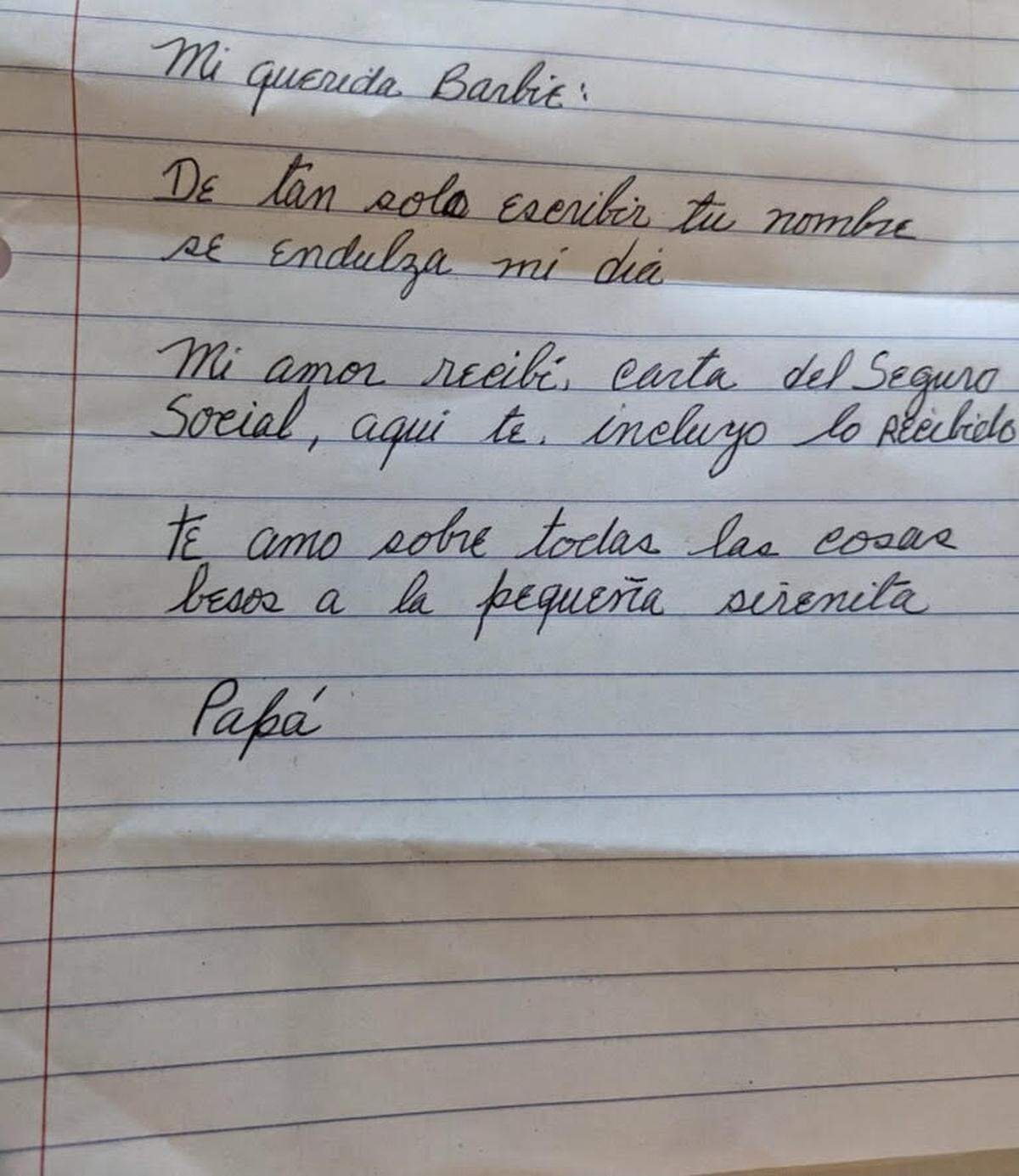
A spontaneous morning text sent last week: “I wish you a beautiful day today, and always.”
In return he got red heart emojis.
A few days ago, Delvalle said he found the stamina to compose a longer text.
“There are 37 days until your birthday,” he told his daughter. “Your mom, on this date 31 years ago, would put my hand on her pregnant belly so I could feel your kicks.”
As he composes a new text, he hums the song — La Tarde, by Cuban trova musician Sindo Garay.
The penalties that mistreat me
there are so many that they run over
and how they try to kill me
they crowd each other and that’s why
they don’t kill me.
“It’s how I survive,” he said as he smoothed out the beige blanket on his bed. “The song says it all.”
This story was originally published July 26, 2021 at 6:00 AM.