Refugee advocates win lawsuit against Trump order that left many families divided
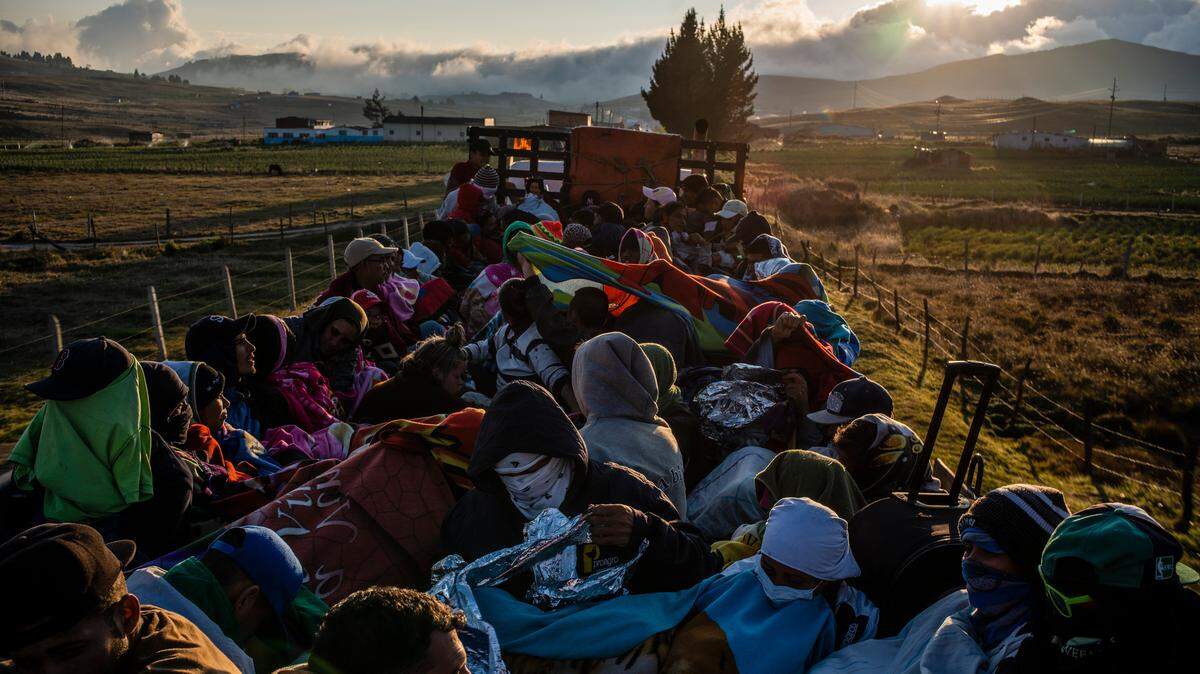
A federal appeals court ruled against a Trump administration executive order that effectively barred refugees from living in certain areas, a decision that immigration advocates are hailing as a potential first step in rebuilding the country’s resettlement program.
The decision — which was issued by U.S. District Judge Peter Messitte in Maryland on Friday — is considered a victory for refugee activists after four years of Trump administration policies that have made it more difficult to resettle refugees.
“Our main priority now is ramping up refugee resettlement numbers again,” said Timothy Young, a spokesperson for the Lutheran Immigration and Refugee Service, one of the organizations that filed the lawsuit. “With the incoming Biden administration, we don’t see that being an issue. However, it will take work — lots of work.”
The court ruling comes two years after President Donald Trump signed an order requiring that resettlement agencies obtain written consent from states in which they plan to receive refugees. Two months later, three faith-based resettlement agencies filed a federal complaint challenging the administration’s move and won a preliminary injunction in January 2020.
The president’s executive order ultimately prevented refugees from being reunited with their U.S.-based families depending on where they live. The order also prohibited communities from welcoming refugees if their state and local officials rejected them, even if they have longstanding and successful resettlement programs. As of last week’s federal court decision, those orders were undone.
“This ruling provides critical relief,” said Krish O’Mara Vignarajah, president and CEO of Lutheran Immigration and Refugee Service, a resettlement agency that has helped hundreds of thousands of refugees since 1939.
The Miami Herald reached out Monday to the defendants of the lawsuit — the Department of Health of Human Services and the Department of Homeland Security — but did not receive an immediate response.
In October, Trump proposed to cut the country’s refugee program for the fifth time, a move that brought the refugee population to an all-time low.
In the announcement to reduce how many refugees will be admitted into the United States during the 2020-2021 fiscal year, the administration said it would allow 15,000 — an almost 17% reduction from the previous year’s 18,000 refugee cap, and an 82% cut since Trump took office.
As recently as Nov. 12, during a virtual event with a Catholic group that works with refugees, President-elect Joe Biden pledged that he would raise the annual refugee admissions ceiling to 125,000 as soon as he takes office. He also made a similar statement during World Refugee Day in June and has a statement posted to his transition website.
“I promise, as president, I will reclaim that proud legacy for our country. The Biden-Harris administration will restore America’s historic role in protecting the vulnerable and defending the rights of refugees everywhere and raising our annual refugee admission target to 125,000,” Biden said during the virtual event in November.
The executive branch has the unique authority to determine the country’s annual limit for refugees.
“Those who have been waiting for years to reunite with their families will no longer have to choose between their loved ones and the resettlement services that are so critical in their first months as new Americans,” O’Mara Vignarajah said.
When the executive order was still in effect and required refugee resettlement agencies to obtain consent from state and local authorities, 42 governors and more than 100 local authorities affirmed their willingness to continue resettlement. Texas Gov. Greg Abbott was the sole dissenter who formally voiced his opposition to welcoming refugees.
But immigration policy experts say restoring and restructuring the refugee system won’t be that easy, noting that accepting a surge of refugees after four years of historically few refugee arrivals would require significant resources, time and political compromise.
“How do you ramp everything up without funding? Most of the programs in Florida were slashed. That’s going to be the biggest issue here,” said Randy McGrorty, executive director of Catholic Legal Services, a local organization that provides free legal services for refugees in South Florida. “There were no refugees coming in anymore so there aren’t many services left. What’s key here is who will be appointed to run the Office of Refugee Resettlement.”
According to the Office of Refugee Resettlement’s budget for the 2021 fiscal year, $279 million is allotted for transitional and medical services for refugees, “sufficient to maintain benefits for the estimated number of new arrivals and $151 million for refugee support services.” The Biden-Harris transition team has yet to announce who will lead the office.
Church World Service is one of the last refugee resettlement agencies left standing in South Florida. In the last four years, Maureen Porras, the agency’s managing attorney, says more than half a dozen agencies shuttered their doors due to the dwindling refugee caps.
“It will require the government to allocate more funding so that we and other agencies can hire, open new offices and expand our capacities,” Porras said. “This won’t be immediate and could take a very long time to see results.”
During fiscal year 2019-20, Texas, Washington, New York and California resettled roughly a quarter of all refugees, taking in nearly 8,100 refugees, according to the Pew Research Center.
Since 2002, California has resettled the most refugees (about 108,600), followed by Texas (88,300), New York (58,500) and Florida (48,700), federal data show.
This story was originally published January 11, 2021 at 5:06 PM.