Here’s how Miami-Dade Schools transformed a secret migrant camp into a makeshift summer school
It was a few minutes before 9 a.m., almost time for Victoria to wake up the kids.
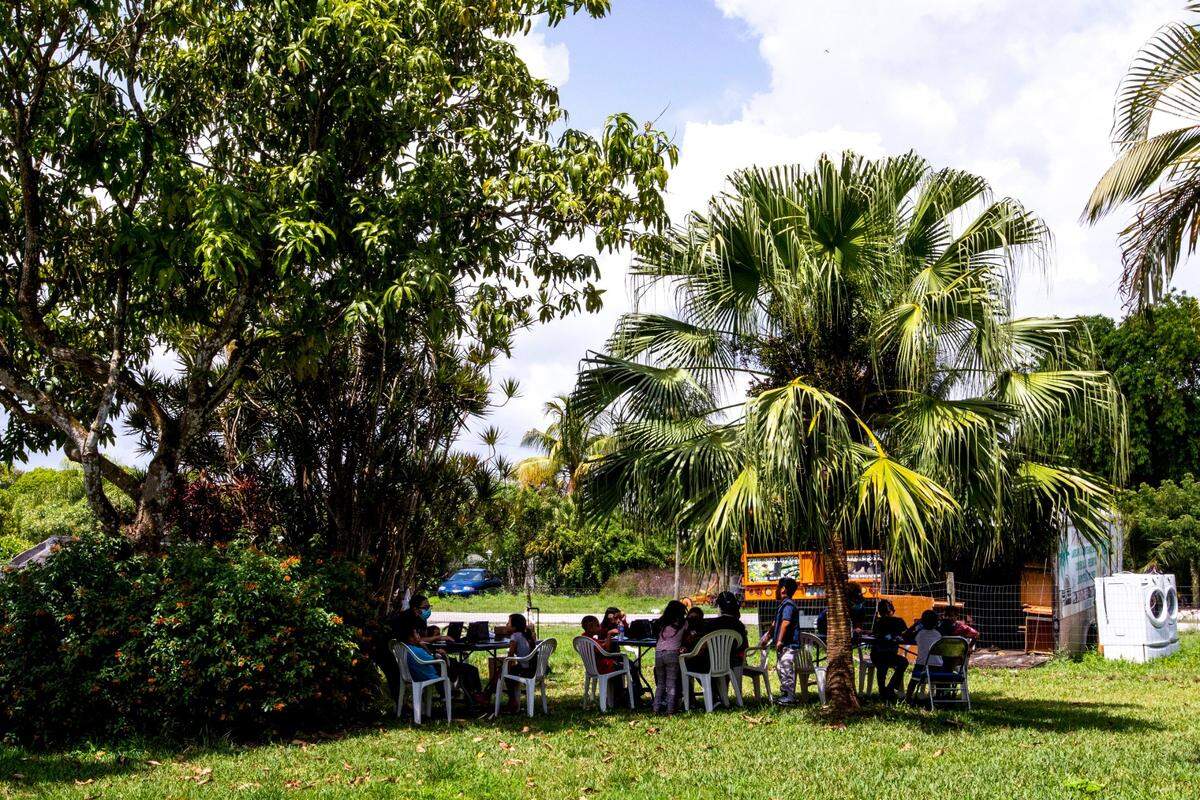
Under an already scorching sun, she unfolded the chairs and set the table under a shady palm tree. Everything was almost ready for another makeshift day of homeschooling at the secret migrant camp in South Miami-Dade. She placed Cheerios, a gallon of milk and hand sanitizer atop the table before walking over to corral the kids. She knocked on each trailer door three times.
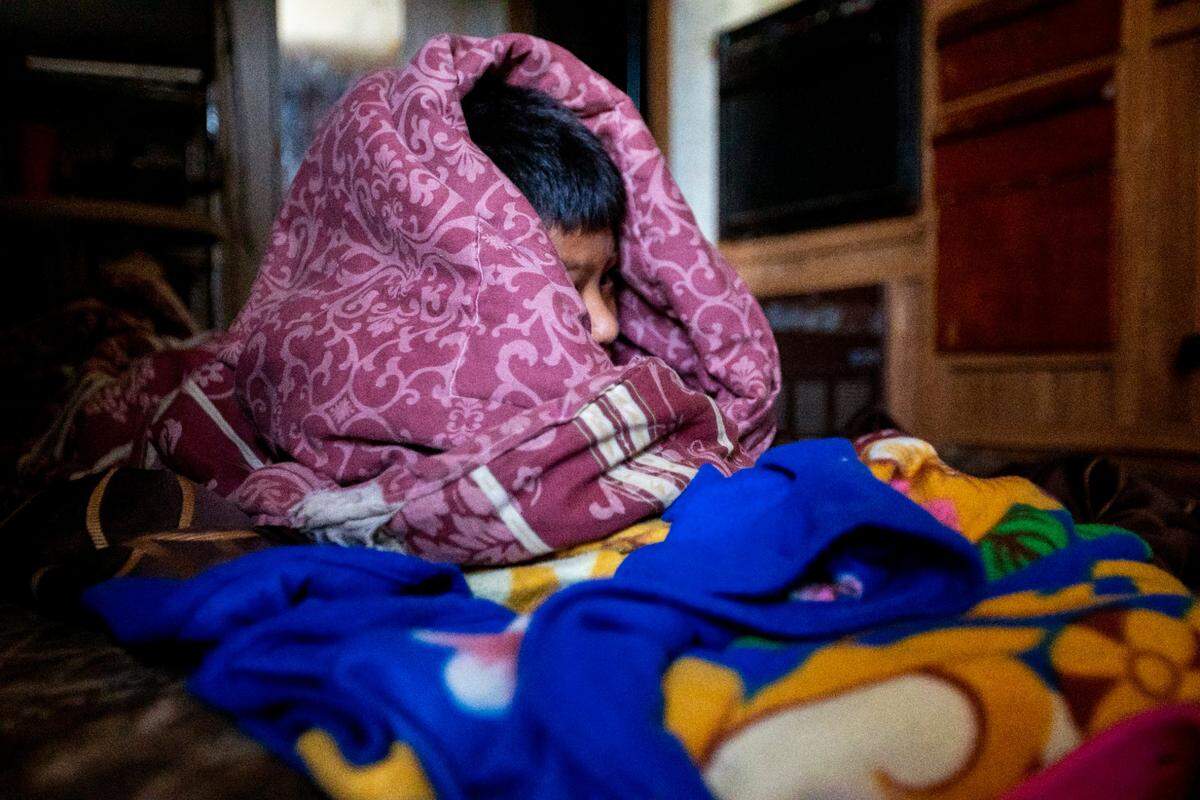
The sounds rallied 11 of the dozen children, but there was no waking 7-year-old Jose. Victoria opened the door to find the boy on the floor in a peaceful slumber.
“Let’s go sweetheart, it’s time for school,” she said in Spanish. She pulled back the dirty burgundy comforter and caressed his forehead.
“Un ratico más, mamá,” the groggy boy said. “One more minute, mom.”
Except the woman isn’t his mother. She is the cafeteria lady.
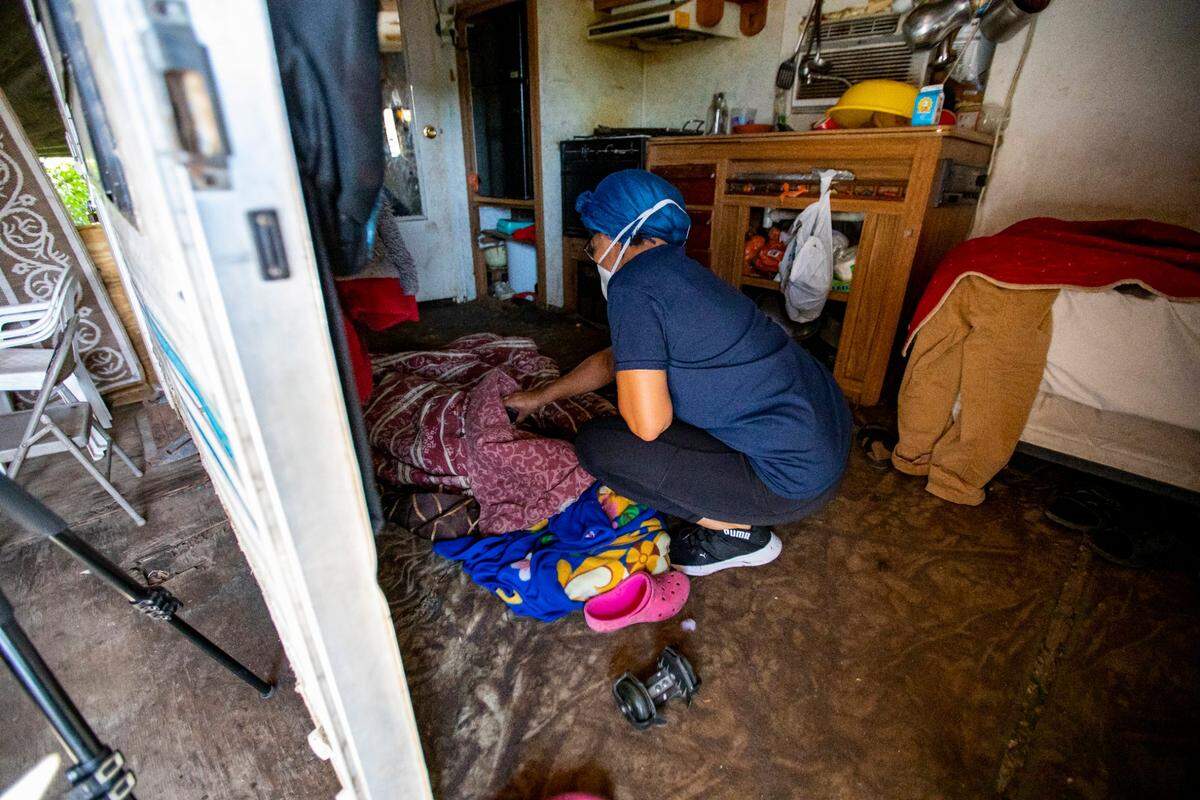
Victoria, who works as a Miami-Dade County Public Schools cafeteria director, is one of four staffers who have teamed up to transform a squalid migrant camp in rural Miami-Dade into an outdoor classroom during the summer.
Most of the children, many of them from impoverished areas of Guatemala, had never stepped inside a school before last year, when a neighbor spotted them playing outside during school hours. When she told a local principal, it set in motion an unlikely visit from Miami-Dade’s schools superintendent, Alberto Carvalho, reported by the Miami Herald in early March.
The children received an outpouring of support: Donations of shoes and clothing, mattresses, toiletries — and ultimately, school enrollment. Then the coronavirus struck, closing schools nationwide. Miami-Dade Schools, which serves more than 356,000 children, all but shuttered its doors except for cafeterias that prepared “to go” lunches for the neediest children.
The kids from the migrant camp were among them. But none of their parents could come pick up the paper bag lunches. That’s about the time Victoria started driving over.
“If they depended on us before coronavirus, imagine how much they need us now,” Victoria said as she adjusted her face mask and hairnet. “For many of these kids, school meals were their only meals.” Every visit, Victoria brings three days’ worth of food.
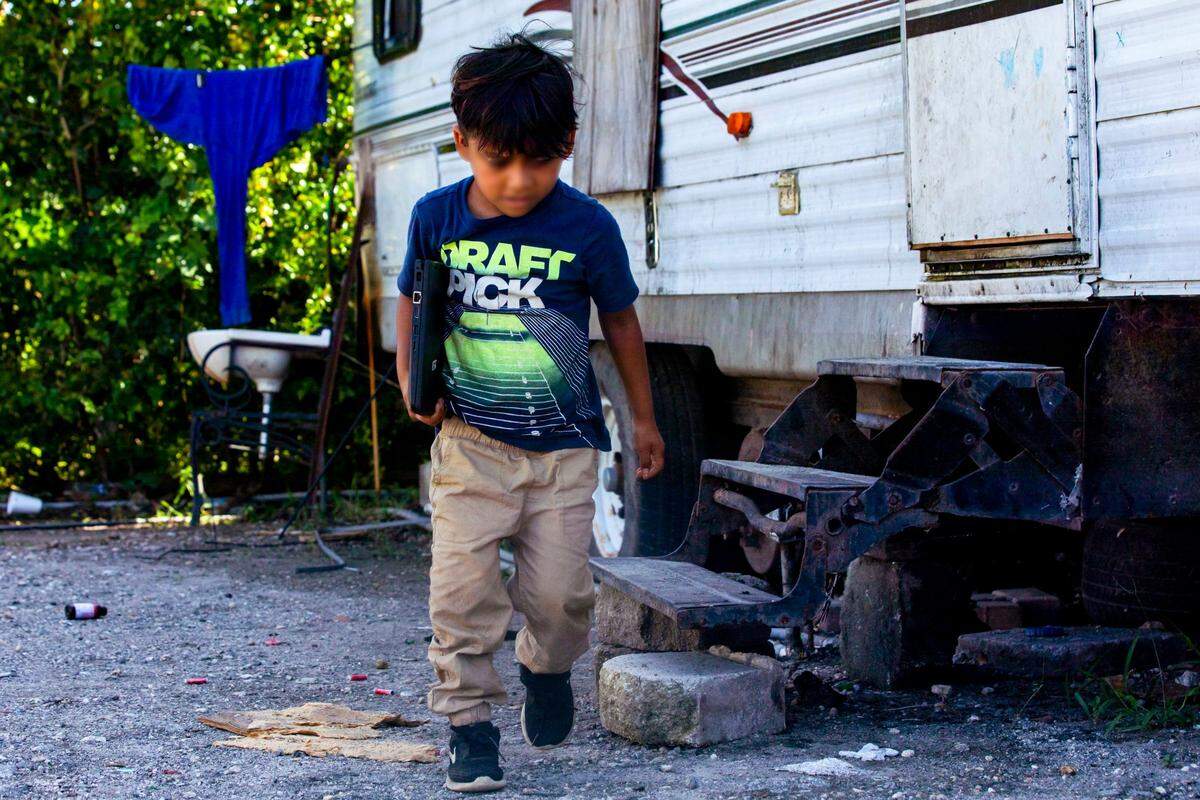
She fixed her gaze on the “village” of 72-square-foot windowless, ramshackle landscaping trailers that the dozen children live in while hiding from immigration authorities.
“Their parents are all farm workers, so they leave the camp before the sun rises,” Victoria added. “Summer school isn’t just something they’re excited about but it’s something they literally depend on.”
Because of the children’s immigration status the Miami Herald is not disclosing the location of the camp or using any last names.
A NEW NORMAL
Before their elementary school abruptly closed its doors to mitigate the spread of coronavirus, the kids would stop at the school clinic every morning. Sometimes they bathed and brushed their teeth. Their mud-filled shoes and stained shirts were replaced with clean ones. Their ears were cleaned. At lunch, they were given double portions if they were still hungry.
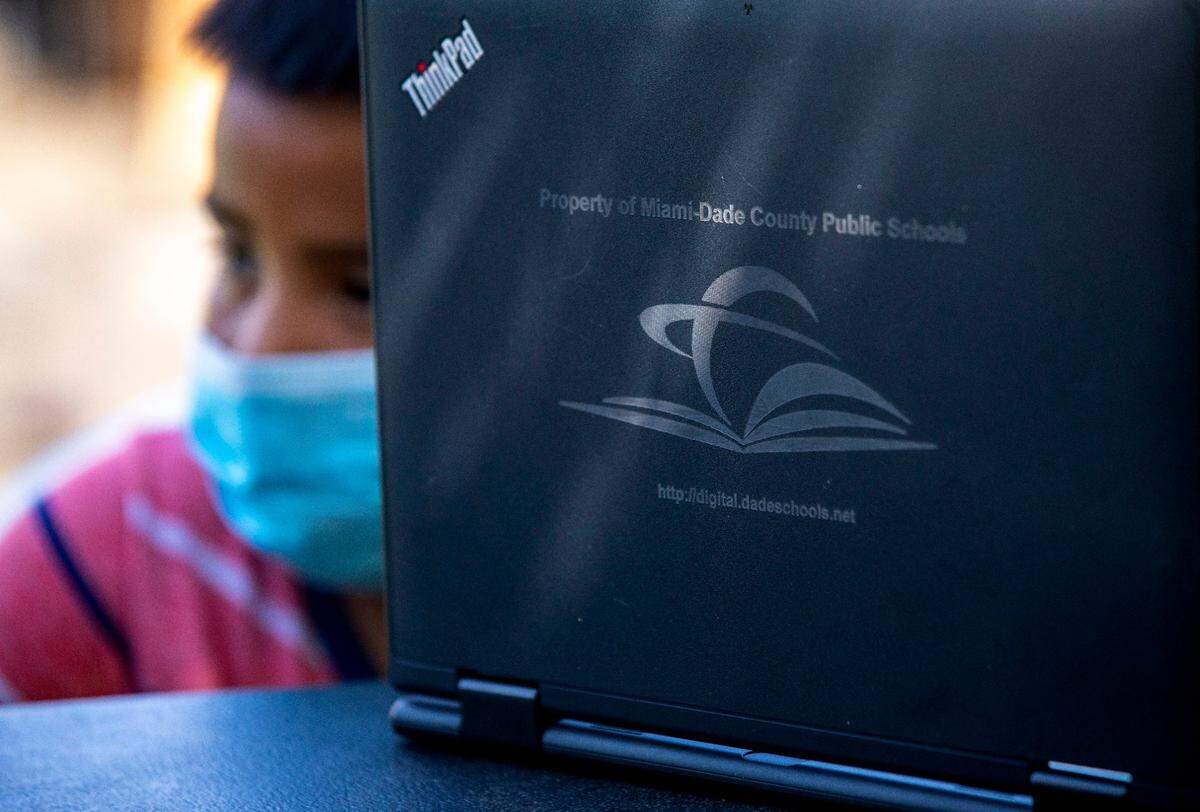
For many students throughout the county, the pandemic meant their in-person education transitioned online with Zoom links and more virtual assignments. The school system provided laptops. Parents who needed help guiding their kids through the curriculum were able to call school officials for help.
“But not these kids,” the school principal told the Herald. “Their parents are essential workers and they’re not here. We’re in the middle of nowhere. Imagine a 5-, 6- or 7-year-old setting up a computer station on their own.”
The principal said the district even brought WiFi hotspots, but most of the time the staffers’ attempts to connect to the web are unsuccessful: “It’s the perfect equation for failure. We want these kids to succeed, so that’s why we came out here despite the pandemic and that’s why we’re extending this for the summer.”
According to school officials, 900 students are enrolled for the district’s summer virtual math and reading program, which started June 9. The program was designed to help kids who weren’t able to stay afloat academically as well as children with 20 or more absences. The children at the migrant camp are the only students who are being accommodated with daily visits from school leaders.
“Their need just exceeds the rest,” Carvalho said.
This is just one of the secret migrant camps in the county. There are at least nine other clandestine villages just like it, tucked between sparse nurseries, vast vegetable fields and fruit crops in South Dade.
Carvalho says he’s tried to visit and make donations to two other camps he learned about from anonymous tipsters at the school district, but the owner of those didn’t allow him in.
RURAL E-SCHOOL
For 9-year-old Juan, a collection of plastic tables and chairs outside his trailer is “as close as it can get to real school.
“I have my desk, my computer, my friends and my teacher,” he said.
He slurped his cereal from the plastic bowl: “Oh, and we get lots of food too.”
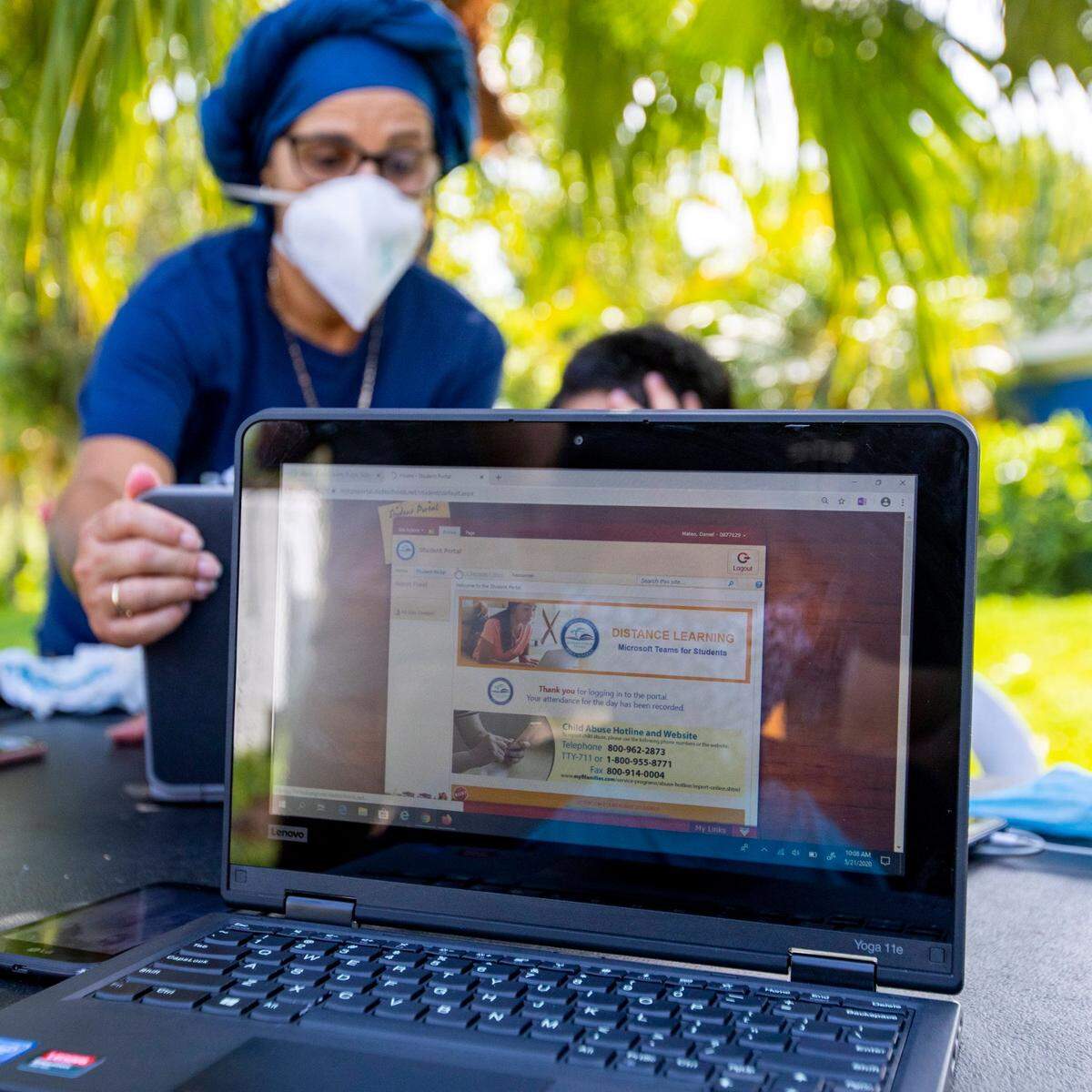
Every Tuesday and Friday, Victoria arrives at the property along with two staffers who help her unload the boxes of back-up laptops and set up the fickle internet hotspot in 30 minutes. If the internet doesn’t connect, sometimes the instructors connect their personal phones.
On the days the team doesn’t come to the camp, students stay with the laptops and hotspots at home. Though the equipment remains with the kids when the instructors leave, some students told the Herald connecting to the internet is difficult because the teachers are the ones who usually work with the equipment, and when they’re not there, there is hardly any reception.
“So we play soccer instead,” one 10-year-old boy said.
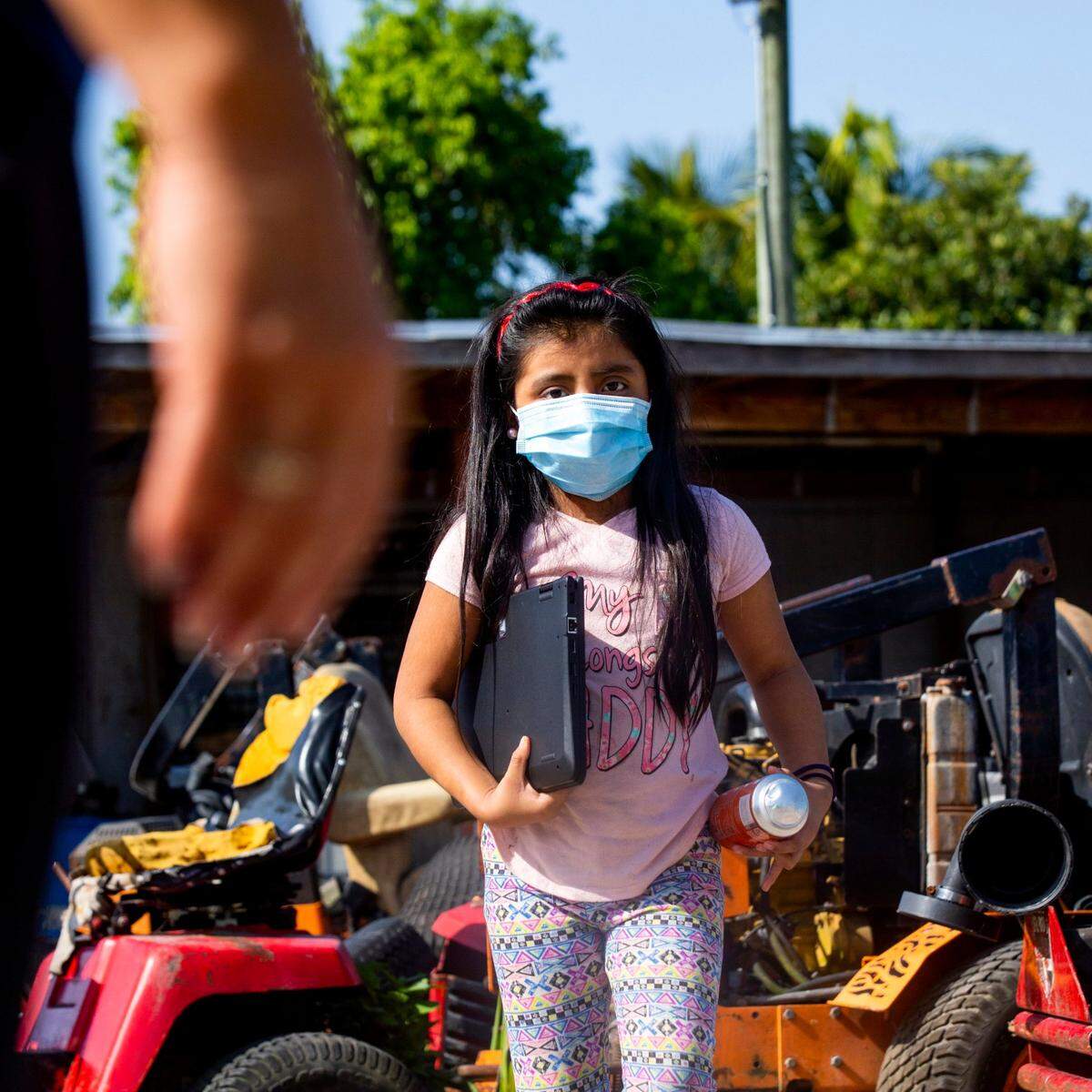
The makeshift classroom — which moves around according to where the sun hits — is located on a two-acre property consisting of abandoned landscaping trailers, dilapidated mobile homes and barrack-style compounds.
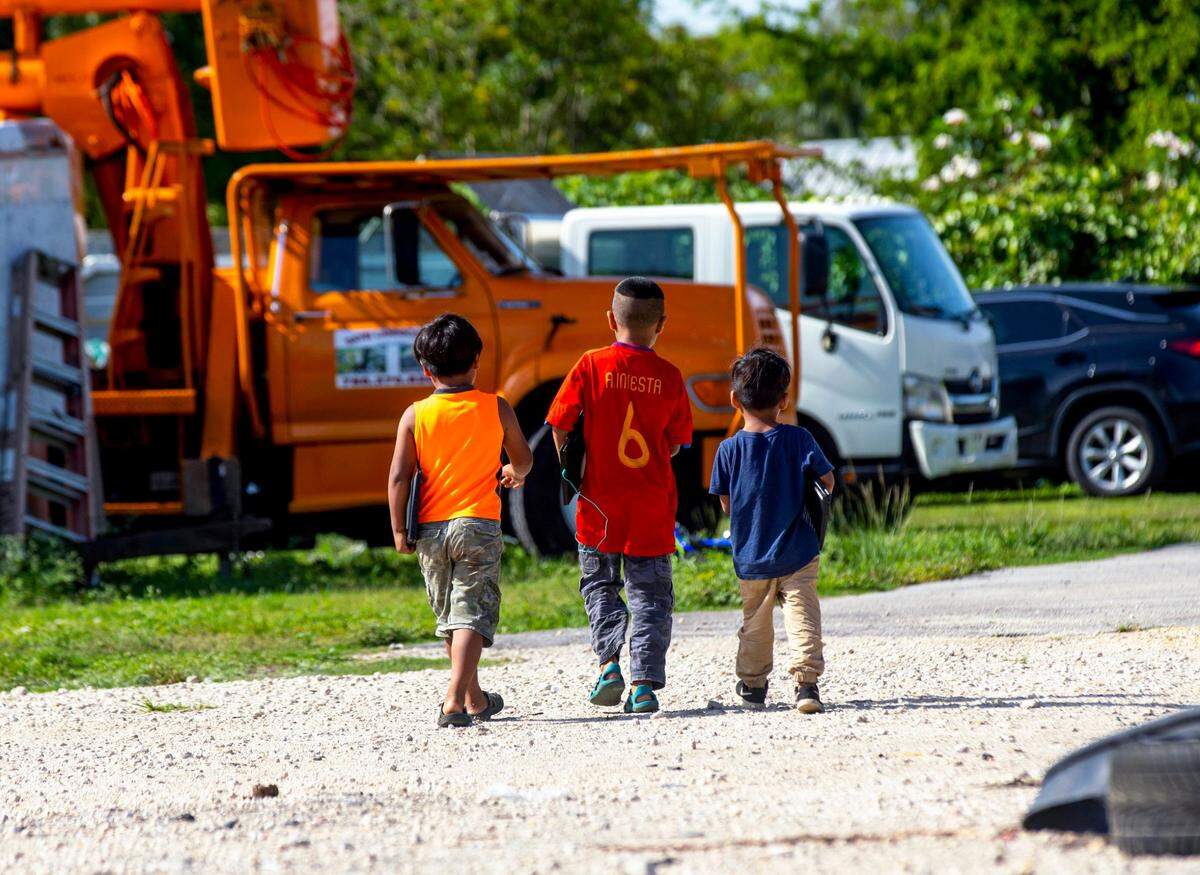
The closest thing to a playground is a mini-junkyard with rusty landscaping equipment and broken bicycles. The moldy furniture and large tires double as toys when the children are bored after schooling is over. To them it’s the only park that didn’t close down due to COVID-19.
When they have to go to the bathroom, they raise their hands and head to one of the two communal outhouses. They wash their hands with a hose that hangs from an old truck. If milk or food spills on their clothes, they make their way to the one shower at the camp, held together by four slabs of plywood.
Most of the 20 families — 48 people in all — who live in the compound cook meals on an outdoor grill personally donated by Carvalho and other school leaders. The price tag to live in one of the shacks: $275 to $300 each month per person, paid to the property’s landlord, or around $14,000 per month for the entire camp.
“I had to get out of there,” said Matthew, a husband and father of two who lived at the camp until late March. “The conditions were horrendous and I was worried for the children’s health, specifically amid coronavirus.”
Matthew, who now works on a local farm in Naples, said he “feels bad” because he “stripped” his two kids of the education they were receiving.
“Those teachers at the school were parents for my children when I couldn’t be,” he said. “I don’t have that anymore. But I had to pick what to me seems like life and death.”
Secrecy and security govern the daily routine of the camps, where detection can lead to arrest, detention and deportation. Residents deploy a system of makeshift locks, lookouts and drills. Youngsters are taught to hide when strangers arrive.
Despite the migrants’ fears of apprehension and deportation by U.S. Immigration and Customs Enforcement, Carvalho has vowed to protect the kids — and he is backed by federal law, which prevents schools from releasing student records, including immigration status.
According to a landmark U.S. Supreme Court decision, states can’t deny free, public education to undocumented children.
However, because the school is technically not taking place on school grounds, whether or not they remain protected is questionable.
“That’s why we’re extra careful,” the principal said.
The number of Guatemalan-born children enrolled in Miami-Dade schools has nearly doubled in the last three years. Palm Beach County also saw 50 percent jump from the previous two years, data shows.
Families like the ones at the South Dade compound cite increased violence, poverty and lack of access to schooling as reasons for crossing the border into the U.S.
“We were almost killed by drug lords who threatened to kill our kids for money,” one of the parents told the Herald over the phone. “I’ve never gone to school, and never thought they would either, so the fact that they are getting an education is a blessing from God.”
Back at the camp, 5-year-old Graciela is ready for a break — it is summer after all. Right as she closed her laptop, Victoria signaled that school was over for the day.
Suddenly, the kids broke out in song:
“Vamos pa’ la playa
Pa’ curarte el alma
Cierra la pantalla.”
The song, by Puerto Rican artist Pedro Capó, is a viral hit, with more than 210 million views on YouTube. It translates as: “Let’s go to the beach... Close the screens.”
“At school you have bells,” the principal said. “Here, we have songs.”
This story was originally published June 10, 2020 at 6:00 AM.