‘If you’re going to rape me, kill me’: Woman says U.S. immigration agents assaulted her
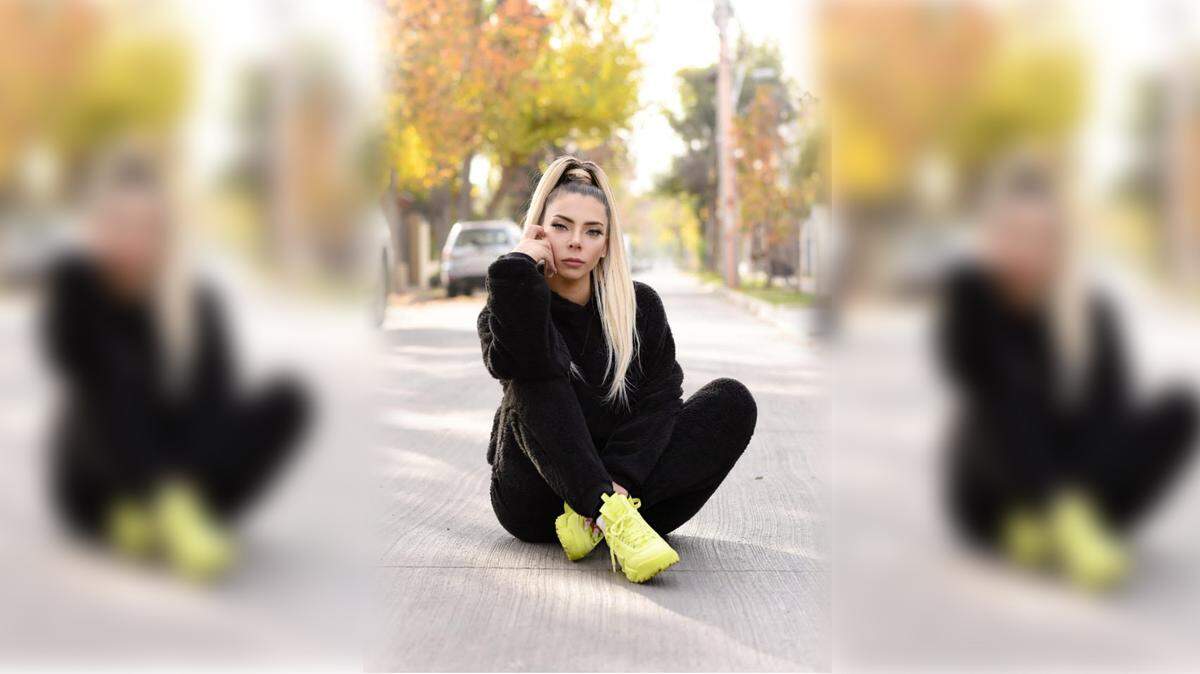
Geraldine Rodriguez Olivares frantically texted her family for help.
The Chilean woman — a twerk dancer on an international tour — had just landed in the Dominican Republic on a flight from Puerto Rico. As she messaged relatives, her phone buzzed with a message from Chile’s consul general in Santo Domingo, who had been alerted by Rodriguez’s family.
Desperate, Rodriguez replied: “Get me out of here, please,” she wrote in Spanish. “I am begging you.”
Startled, the Chilean diplomat, Karen Gonzalez, got in her car and headed to the airport, attempting to call Rodriguez back as she drove.
“I’ll be there in about 15 minutes,” she said. “Quédese tranquila.” Remain calm.
Meeting the consul at an airport terminal, Rodriguez told her country’s diplomat a harrowing story: At the airport in the Puerto Rican capital, U.S. Customs agents had taken her to a private room where they forced her to twerk, while as many as five officers threw dollar bills at her and slapped her butt. She was then stripped naked and sexually assaulted.
While she was waiting for the consul, Rodriguez, a celebrity in her homeland, had also recorded videos for her audience of 1.4 million Instagram followers:
“I need your help urgently,” she said sobbing uncontrollably. Then she paused to gasp for air. “Por favor.”
Rodriguez’s public cries for help sparked an international investigation involving U.S. and Chilean diplomats, prosecutors and immigration officials.
U.S. Customs and Border Protection has confirmed to the Miami Herald that the agency launched an investigation after Rodriguez uploaded her tell-all video on Feb. 17.
On Saturday, a CBP spokesperson in San Juan said the agency has evaluated the available video footage from the airport and concluded that the accusations are unsubstantiated.
The Herald spoke to Rodriguez, her boyfriend Rodrigo Catalan and best friend, Patrick Pacheco, who supported her version of the events. The Herald also examined dozens of electronic communications, documents and medical reports.
The Inspection
Rodriguez, 31, a twerk dancer since age 18, who has since achieved celebrity status in Chile, first arrived in Puerto Rico on Feb. 1. Known to her followers as “Geri Hoops,” Rodriguez was escorted on a speedboat to some of the island’s top beaches and was interviewed on local TV.
On Feb. 15, Rodriguez left San Juan and flew to the Dominican Republic to dance in a music video for reggaeton singer Ozuna.
But on her return to Puerto Rico on Feb. 16, Rodriguez says, everything changed. She arrived at 11:06 p.m., not long before the U.S. Customs office closed at midnight. Rodriguez was traveling with a friend, who spoke to the Herald but asked to remain anonymous.
When the two women approached the counter at Luis Muñoz Marín International Airport — one of the country’s few privatized airports — Rodriguez said immigration agents told them they needed to sit in the CBP waiting area, but were not given a reason.
“They wouldn’t tell us why we were being held and kept telling us to sit back down,” Rodriguez told the Miami Herald. “We kept seeing people come in, get patted down, and then leave. But not us.”
An agent at the counter called Rodriguez. When she approached, she said an immigration agent showed her a printed Instagram flyer advertising her twerking class at a local dance studio.
.jpg "unnamed (1).jpg")
“He told me they knew who I was,” she said. “He waved it at me and pointed at my picture, said they monitor my Instagram posts, that they had seen me on TV and heard me on the radio.”
Shortly after, both women said they were individually taken to an inspection room where they were patted down by two female officers as per Customs regulations.
Eventually, officials told Rodriguez she could not be admitted to the U.S. She was told she should have traveled on a work visa, not a tourist visa. She said officials cited her social media posts as proof she had been working.
Federal documents show Rodriguez was deemed “inadmissible” to the U.S. Her friend, however, was released, leaving Rodriguez to remain alone in an empty waiting area, she said.
Rodriguez, who spoke to the Herald several times, provided at least two slightly different accounts with varying degrees of detail. At times she says she was taken by agents into an office within CBP’s facility. At others, she said the assault happened in a separate room in an airport terminal where agents escorted her. Experts say it’s common for sexual trauma victims to remember parts of their experience in jumbled and confused fragments.
Rodriguez is emphatic that she was berated and heckled, made fun of because of her twerking career.
“Didn’t you come to make a show?” she said an officer asked, as others chimed in: “Well, perform it now.”
The agents “began to slap my butt and they threw money at me,” she said. “I was so petrified that I peed myself.”
She was then told to remain in the private room.
Some time later, Rodriguez was told she needed to be checked for drugs by two male officers.
Confused because she had already been patted down, Rodriguez said she panicked as she was pulled by the arms into another nearby room.
She says she told them: “If you’re going to rape me, kill me.”
According to Rodriguez, the uniformed officers stripped her, pressed her face against the wall and made her open her legs. One of the men pulled down his pants zipper to put on a condom, while the other put on blue gloves, she said.
The man in the gloves patted her bare skin, Rodriguez said, and shoved his fingers inside her. When he was finished, the other man raped her from behind.
Rodriguez said the two men took turns. As one raped her, the other would masturbate. Rodriguez said they would turn her head so she could watch them.
Rodriguez says her memory of the rest is hazy, but remembers that another male officer walked in, put her clothes back on, took her to the bathroom to wash her face and then directed her to a cot, where she passed out.
“That’s when I woke up.” Next thing she knew, Rodriguez said, she was given back her phone and passport, and was marched onto an airplane in handcuffs back to the Dominican Republic.
A Plea For Help
About six hours after Rodriguez landed in Santo Domingo, the Chilean consul met with her, text messages show.
Rodriguez’s best friend, Pacheco, and boyfriend Catalan had contacted the consulate through Twitter and other social networks after having received distraught phone calls from Rodriguez.
By the time the consul arrived, Dominican airport officials had already called an ambulance and she was on a stretcher being treated by a female paramedic.
Because the earliest flight back to Chile wasn’t until the following day, the consul booked her at a nearby Hilton hotel, drove her there and walked her to her room.
Though the consul had been informed by Rodriguez’s friends that she had been sexually assaulted, the official was not aware of the alleged rape. The frazzled Rodriguez, who says she was in a state of shock, did not disclose anything further.
The following morning she flew to Santiago, the Chilean capital. Her boyfriend said she seemed aghast and distant.
“We couldn’t ask her any questions,” Catalan told the Herald. “She was uncontrollable. Crying, screaming, crying. We couldn’t understand anything that she would say.”
Instead, she slept for several days.
Rodriguez said it took her a week to tell her loved ones what she says she endured at the hands of U.S. immigration officials.
“When I got to Chile, I only had one idea in my mind, and that was to kill myself,” Rodriguez said. “I didn’t know how I was going to tell my boyfriend what they had done to me. I was ashamed.”
With their encouragement, she went to Chile’s Forensic Medical Service, a government agency under the country’s Ministry of Justice that performs all forensic testing having to do with criminal investigations, documents show.
Rodriguez was turned away at the door because she had not yet filed a criminal complaint. Later that afternoon she was examined by a private gynecologist, medical records Rodriguez provided the Herald show. The medical report found no visible bruising but said Rodriguez complained of pain and a discharge.
Sexual-assault experts from Jackson Memorial Hospital contacted by the Herald say any evidence would have likely disappeared by that time.
Rodriguez was then contacted by a Chilean ministry that deals with gender-based violence, which opened an official investigation. Rodriguez underwent an official forensic exam. To date, she has only given a partial statement to the authorities. Family members who accompanied Rodriguez to the ministry told the Herald that she has severe panic attacks every time she tells her story. She has scheduled an appointment with Chile’s attorney general’s office to finalize her statement.
Sexual-assault experts say it is isn’t unusual for victims to break down when they’re being questioned by authorities.
She is also undergoing psychological treatment, the Miami Herald confirmed.
The Chilean prosecutor in charge of the case, Paulina Cabrera Garnham, declined to speak to the Herald because the investigation is ongoing.
On March 2, Rodriguez also uploaded a video to YouTube.
Sources close to the investigation say the Chilean prosecutors are working with the Foreign Ministry officials to decide whether they will file a complaint against the U.S. for custodial rape.
The U.S. State Department referred inquiries from the Herald to the Justice Department.
“As a matter of policy, the Justice Department does not publicly comment on communications with foreign governments on investigative matters, including confirming or denying the very existence of such communications, “ said Nicole Navas Oxman, a DOJ spokesperson.
Documents show that CBP agent Alvaro Figueroa Colon in Puerto Rico signed off Rodriguez’s paperwork the night she says she was assaulted.
“I can tell you that you can call public affairs,” Figueroa told the Herald four times before hanging up. Figueroa’s supervisor, who identified himself as agent Pagan, also declined to comment.
“Stop calling, you need to stop calling,” he said. “We cannot talk about the investigation.”
CBP policy prohibits its officers from touching a person “unless the person refuses to remove any article of clothing.” If an officer suspects that a person might be hiding something in a body cavity, the officer should request that the person remove it.
“Only medical personnel may conduct a body cavity search. The CBP officers are prohibited from conducting body cavity searches themselves,” according to a CBP Inspector’s Field Manual obtained by the Miami Herald.
Unless there is probable cause, any person detained for a period of two hours for a personal search “will be given the opportunity to have CBP personnel notify someone, including an attorney, of their delay.”
The two-hour notification window does not include wait time, luggage inspection or prior interviews. Policy also indicates that when a person has been detained eight hours from the time a supervisor approved a search “the ICE duty agent and/or CBP prosecution officer will contact the U.S. Attorney’s office.”

The U.S. Attorney’s office in San Juan was not available for comment.
The CBP office in Puerto Rico has repeatedly denied wrongdoing.
“Once this allegation was brought to the attention of our management officers, an investigation was conducted, which included the review of camera footage during her stay within our CBP facility. We did not find misconduct by any of our officers to support Ms. Hoop’s accusation,” said San Juan CBP spokesman Jeffrey Quiñones, referring to Rodriguez by her stage name.
“On March 2, on social media, she alleged that she was also sexually abused. CBP takes these accusations very seriously. We have referred this accusation to our Office of Professional Responsibility,” Quiñones affirmed.
CBP’s Office of Professional Responsibility — which did not immediately respond to the Miami Herald — internally handles investigations of CBP employees and contractors. Disciplinary action is at the discretion of managers and varies case by case. The Miami Herald requested video footage from both CBP and airport officials.
In 2016, the latest year for which there is information, CBP investigated 52 allegations of sexual misconduct by its personnel that occurred during the 2015 fiscal year. Out of these 52, 10 were found to be substantiated.
However, between 2005 and 2017 the U.S. government paid more than $60 million in settlements in cases in which CBP agents were involved in deaths, driving injuries, wrongful detentions and alleged assaults — including sexual — according to court documents obtained by the British newspaper The Guardian. Of this amount, at least $1.2 million were awarded for unreasonable searches including being stripped naked.
In another case in 2014 reported by Harper’s Magazine, the University Medical Center in Texas settled for $1.1. million for its role in a CBP cavity search. CBP settled two years later for $475,000 without admitting guilt. In order to combat abuses, the court mandated CBP personnel receive training on searches and Fourth Amendment law.
In the meantime for Rodriguez, her life is now “hell,” her best friend, Pacheco, told the Herald.
“She hasn’t been well. Some days she wakes up begging us to admit her into a mental hospital so that she doesn’t kill herself,” he said.
“The pills aren’t working, nothing is working. She can’t get the faces out of her head.”
A note to tipsters: If you want to send Monique O. Madan and Romina Ruiz-Goiriena anonymous or confidential information about this case, their emails and mailbox are open. The address is 3511 NW 91st Ave, Doral, FL 33172. You can also direct message them on social media and they’ll provide encrypted Signal details.
This story was originally published March 9, 2020 at 10:05 AM.