Guatemala’s former top prosecutor finds refuge in U.S. — and in her fellow migrants
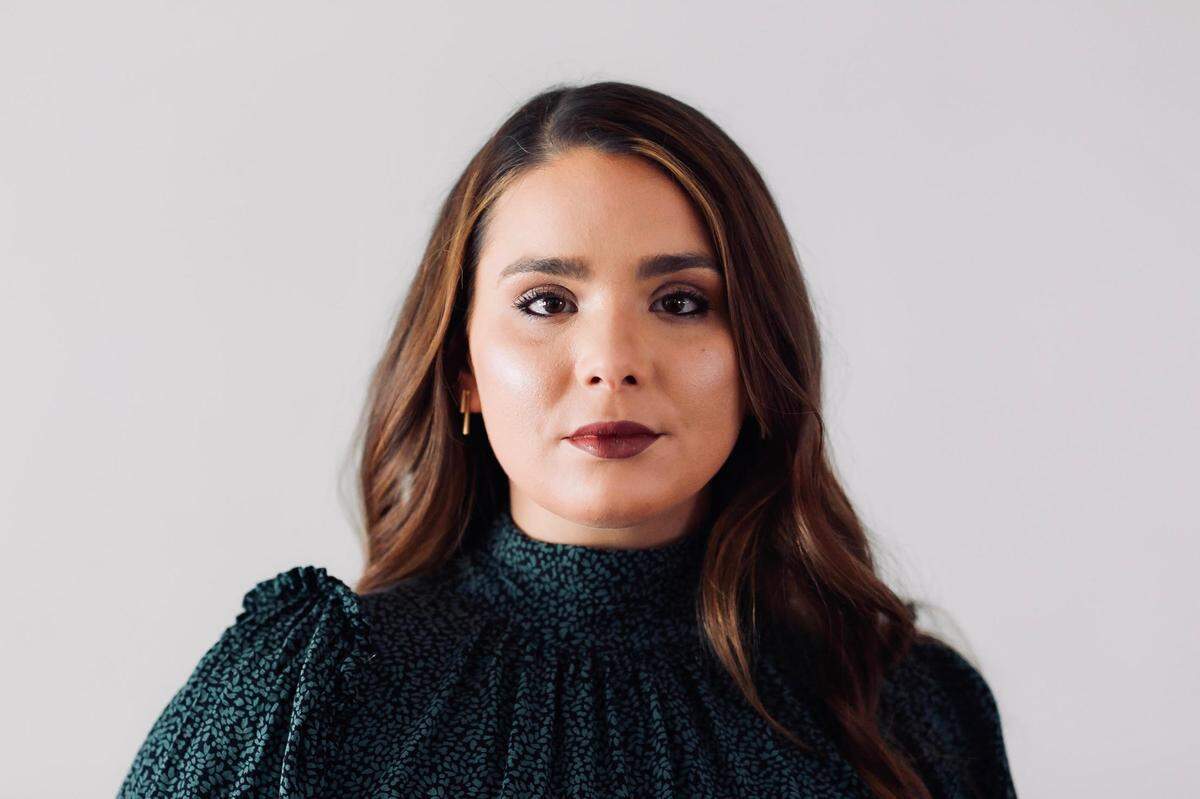
As the top anti-corruption prosecutor in Guatemala, Thelma Aldana helped topple a sitting president and most of his cabinet.
Her justice crusade garnered praise among the Central American nation’s poor. But it also won her a lot of enemies: from gang leaders to drug traffickers to Guatemalan elites.
Granted political asylum last week after the Drug Enforcement Administration presented evidence of credible death threats, Aldana now lives near Washington, D.C., stripped of the trappings of her former office or even the ability to hold a job.
Her lifeline in her adopted home: Her fellow Guatemalan migrants around the country, including South Florida.
Most of them poor, they see Aldana as a hero. Since she fled to the United States, they’ve paid her rent and cellphone bill, and have donated furniture and clothes, with additional humanitarian help from a nonprofit in Costa Rica.
“When I tell you they’ve provided everything, I mean everything,” she said, recounting the day 48-year-old Boris Ochoa and his wife, who own a cleaning and maintenance company in New Jersey, found her an apartment, and then showed up with a truckload of surprises.
.jpg "unnamed (2).jpg")
The trailer was filled with a couch, table, desk, chairs, a bed frame, mattress, sheets, pillows, kitchenware, an iron and art for the walls. They also hooked her up with a new computer.
“My eyes just swelled up with tears. I couldn’t understand why they were helping me,” she said.
“I’m now in their same shoes,” Aldana told the Miami Herald. “I am now a migrant.”
She’s gone from gracing Time magazine’s top 100 most influential leaders to life in transition. “I am living the life that many migrants live — no job, no family, no place you can call home.”
Aldana, 63, a 2019 presidential candidate in her own country, has been living in the U.S. for about 10 months after a Guatemalan court issued a questionable warrant over alleged embezzlement — a move that human-rights groups and members of the U.S. Congress say was politically motivated to undermine her presidential bid during last June’s elections.
Eliot Engel, chair of the U.S. House Foreign Affairs Committee, lauded the asylum decision on Twitter: “This is a major victory for the international fight against corruption,” he wrote.
But life is radically different for Aldana in the U.S. She doesn’t speak English. Her education and university degrees don’t carry weight here. She’s still waiting for a U.S. work permit.
She went from having several armed bodyguards at home and at work to having zero protection. She downsized from a multi-bedroom mansion to a humble studio apartment in Arlington, Virginia. The cooking and cleaning crews are gone, so she makes her own breakfast in the morning. But she is also enjoying the taste of freedom.
Among her favorites is the subway: “I can fall asleep often on it,” she said. “And when I wake up I laugh because I’m just surprised to be alive. If it were Guatemala, I would be dead.”
Despite being sought by death squads, Aldana says she has finally found refuge, not just in the U.S. asylum system, but in the arms of her “fellow people.”
For fellow migrants like Ochoa, there was no question about giving her a hand: “She’s our hero. She’s the only hope that Guatemala has, so that people like me — like her — don’t have to flee anymore.”
Every year, as many as half a million Central American migrants hop aboard freight trains colloquially known as “La Bestia,” or “the beast,” on their journey to the U.S.
Ochoa was one of them 30 years ago.
There are over one million Guatemalans living in the country. U.S. Customs and Border Patrol data show a majority of migrants from Central America are fleeing Guatemala, a nation of 17.2 million that borders Mexico to the north. Customs’ report shows the agency detained more than 185,000 families and 30,000 unaccompanied minors from Guatemala in the fiscal year ending in 2019.
“If she wanted to, she would have a private airplane, millions and millions of dollars at her disposal, but she preferred to come [to the U.S.] and be ripped apart from her family with no money, all to flee corruption,” Ochoa said. “How can the Guatemalan migrant community not help the only person fighting for the justice of our mainland?”
Aldana’s daughter, 26, got married in October. She couldn’t go. Her son, 23, graduated college in November. She was absent.
Aldana’s path to become the Central American nation’s chief prosecutor began in 1981 as a judicial counselor. She rose through the ranks eventually becoming the president of the country’s Supreme Court.
Then-President Otto Perez Molina tapped Aldana as chief prosecutor in 2014, looking for a safe bet to calm tensions across Guatemalan society. Her predecessor had garnered international attention for bringing war criminals, including a former military dictator, to face charges of genocide.
.jpg "unnamed (1).jpg")
Guatemala’s history is plagued by corruption and human rights abuses dating back to the 1960-1990s civil war that left over 200,000 people dead. After the war, Guatemala reformed its legal system to include criminal penalties for official corruption, but “officials frequently engaged in corruption practices with impunity,” according to a recent State Department report.
Aldana was supposed to solve cold murder cases that kept Guatemala atop the world’s lists of deadliest countries. Instead she went after the president.
Working in conjunction with a special U.N.-backed International Commission Against Impunity in Guatemala, prosecutors discovered a customs fraud ring in 2015 involving the upper ranks of government.
Almost 89,000 wiretaps later, investigators put together how officials allegedly negotiated preferential rates in exchange for kickbacks to the tune of $14.5 million. As many as 28 officials participated in the scheme lining their pockets — Perez Molina included.
The outrage sparked a wave of protests that led to the impeachment, resignation and eventual arrests of Perez Molina and many cabinet members. Aldana also went after at least six political parties for influence peddling, laundering and bribes, including ex presidential candidate Manuel Baldizon, who fled to Miami and pleaded guilty to money laundering in federal court last year.
“She made us light up in Guatemala. She’s the only one that fought for our peace,” Ochoa said.
As Aldana’s anti-corruption crusade continued, her situation became more precarious. She launched an investigation into the following President Jimmy Morales, members of his family, as well as dozens within the oligarchy for campaign-finance violations in 2015. Eventually, she went from trusted government darling to the elite’s public enemy.
According to reports by the Associated Press, Aldana’s office won close to 9,500 convictions in 2017 alone and reduced the backlog of nearly 1.2 million unsolved cases by half. By the time she left office in 2018, Aldana had jailed 250 people.
Last year, she mounted a presidential run and by law had immunity as a candidate. She was polling well above the rest of the field.
That’s when the tables turned. Overnight her life changed. Aldana went from being a powerful prosecutor to another migrant fleeing to the United States. She was escorted to the airport by a security detail.
Fortunately she had won many fans among migrants here in the United States who she says are “more like friends and family.”
She recalled a recent conversation in Miami that she will never forget.
“I asked someone ‘how much time has to pass before one stops crying for their country?’”
“Never,” Marlon Rodriguez, a Guatemalan migrant who lives in Miami, responded. “I’ve been here 30 years and I’m still crying for my country.”
“That stuck with me,” Aldana said. “It made me think about all the migrants. How I at least came on an airplane. How they are so desperate that they make that treacherous journey through the border. I think about the people who get here and don’t know people. I knew people. I have help — help from those very people I’m talking about.”
They might also be key to a future presidential bid as early as 2023. Although Aldana would not confirm a run for office, she said she is hoping to organize migrants across the country and get them registered to vote.
“We have to organize. I tell them that we have the potential to change the future of Guatemala from the United States.”
For Aldana, the move to the U.S. is temporary.
“My triumph will be when I return to Guatemala,” she said. “I will return — and let me make this clear I will not return when I die, in a coffin. I will return alive.”
This story was originally published February 28, 2020 at 11:11 AM.