They protested against private prisons. Now they’re facing prison time in South Florida
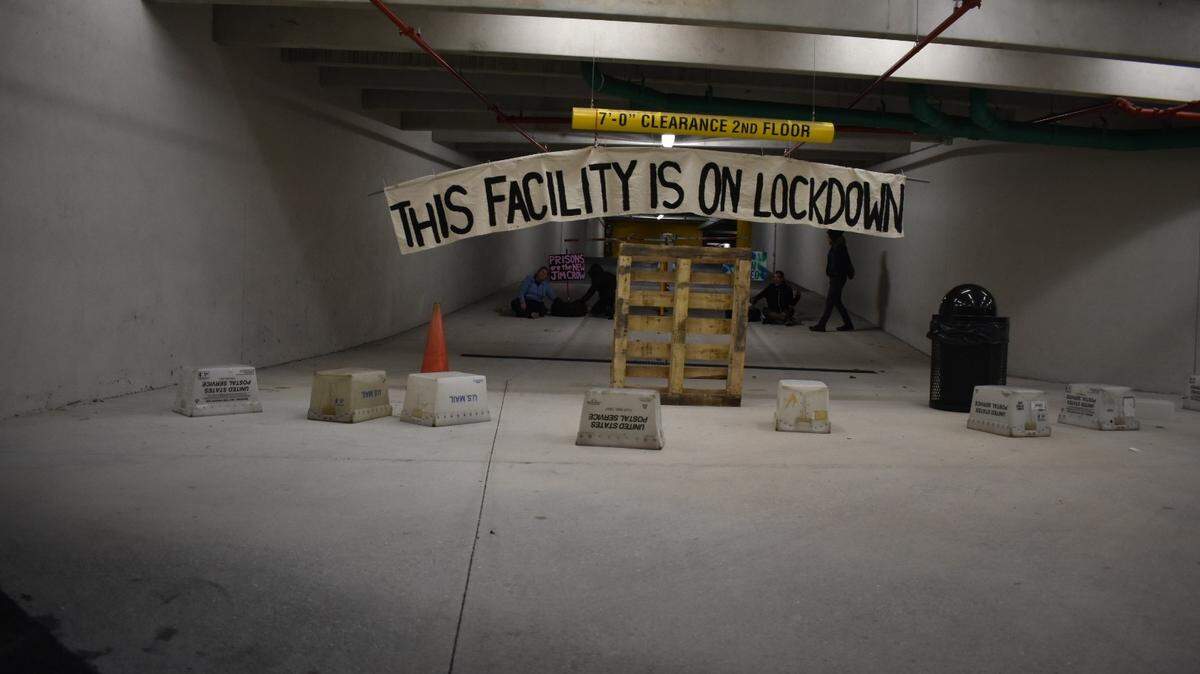
Six activists who planned and participated in a protest against private prisons at Geo Group’s headquarters in Boca Raton two months ago were rearrested during a Palm Beach County court hearing Tuesday.
Records show the six people — who were originally arrested the day of the protest on Dec. 3 and charged with misdemeanor trespassing — are now facing two additional felony charges: false imprisonment and conspiracy to commit false imprisonment, along with misdemeanor criminal mischief. An additional activist was rearrested on Friday at her Broward home and another protester, who lives out of town, is also facing the same charges.
The decision to upgrade the charges was made after Boca Raton Police investigators completed a “follow-up investigation,” according to an arrest report. The Palm Beach State Attorney’s Office has also filed with the court the formal document with the false imprisonment charges.
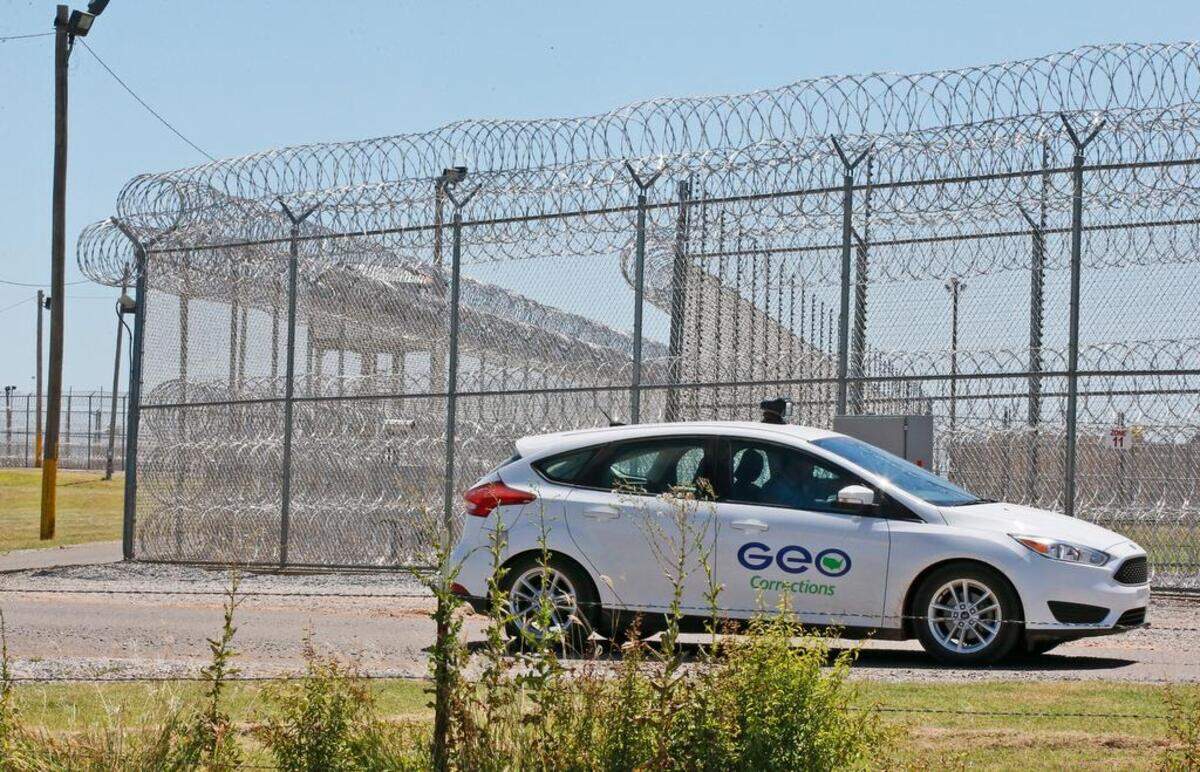
Geo Group, which also runs adult detention centers for U.S. Immigration and Customs Enforcement, is based in Boca Raton. The contractor runs one ICE detention center in Florida, the Broward Transitional Center in Miramar.
During the December protest, the activists blocked the entrances to the company’s parking garage with concrete-filled tires and barrels, as well as the doorways to “physically impede “business as usual.” However, according to new charging documents filed with the court Tuesday, police later discovered that there was actually a security guard inside the building when the protesters blocked the entrances and exits, consequently holding him there against his will.
The overnight guard, identified in the report as 32-year-old Trayon Drummond, told police that he saw people getting out of a moving truck at around 6 a.m. When he went to go push a door open, a man slammed a barrel in front of the door, not letting him out.
“I didn’t know what it was. It could have been terrorists,“ Drummond told police. According to the report, the panicked guard noted that a protester “wrote a letter and stuck it on the window for Drummond to see. He said the letter said: ‘You’re not a hostage but you must quit your job.’ “
“Based on the statement from Drummond, that he felt in fear and was not free to leave, being blocked in by the subjects, and based on the suspects working in concert, as a team, to coordinate the blocking and shutdown of the access doors, elevators and parking facilities of the Geo Group building, probable cause exists for the arrests of [the defendants] for violation of false imprisonment,” Boca Raton Detective Terrence Payne wrote in the report.
According to Florida law, the term “false imprisonment” means “forcibly, by threat, confines, abducts, imprisons, or restrains another person without lawful authority against their will; or secretly confines, abducts, imprisons, or restrains another person without lawful authority against their will.”
Sabarish P. Neelakanta, the lawyer representing all the defendants — Carlos Naranjo, 36; Mathi Paguth, 40; Nicholas Vazquez, 22; Alexis Butler, 25; Ellen Vessels, 34; Christian Minaya, 39; Wendy King, 36; and David Hitchcock, 30 — told the Miami Herald: “A lot of what is stated [in the report] is in disagreement with the truth.”
“I’ll tell you this: that the facts will tell a very different story about how this all transpired,” Neelakanta said, adding that “it’s no secret that there are many political issues surrounding Geo Group and private prisons in general in today’s political world. Individuals who protest against potential abuse are oftentimes targeted and made to feel like what they do is criminal. I think there’s a bigger story here than what may be within the four corners of this police report.”
Court documents say police believe they have enough evidence to prove that the protesters “conspired” to commit false imprisonment because they knew where every entryway and exit of the property was, “which is indicative of prior reconnaissance of the facility.” Investigators also say the probable cause is sufficient because the activists used social media to plan and rally protesters ahead of the demonstration.
Craig Trocino, director of Miami Law Innocence Clinic and longtime appellate and post-conviction attorney in Miami, told the Herald “assuming they can prove what’s written in the report, it could conceivably amount to a conviction.”
“I don’t see a prohibition here but it appears calculated,” Trocino said. “They can add and supersede charges even months later, assuming they can prove them. However in this particular context, it seems like it’s designed to send a message to future protesters. You have to ask yourself: Why these heavy charges and why now? These new charges change the calculus of the case quite significantly.”
U.S. Democratic Congressman Ted Deutch, whose district oversees the protest location, told the Herald in an email: “Obviously, I want to know why a group of protesters are being charged with false imprisonment for protesting a private prison company.”
Boca Raton Police spokesman Mark Economou told the Miami Herald that “after taking testimony, dissecting social media media, body cam footage and surveillance video, investigators concluded that there was enough evidence to charge these individuals, even all these months later. “
“And let me make this clear, we have no problem with protestors and their first amendment rights. However, I think this sends a message that if a protest crosses the line criminally, then the law is going to be applicable— whether you are protesting GEO group or protesting outside a non profit that feeds the homeless or protesting outside the public library, the law will be enforced if criminal activities take place,” added Economou.
“We will not allow our government to separate innocent families. We will not allow private companies to profit off the suffering of children,” the protesters told the Herald in December. “We will not allow their workers to sit undisturbed in air-conditioned offices while people are deprived of their humanity.”
In early 2019, banking giants Bank of America, Wells Fargo, JPMorgan Chase and others announced they would sever ties with the private prison industry — specifically GEO Group and CoreCivic, the largest operators of private prisons and detention centers in the country — because it was a “risk” to their business following national outrage over private companies profiting off the detainment of adults and children.
“Public resistance to the use of public-private partnerships for correctional, detention and community-based facilities could result in our inability to obtain new contracts or the loss of existing contracts, impact our ability to obtain or refinance debt financing or enter into commercial arrangements, which could have a material adverse effect on our business, financial condition and results of operations,” GEO Group said at the time, according to documents filed with the Securities and Exchange Commission.
A host of both big and small banks still provide more than $2.6 billion in credit to the industry, according to a recent report released by three research watchdog groups: In The Public Interest, Public Accountability Initiative and the Center for Popular Democracy.
This story was originally published February 11, 2020 at 6:41 PM.