Protestors ‘shed light’ on Homestead detention center for migrant children — literally
Binoculars in hand, Joshua Rubin stood atop a concrete barricade just a few feet away from the Homestead migrant shelter’s property line.
It’s the only vantage point that could give the protestor any glimpse into the life of the thousands of unaccompanied minors detained there after crossing the Southern border without their biological parents.
For weeks, Rubin, along with dozens of other immigration advocates, put together large signs and wedged them between tree branches in a nearby wooded area—signs big enough for the children to see.
Written on two of the banners: “Estamos luchando por ustedes,” and “No estan solos” — Spanish for “We are fighting for you” and “You are not alone.”
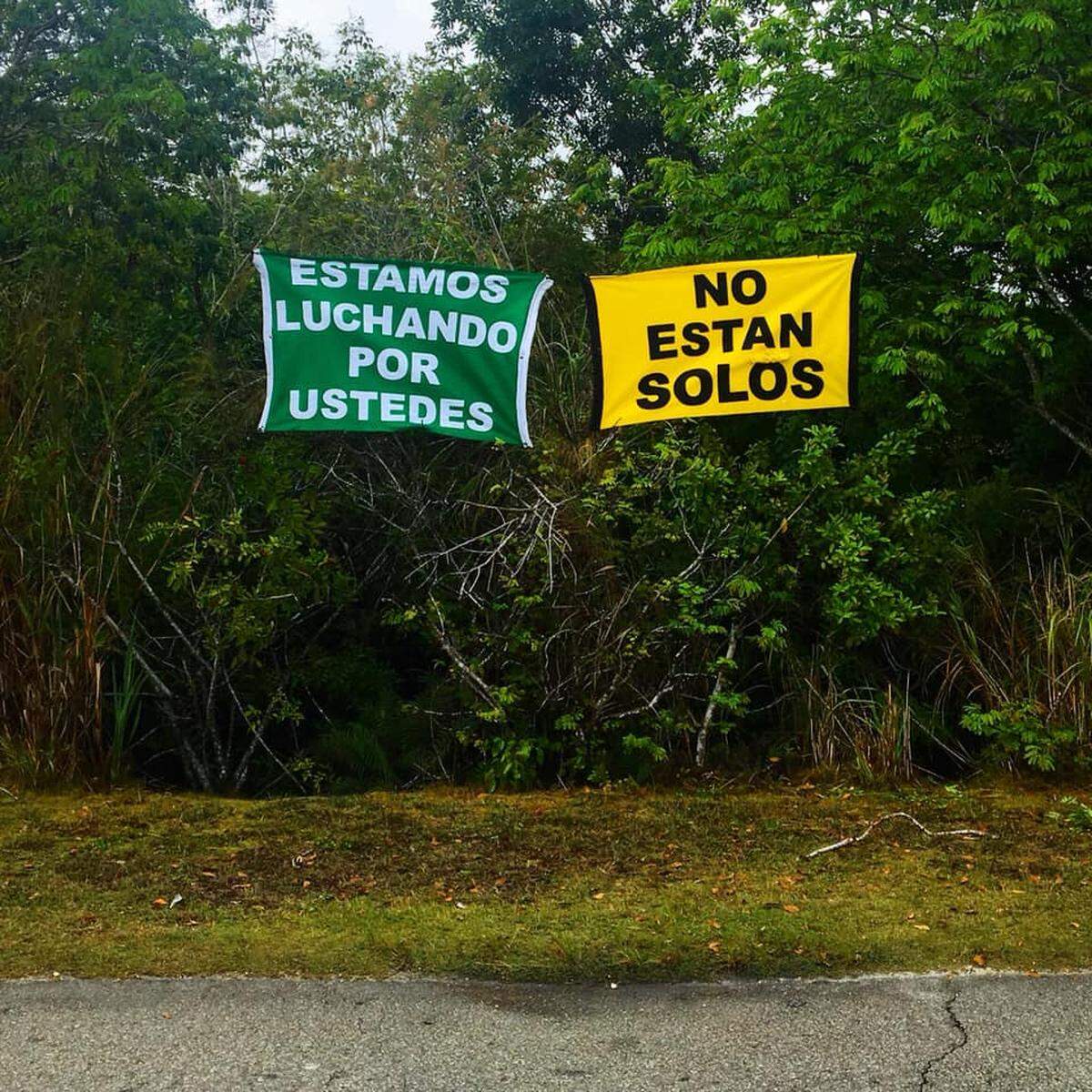
But earlier last week, according to a police report, protestors say their signs were mysteriously taken down, fueling a desire to make an even “bigger statement.”
“So we decided that we’d project our message on the buildings instead,” Rubin told the Miami Herald. “There’s no shutting us up. Children belong in homes, not a child prison.”
On Friday night, immigration groups from across the country rallied outside the shelter. Their form of a protest this time: a light show.
Projected on the buildings were messages that read “Shut it down” and “Homes Instead.”
Alessandra Mondolfi, the artist who coordinated the light demonstration said she wants people to wake up and know that this place exists.”
“The moment they step out into the yard they scan the horizon for our signs,” Mondolfi said. “Someone took them down but I will make bigger and bolder ones, like the ones tonight that shed light.”
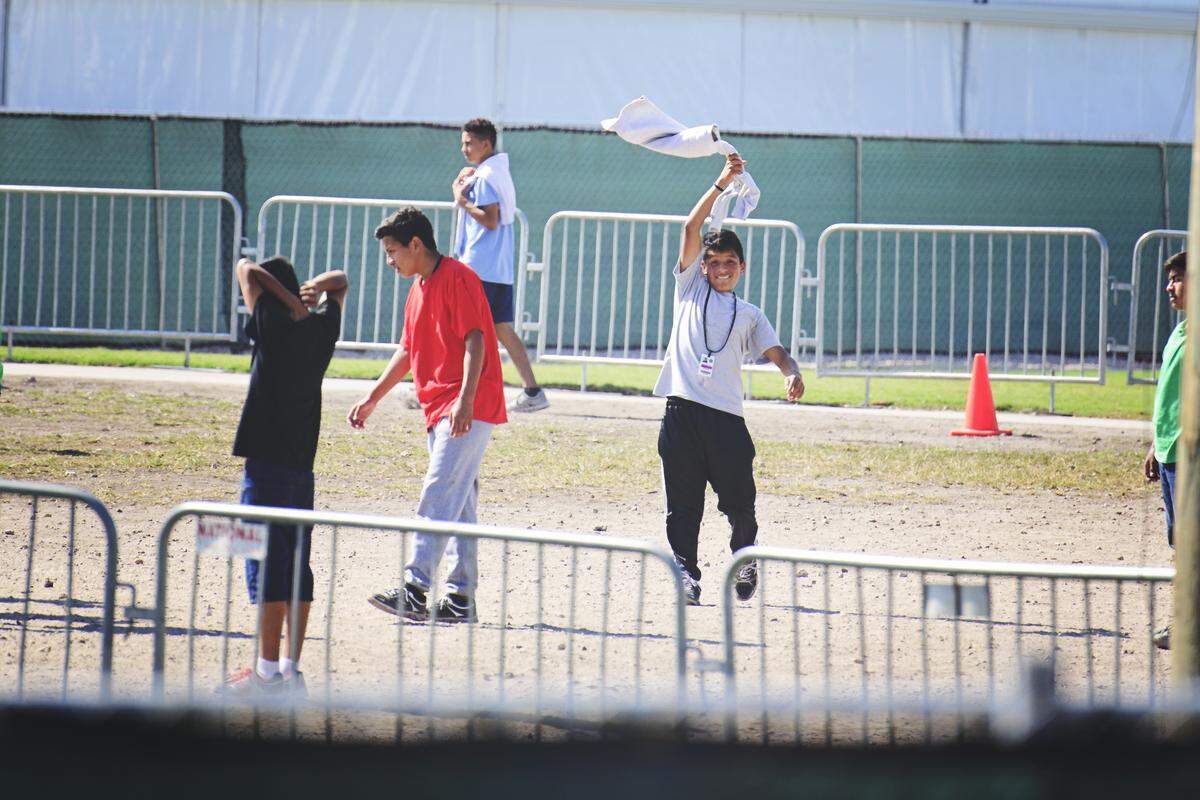
The only temporary shelter that remains open nationwide is the Homestead shelter for unaccompanied minors in South Miami-Dade. Under pressure, the Trump administration in January shut down the nation’s only other temporary shelter in Tornillo, Texas, and authorized adding thousands of beds to the Homestead facility, which is run by the U.S. Department of Health and Human Services.
Marina Vasquez, a pediatric nurse and protestor who pressured federal officials to close the Tornillo shelter by camping outside the property for months, called the detainment of children “child abuse.”
“It was so cold. I drove from Austin and slept in my car. I spent Christmas Eve, Christmas Day, New Years Eve and New Years day with the children, well outside the gates of Tornillo,” Vasquez said. “It was so cold. But I felt that I was protecting the children in some way; by being there, by witnessing.”
The protest comes a day after the Department of Homeland Security Secretary Kirstjen Nielsen wrote a letter to Congress about the overflow of migrants at the border and at existing shelters. She said the agency wants to deport migrant children back to their home countries, citing a “system-wide meltdown.”
According to DHS, late last year, the department apprehended 50,000 to 60,000 migrants a month at the southern border.
“Last month, we apprehended more than 75,000, the highest in over a decade. And this month, we are on track to interdict nearly 100,000 migrants. Unlike previous flows, these migrants are not arriving in high numbers, one-at-a-time. They are arriving in large groups,” Nielsen wrote.
Nielsen’s plea to Congress was followed by statements from President Donald Trump, threatening to close down the southern border, or at least vast stretches of it. The U.S. Department of State then confirmed that they will slash at least $500 million in aid to El Salvador, Honduras and Guatemala.
In the letter, Nielsen called on Congress to allocate funds to add thousands of beds at existing immigrant detention centers, as well as expand the number of temporary shelters.
“We need additional temporary facilities as soon as possible in order to process arriving aliens, especially those entering illegally between ports of entry,” Nielsen wrote. “We are witnessing the real-time dissolution of the immigration system.”
Temporary emergency shelters, according to federal officials, are any “unlicensed care provider facility that provides temporary emergency shelter and services for unaccompanied alien children when licensed facilities are near or at capacity.”
Being unlicensed means the facilities don’t have to be certified by state authorities responsible for regulating facilities that house children. Temporary shelters also don’t have to comply with the 1997 “Flores Settlement,” which limits the length of time under which U.S. officials can detain children at DCF detention centers — 20 days maximum.
Since temporary shelters for children are run by HHS and not DCF, they do not fall under the 20-day rule, HHS officials said.
“We don’t have a deadline on the timely manner.”
In February, U.S. Rep. Judy Chu, D-California, along with Jeff Merkley, the Oregon Democratic senator, reintroduced the Shut Down Child Prison Camps Act, which was originally submitted in December to shut down Tornillo.
The lawmakers are still looking for sponsors to support the bill, which seeks to shut Homestead down.
This story was originally published March 31, 2019 at 7:28 AM.