South Florida’s heat makes cancer patients sicker and more isolated, study says
For cancer survivors, South Florida’s unforgiving heat and humidity can be an invisible threat that dictates how the day will go.
A new University of Miami study, “When it comes to heat, I retreat,” published in the journal Environmental Research: Climate examines how 20 people with a history of cancer cope with chronic heat in Miami-Dade and Broward.
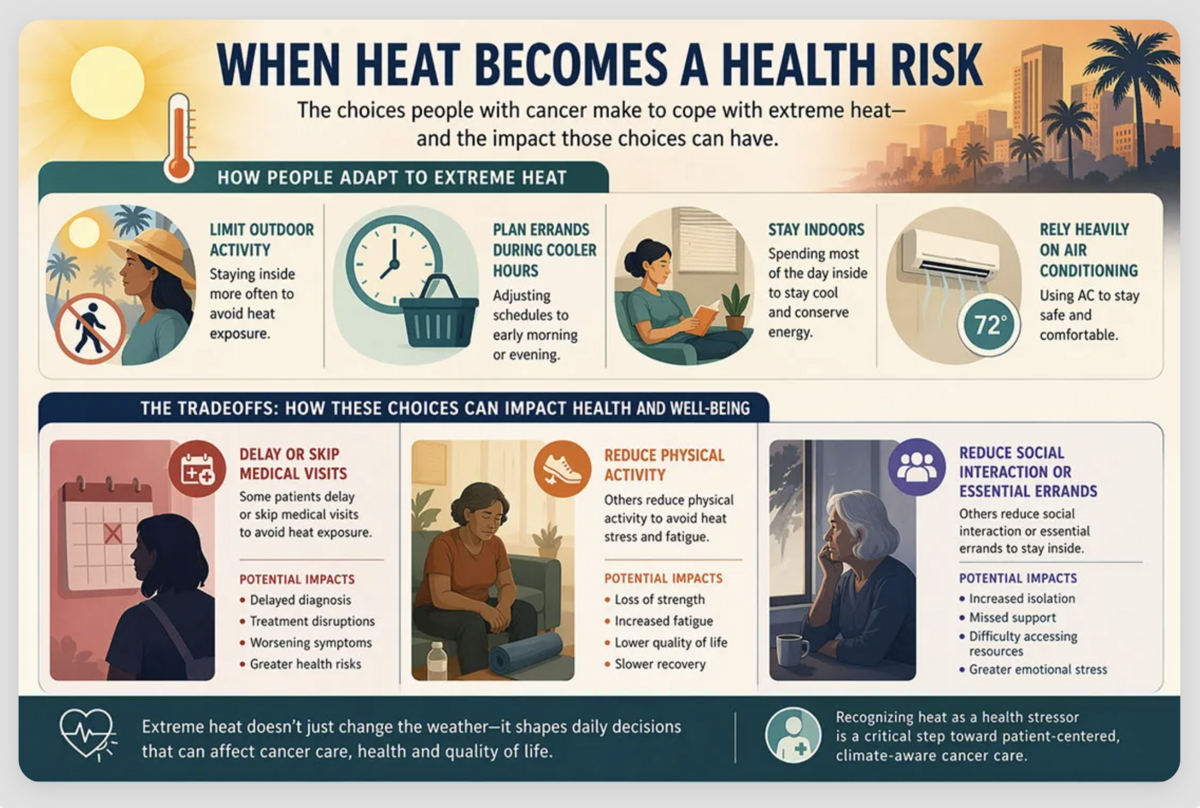
Kilan Ashad-Bishop, a University of Miami assistant professor and the study’s lead investigator, said participants described relying more on air conditioning, cutting back on social activities and rescheduling appointments to avoid the hottest parts of the day.
Doctors have long understood that certain medications, including those prescribed to cancer patients, can lower someone’s heat tolerance. It’s still unclear if intense treatments like chemotherapy and radiation also have an impact.
Just 30 to 45 minutes outside can trigger brain fog and exhaustion, forcing some survivors indoors for the rest of the day, they said. Others won’t leave home without a fan or an ice pack. One cancer survivor told researchers the sun “sucks the life out of him.”
In some cases, the consequences were severe enough to need emergency medical care. One participant with recurring lymphoma, who went by the pseudonym Anita in the study for privacy, said she was hospitalized after suffering a heat-induced seizure.
“I can’t have heat exposure with my medications,” she said. “Some of them bring out hives, rashes… so if you like to be outside in the sun, you can’t. So I haven’t.”
Staying home
Being uncomfortably hot also led to patients spending much more time at home, where they could control their environment.
“What was most important was staying comfortable, staying cool, and that necessitated staying home,” Ashad-Bishop said.
Patients also reported skipping physical activities encouraged by doctors, like walking for exercise, because of the physical toll of being outside. Survivors described scheduling essential errands early in the morning or later in the evening to avoid peak temperatures.
“I might go outside for 30 minutes to an hour at most. I’m basically inside all day. Staying cool is what it’s all about for me,” one prostate cancer survivor told researchers.
But retreating indoors can come at a cost. Spending more time alone, or limiting social interactions to a spouse or partner, can contribute to isolation and other mental health challenges, Ashad-Bishop said.
“If we don’t consider the context of climate change, then we’re going to see more and more people trying to adapt to extreme weather in ways that we know from decades of work threaten their health in other ways,” she said.
Climate change is significantly increasing the number of dangerously hot days in South Florida, and nights offer less relief than they used to.
Several participants said extreme heat also led them to postpone medical appointments because they felt sick or uncomfortable traveling outdoors. Most still attended eventually, recognizing that follow-up care and screenings could be lifesaving, but researchers said delays remain a concern.
“Anita” told researchers that her doctor’s office would sometimes call her an Uber when she was experiencing heat exhaustion.
Making heat part of the cancer conversation
Previous research has shown that cancer patients and survivors may be especially vulnerable to heat-related illness because of difficulties regulating body temperature, medicine-related dehydration and fatigue, and financial constraints from high medical bills that can make it hard to pay energy bills.
Yet despite frequent interactions with different healthcare providers, most participants said conversations about heat risks were rare.
Felicia Casanova, a co-investigator on the study, said one goal is to empower patients to ask more questions about how heat may interact with their treatment plans.
“It often goes unnoticed or is misdiagnosed as something else, and I think there’s a danger in that,” Casanova said.
When Anita first told a nurse about her heat sensitivity, she said she was told it was likely menopause. That was before she was hospitalized with a heat-induced seizure.
Considering environmental factors like heat would be a change for how health care professionals work with their patients.
“As we think about what our health looks like in a rapidly shifting climate, we have to think beyond meeting basic needs,” Ashad-Bishop said.
That could include additional education and energy assistance programs to help cancer patients with their air conditioning bills, Ashad-Bishop said.
Casanova said the researchers hope to continue studying the issue and build enough evidence to support changes within the healthcare system, including how cancer patients are educated about chronic heat exposure.
Ashad-Bishop said many questions remain unanswered, including how certain treatments, such as chemotherapy, might make people with a history of cancer more susceptible to heat. She acknowledges that 20 people is a limited study and sees this as a start of the investigation into heat’s impact on cancer patients.
Ashley Miznazi is a climate change reporter for the Miami Herald funded by the Lynn and Louis Wolfson II Family Foundation and MSC Cruises in partnership with Journalism Funding Partners.