A ‘super’ El Niño could form. What does that mean for South Florida?
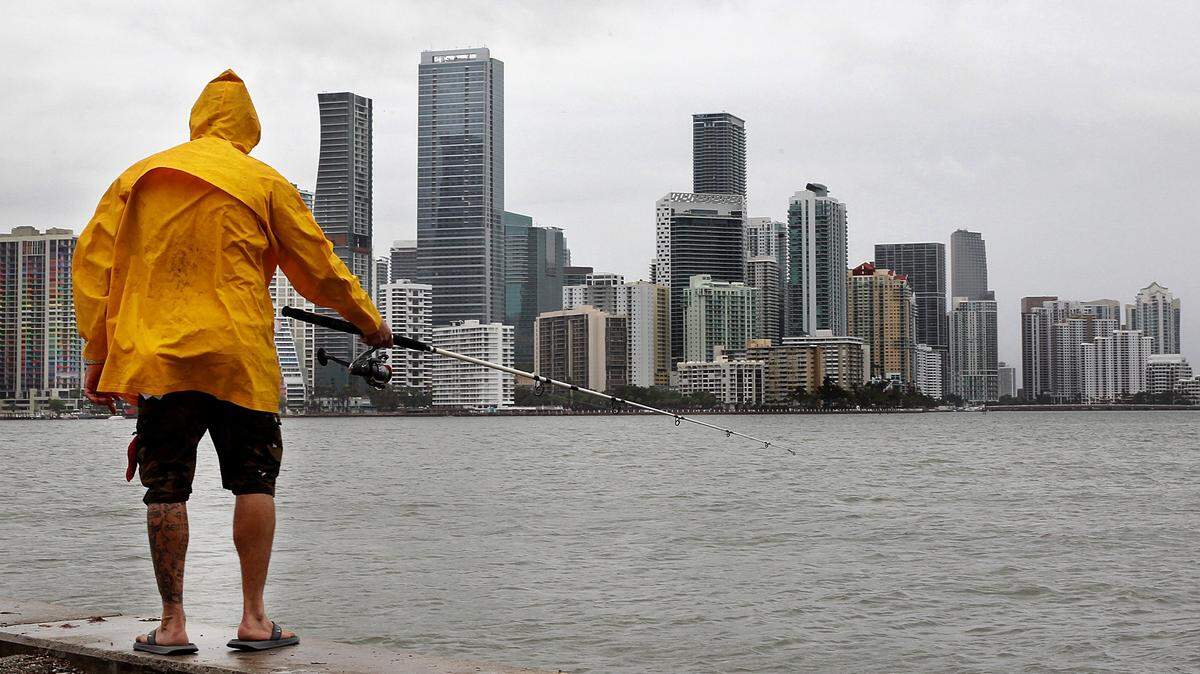
A potentially historic El Niño is brewing in the Pacific — one that forecasters say could become among the strongest ever recorded, reshaping weather patterns worldwide by altering rainfall, temperatures and how hurricanes form.
El Niño is a naturally occurring climate pattern that brings warmer ocean surface temperatures in the central and eastern tropical Pacific every two to seven years. This could shape up to be the biggest El Niño since the 1870s.
So what does a possible “super” El Niño mean for South Florida?
“With big El Niños, there are winners and losers. South Florida is generally speaking a winner,” said Ben Kirtman, an atmospheric scientist and dean at the University of Miami’s Rosenstiel School.
One of the biggest local effects of the powerful climate phenomenon is usually fewer hurricanes and tropical storms in the Atlantic. Tropical storms and hurricanes form vertically upward. El Niño increases the wind shear higher up in the atmosphere which can throw the formation off course.
That makes it harder for storms to strengthen. It’s kind of like trying to keep a candle lit while blowing on the flame.
Combine that with the high-pressure system called a “Bermuda High” that sits in the Atlantic all summer long and steers where storms make landfall. As it retreats to the northeast toward the central and North Atlantic out at sea, it sends more storms out into the open ocean instead of pummeling toward the U.S. coast.
Put together, those two factors often mean fewer storms threatening South Florida — but that doesn’t mean zero risk. Storms still happen in El Niño years. In 1992, for example, there were only five named storms—but Hurricane Andrew still made landfall in South Florida.
“People can’t let their guard down,” said Barry Baxter, a meteorologist with the National Weather Service in Miami.
Colorado State University is predicting a near to slightly below average hurricane season. They are calling for 13 named storms, 6 hurricanes and 2 major hurricanes.
What can weaken El Niño’s storm-suppressing benefits
Even during El Niño years, other climate drivers can offset its suppressing effects for hurricanes, climate change being one of them.
The tropical Atlantic has been unusually warm in recent years because of climate change, providing extra energy that can fuel storm formation, Kirtman said.
Then there’s the “Madden-Julian Oscillation,” Kirtman said. It covers the whole tropics with a huge formation of rising air, thunderstorms, clouds and heavy rain that is followed by dryness. The dry side of the formation helps prevent storm development. The moist, high-energy formation promotes storm development.
The system races around the globe for 45 to 60 days, and if the high moisture formation overlaps with a storm formation during peak season, then it could offset the El Niño storm suppression.
A wetter dry season and higher king tide flooding
El Niño won’t raise the air temperature this summer, but South Florida may still feel some of its heat in the form of humidity, from the oceans heating up, Kirtman said.
It’s most noticeable effects happen during the winter, when El Niño will actually make things cooler and wetter, which is another win for the region, Kirtman said, especially since wet season still isn’t predicted to bring enough rain to fully recover from the record drought.
William Sweet, a National Oceanic and Atmospheric Administration (NOAA) oceanographer spearheading efforts to track and predict changes in sea level and coastal flooding, said “rain is a welcomed thing, until it is not.”
Looking at the data of El Niños, strong ones, like the one anticipated to form, come with more high tide flooding. It’s especially apparent on the West Coast but in large sections of the East Coast, too.
“Every time we have a strong El Niño, we tend to have record breakers all over, meaning the number of days with water in the streets. Some years are worse than others, more times than not these align with El Niño,” Sweet said.
During El Niño, the jet stream pushed farther south, sending more storms towards the southeast and mid-Atlantic coasts, including Florida. These windstorms disrupt the Gulf Stream, causing it to fluctuate or weaken at times.
Sweet compared the Gulf Stream to a banjo string. When strong weather systems “pluck” it with wind and pressure changes, the current can speed up and slow down in ways that affect sea levels along the coast by a foot or so.
If high tides roll in during a Gulf Stream slowdown and higher seas can make coastal water levels rise quickly and cause high tide flooding. This flooding becomes even worse if accompanied by heavy rain or direct storm surge.
Scientists see a clearer connection between El Niño and unusually high coastal water levels from about New Jersey to South Carolina. In South Florida, the picture is less clear.
In South Florida, some El Niño years bring higher water levels and flooding, but other non-El Niño years can too. What that suggests is that El Niño is only one piece of the puzzle of high tide flooding in South Florida. Rising sea levels also are the result of climate change and fluctuate with regular weather patterns, like a distant tropical storm.
What are the odds it turns out to be a historic ‘super’ El Niño?
One of the key indicators of El Niño strength lies beneath the ocean surface, where warm water builds in the western Pacific near Australia. Similar heat patterns preceded the major 1997–1998 El Niño, one of the strongest on record, and current conditions show comparable warming in that region.
Still, forecasting intensity remains difficult. A strong El Niño requires not just warm ocean conditions but also supportive atmospheric conditions, which are not guaranteed. Forecasters currently estimate an 82% chance of El Niño developing by early summer. The National Weather Service also reports a 37% chance that it could become a very strong event by fall.
Climate warming is making forecasting trickier, Kirtman said.
“We’re calling for this uber El Niño to happen, but how much of the warm water that we’re seeing at this moment in time is due to the fact that the oceans are just warming up, and how much is actually this natural variability that’s superimposed on that? That’s a hard question,” he said.
Ashley Miznazi is a climate change reporter for the Miami Herald funded by the Lynn and Louis Wolfson II Family Foundation and MSC Cruises in partnership with Journalism Funding Partners.
This story was originally published May 19, 2026 at 4:38 PM.