Key Biscayne spent $8M to make a climate-resilient flood plan. Then they tossed it
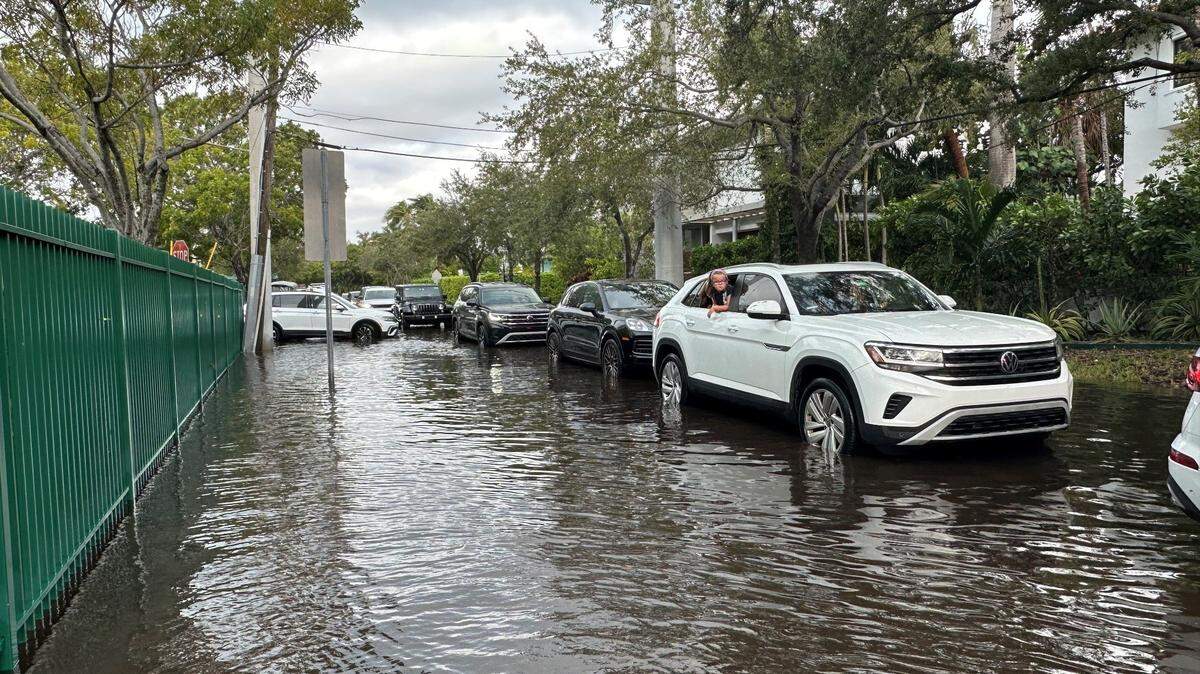
On days with heavy rain in Key Biscayne, golf carts can stall out in the middle of the street, electric cars get stranded in rising water and residents wade through inches — sometimes feet — of flooding. The problem has grown increasingly worse and six years ago, the village council decided that it was time to come up with a plan to keep flooding from disrupting life on the island.
But when presented with launching its long-awaited, climate-resilient solution, village leaders and residents rejected it — deciding the disruption of fixing the problem outweighed the cost of living with it.
About $8 million was spent to work with engineers to create a plan to upgrade Key Biscayne’s aging drainage system — replacing old pipes and raising roads that flood most often near the elementary school. The design was finished, permitted, financed and ready to be built. But last week, the council scrapped the whole plan, leaving $76 million in grants and loans on the table that can’t be transferred.
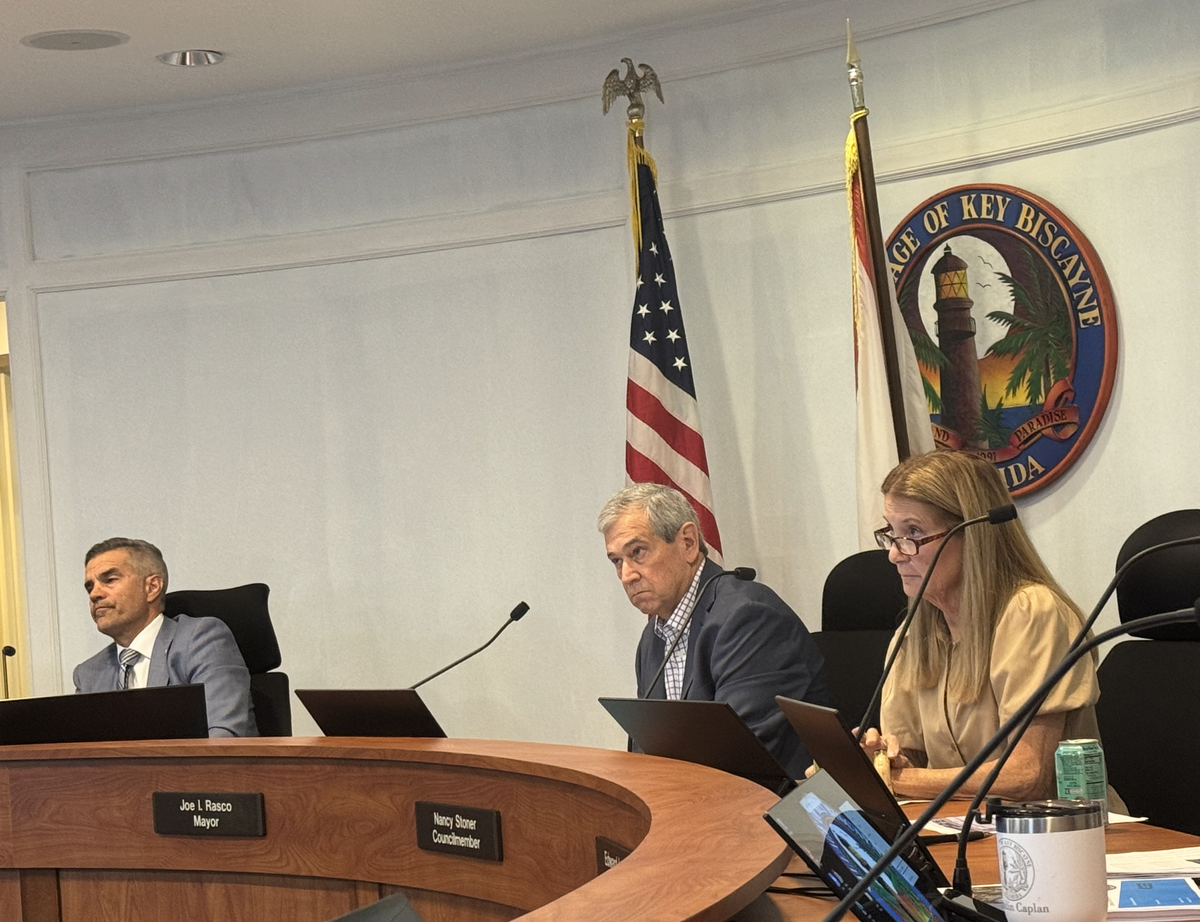
“We are looking at this and asking, can we do a little bit less, for now?” Key Biscayne Mayor Joe Rasco told the Herald. “We need to fix the flooding, but we need to do it in a way that our quality of life doesn’t suffer.”
The alternative plan the commission is now considering centers on installing a series of six injection wells in an area that frequently floods that would send stormwater underground instead pumping it out to Biscayne Bay. Rather than replacing the island’s aging pipe system, the approach would largely rely on the existing drainage network to collect rainwater and funnel it into wells, where it would be injected below the surface into porous rock formations.
It’s a plan critics say is less effective and relies on the same aging infrastructure that the original plan intended to replace.
“You have to ask yourself, is it worth abandoning a design that was very rigorously and methodically developed over many, many years and is ready to go to construction for a concept that is riddled with uncertainty and risk,” said Roland Samimy, the Chief Resilience and Sustainability Officer at the Village of Key Biscayne.
Reviving a plan rejected a decade ago
The nail in the coffin for Key Biscayne’s flood plan designed by AECOM, a consulting firm, was how the project would require cutting down more than 500 trees, 300 of which were palm trees, to be replaced with younger, more saltwater-tolerant trees that’d eventually offer more shade.
Councilman Ed London said that he’d rather get his feet wet occasionally than live in “a treeless desert for twenty years for waiting for new growth to mature.”
A group of community members echoed this sentiment at Wednesday’s public meeting,
“Our trees are not decorations. They keep shape, beauty, habitat, cooler streets and a sense of home,” said Helena Iturralde, a Key Biscayne resident.
Despite the community’s resistance, the stakes are high. With a few hours of rain, Christopher Miranda, Key Biscayne’s public works director, said there can be six inches to more than a foot of water on the street. Year after year, the community survey shows flooding and traffic are the community’s top two concerns, he said.
The tough decision juggling multi-million dollar flood plans underscores how challenging it is for South Florida communities, even wealthy ones, to not just say they are resilient, but to act on it.
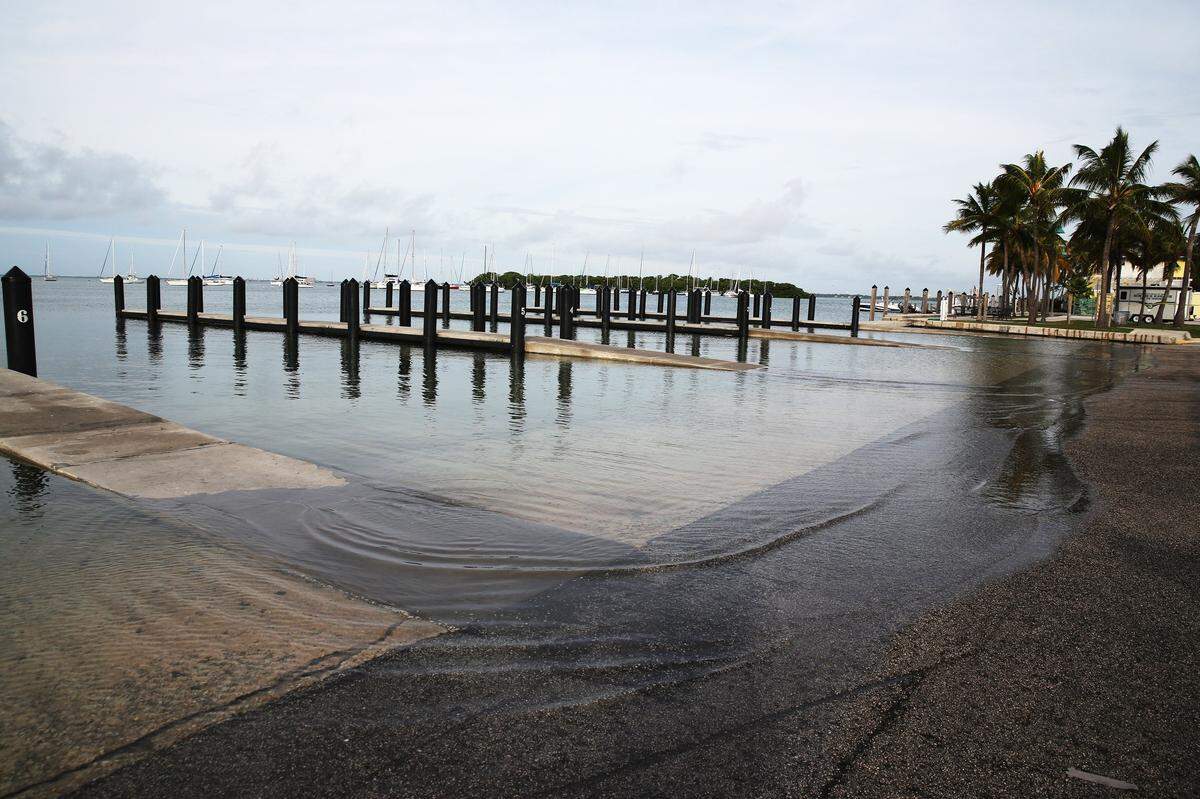
Two feet of sea level rise is expected by 2060. The lowest-lying streets in Key Biscayne flood about 15 times a year now, and without fixes some spots could see up to 90 days of flooding every year by 2040, consultants from AECOM found. By 2070, some of the streets could be permanently underwater.
Now the village is revisiting the idea of injection wells — an idea that was rejected years ago.
In 2015, Key Biscayne commissioned a study to look at using shallow injection wells as a cheaper alternative to rebuilding the island’s drainage system. But this study and another more recent one found that rising sea levels make injection wells less viable options to handle flooding.
Miami Beach has had similar concerns. On the city’s “Rising Above” webpage, it says that most of the city’s stormwater injection wells are “no longer viable” because the city is dealing with a reduced capacity to push water underground. Existing pump stations are no longer connected to injection wells and are instead directed to Biscayne Bay and some surrounding canals.
The injection well plan also wasn’t designed with as long of a future in mind. The nixed pipe and pump plan was designed to work until 2060, and the new injection well concept was designed to 2050.
The original pipe and pump plan was also designed for more intense and less common rainfall events while the injection well system was designed for smaller, more common downpours.
Climate change makes these freak “rain bombs” more common. We’ve already seen it in Fort Lauderdale in 2023 with what meteorologists were calling an extreme, rare disaster and June 2024, when a month’s worth of rain fell in a single day.
READ MORE: Climate change can amplify big rainstorms, but true fixes are far off for South Florida
Funds left on the table
The price tag for the new pipe and pump system was another issue locals and council members balked at, but the plan already accounted for most of the funding.
For ripping up the ground and installing a new large underground network of connecting pipes and pumps that collect floodwater, filter and treat it, and dump it into Biscayne Bay, the price tag was around $44 million.
Since the roads and trees were going to be torn up and replaced, it made sense to also elevate the roadway as appropriate, a few inches in most areas and six to 18 inches in the most low-lying areas, Samimy said, which would cost around $20 million. The village wanting to put its electrical and cable lines underground brought the total to a hefty $90 million.
But over the last four years, the village secured $76 million in funding that isn’t transferable to new projects, said Key Biscayne grant manager Colleen Durfee.

About $60 million of that came from low-interest state and federal loans for water infrastructure projects.
It took the village multiple tries over the years to receive the $60 million, Durfee said.
Key Biscayne also won $16 million in grant funding that came from Resilient Florida and a state water quality grant. Now the village has to return it.
“They don’t consider injecting water into the ground improvement to water quality in the Bay,” Durfee said. Researchers at FIU told the Herald it’s a lot more difficult to measure water quality in injection wells than water that’s being pumped to the Bay.
The mayor didn’t seem worried about finding new sources of funding for the new plan, and that losing the grants and loans was just a “casualty of doing something pretty heroic.”
The rough estimate of the six injection wells came out to between $45 and $58 million. But that just an early estimate, that could also balloon the same way the pipe and pump plan did.
For example, the cost is also contingent on whether the old pipes need to be replaced. Christopher Miranda, the village’s public works director, said. While the existing pipes are being maintained now, “they still have some issues,” like groundwater making it into the system.
Key Biscayne’s mayor closed Wednesday’s meeting by letting the council and community know it seemed it was going to be expensive no matter the route they take.
“There’s going to be problems, and we need to be honest, we are leaving money on the table,” Rasco said.
Ashley Miznazi is a climate change reporter for the Miami Herald funded by the Lynn and Louis Wolfson II Family Foundation and MSC Cruises in partnership with Journalism Funding Partners.