DeSantis announces funding for flying taxi landing and take-off pads
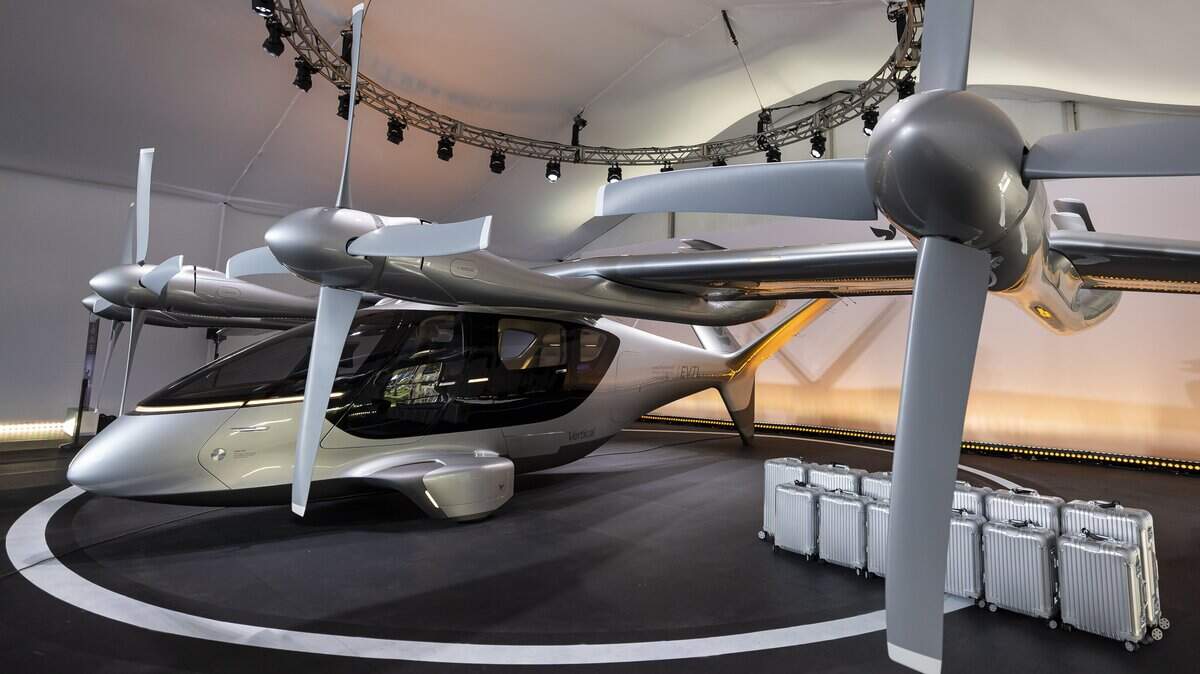
Florida is one step closer to being one of the first states to launch flying taxis.
Governor Ron DeSantis signed a bill this week that offers financing to cover the full cost of public vertiports — hubs where the next-generation aircraft can charge their batteries, take off and land.
If the federal government offers to pay some of the costs, the bill says Florida will help pay for the majority of whatever is leftover.
The flying taxis look like a cross between a small jet and a drone, with rotors up top that assist with a soft takeoff and landing. Known as eVTOLs — electric vertical takeoff and landing aircraft — they run on batteries and require no runway.
Manufacturers have already displayed their prototypes in Miami, showcasing to business executives and investors their sleek design and ambitious promise to save residents time while moving aviation in a more climate-friendly direction.
They’re designed for short regional trips under 100 miles, typically flying between 1,000 and 5,000 feet (helicopters can reach about 15,000 feet). For comparison, the guitar-shaped tower at the Seminole Hard Rock Hotel rises about 450 feet.
Read more: ‘We’re not waiting’: Electric flying taxis could be in Miami sooner than you think
Flying cars aren’t going to solve climate change, but because they run on electricity instead of gas, they could be more sustainable than traditional cars — depending on where that electricity comes from and where their takeoff and landing pads are built. That said, flying taxis use more energy per mile than electric cars, so they’re less efficient overall. Environmentalists are also worried about what hundreds of these vehicles flying around every day could mean for bird populations.

As a new class of aircraft, flying taxis require their own testing and federal approval. In June, President Donald Trump signed an executive order directing the FAA to work with companies on a “pilot program” to conduct flying car trials.
Last month, the Florida Department of Transportation (FDOT) was selected as one of eight to lead the pilot testing. A U.S. Department of Transportation promotional video for the program featured the Jetson’s cartoon, with a title slide that said, “Once a fantasy, now a reality.”
“Working together, we will ensure America leads the way in safely leveraging next-gen aircraft,” said U.S. Transportation Secretary Sean P. Duffy in a March press release announcing the pilot program selections.
The state’s excitement about the flying taxis has brought companies interested in bringing their flying taxi models to Florida, including Archer, BETA, Electra and Joby which were selected to work with the Florida Department of Transportation on the pilot program.
The state has made other investments in the sector, including building the nation’s first aerial testing facility at the Florida Department of Transportation’s SunTrax, a 475-acre facility in Orlando that’s also used to test drive self-driving cars.
“The state of Florida has really leaned in, and they understand, and they recognize the benefits of this to the communities across the state, so they’ve been a tremendous partner for us and just very much a proponent for this industry,” said Kristen Costello, the head of regulatory affairs at BETA Technologies.
“It was a no-brainer that Florida was a prime state to launch this technology with,” Costello said.
Ashley Miznazi is a climate change reporter for the Miami Herald funded by the Lynn and Louis Wolfson II Family Foundation and MSC Cruises in partnership with Journalism Funding Partners.