Are electric vehicles really saving Miami-Dade money? Commissioners want answers
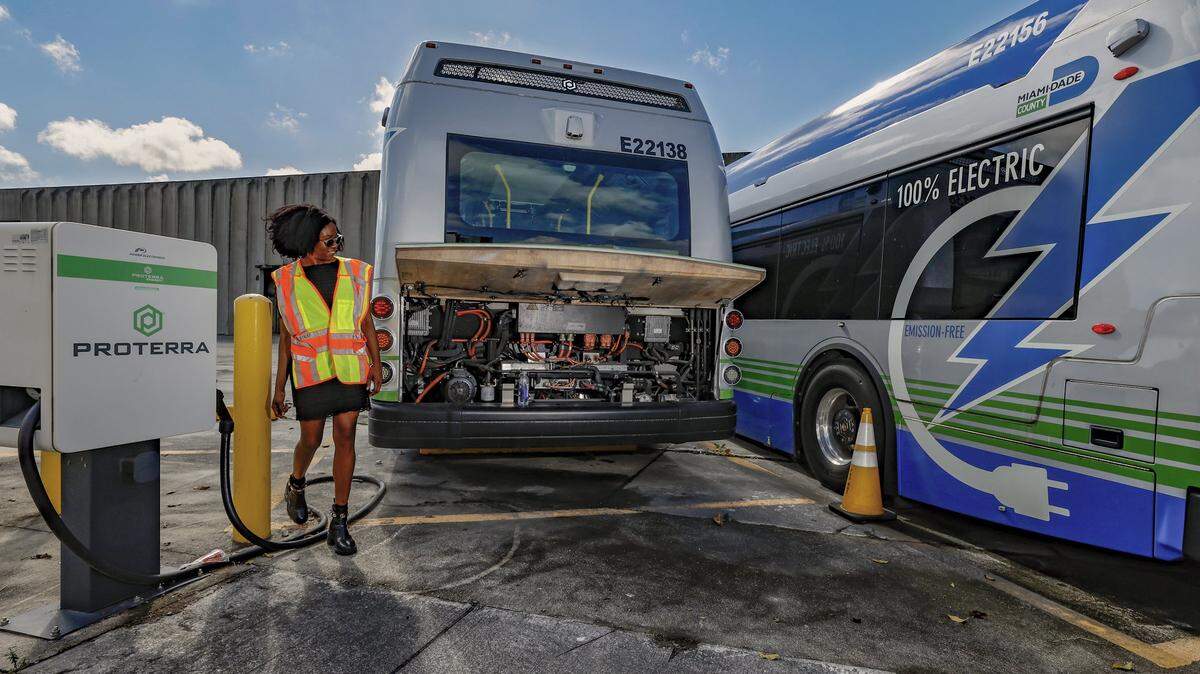
Miami-Dade commissioners want to know if they will see a return on their green investment.
Miami-Dade County set out to reduce its emissions through a greener bus fleet, investing millions in electric buses and launching its first ever Bus Rapid Transit service — the longest fully electric bus route in the United States. But a Miami Herald report last year found that most of the electric buses purchased from a particular vendor, a California-based company called Proterra, were not even operational.
Last week, the county commission gave the mayor’s office 30 days to produce a detailed audit of the county's electric vehicles.
Commissioners want a report that details projected savings from use of electric vehicles currently in operation, how many miles the buses can travel between charges, how many electric buses are operational, which vehicles are out of service and why, ongoing maintenance and repair challenges, among other details. Commissioners requested a cost breakdown by vehicle and manufacturer.
“By seeing how much these buses are being utilized, we can assess what kind of environmentally friendly contribution we’re making on the county, see if it’s just something nice to say, or if we’re not helping neither the environment or the taxpayers,” Commissioner Roberto Gonzalez, a sponsor of the resolution, said.
READ MORE: South Florida’s fleet of electric buses cost $126 million. Only a few are still running
Commissioner Natalie Orbis, who also sponsored the measure, said the buses were sold to the public as both an environmental win and a cost-saving investment — but that promise falls apart if the buses break down far more often than their diesel counterparts.
“We had a huge deficit last year, and we can’t continue to act irresponsibly on behalf of our residents,” Orbis said. “Before we spend more money on electric vehicles and electric buses, we need to take a hard look at what’s actually working.”
The measure also directs the administration to develop a plan for disposing of electric vehicles, batteries and charging infrastructure once they reach the end of their useful life.
.JPG "MIA_2025-02-19AD0001electricProterrabusesjpg (1).JPG")
The Herald report found that most of the Proterra buses had broken down within a year of deployment and were pulled from routes as maintenance requests piled up. Only three to seven were said to be on the road at a given time.
Adding to repair headaches, Proterra has since filed for bankruptcy, leaving the county with a parts shortage and vehicles they can’t fix. A new company called Phoenix EV purchased Proterra’s transit bus manufacturing business.
Miami-Dade paid $72 million for 69 Proterra buses, largely funded through the county’s half-penny transportation sales tax, along with state and federal grants. The county originally contracted for 75 buses, but only 69 were delivered.
The county contracted with a different vendor called New Flyer to purchase new 60-foot electric buses that are used on the first leg of the county’s new rapid transit busline from Dadeland to Florida City. Stacy Miller, the Director/CEO, Miami-Dade County Department of Transportation and Public Works said that the New Flyer buses allow them to deliver a more dependable and efficient service to the county.
“Working with partners that have proven track records and established maintenance supply chains allows us to move forward more confidently as we continue modernizing our fleet without compromising service,” Miller said.
Still, commissioners noted that with a $400 million budget deficit last year the county needs to scrutinize every major purchase.
“I want to make sure it makes sense for taxpayers,” Orbis said. “With gas prices coming down, major manufacturers like Ford and GM scaling back EV investments, and federal EV incentives ending, this is the time to review the facts, measure real-world performance, and make decisions that serve the long-term interests of Miami-Dade County.”
Ashley Miznazi is a climate change reporter for the Miami Herald funded by the Lynn and Louis Wolfson II Family Foundation and MSC Cruises in partnership with Journalism Funding Partners.