Heat-hardy corals turn white off Broward. Bleaching ‘rare’ and ‘concerning’
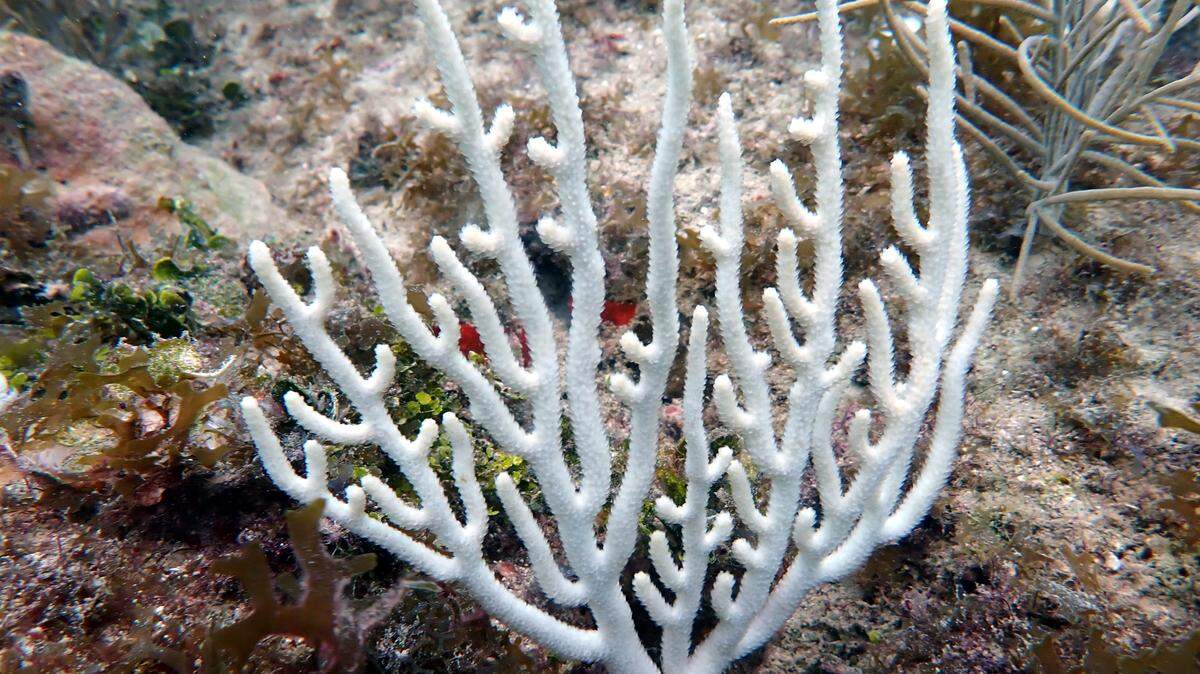
Heat-hardy corals off the coast of Broward County escaped a mass bleaching event two years back that devastated much of South Florida’s reef tract.
They couldn’t take the heat this summer. Earlier this month, researchers documented that several species of soft corals that typically weather high temperatures had also gone ghostly white.
Jose Lopez, a professor with Nova Southeastern University’s Halmos College of the Arts and Sciences, called the discovery ‘rare’ and ‘concerning.’
Bleaching, caused mainly by high ocean temperatures but also pollution, can put corals under “long term stress” that weakens them and can sometimes kill them.
“Corals are the canaries of the ocean. Like canaries in the coal mine ocean form. And this is another sign,” Lopez said.
Over the past few weeks, ocean temperatures off Broward’s coast have hovered around 87 degrees Fahrenheit – just above the local bleaching threshold of 86 degrees. Typically, tropical storms and hurricanes help cool ocean waters. And while a few storms this season helped briefly, an otherwise quiet hurricane season meant ocean temperatures stayed “unusually warm,” the NSU scientists said.
“I think the combination of very flat, clear water and sustained temperatures is what drove the bleaching,” said Nick Jones, an NSU post-doctorate graduate.
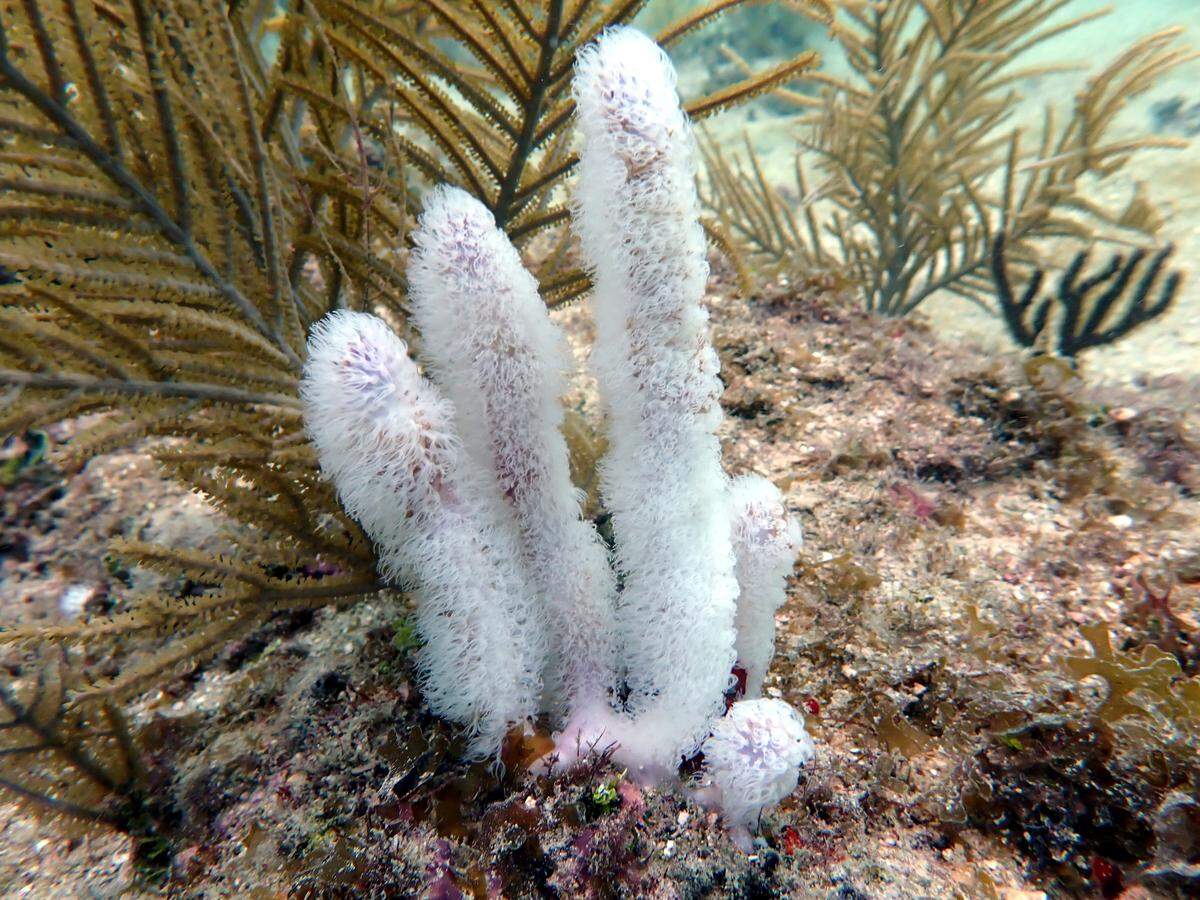
The corals they’re seeing bleached are called octocorals, also known as soft corals. The effected species lie just offshore of Fort Lauderdale and Dania Beach in about 20 feet of water. Soft corals include species like the purple sea fan or branching corals without an outer skeleton.
“Octocorals tend to bleach less than the stony corals, or they seem a bit more resistant to those higher temperatures,” Lopez said. “So seeing them bleach tells us conditions are changing.”
The corals that are seeing the worst of it are a cylindrical-looking branching coral called Briareum abestinum, commonly known as the “corky sea finger” that sway in the ocean currents. Jones found more than 95% of this species bleached in their survey area.
Their bleaching discovery comes at a time when a new scientific report warns that the Earth has reached a critical climate tipping point – a stage where the impacts of climate change may become irreversible. The report, backed by Amazon founder and Miami resident Jeff Bezos, and authored by over 150 scientists said warming ocean temperatures, acidification, overfishing and pollution are driving mass coral bleaching and widespread reef mortality — impacting more than 80% of the world’s reefs.
.jpg "Antilogorgia (1).jpg")
This climate report is funded by MSC Cruises USA and the Lynn and Louis Wolfson II Family Foundation in partnership with Journalism Funding Partners. The Miami Herald retains editorial control of all content.