Florida most at risk of ‘severe coastal flooding.’ New research shows where
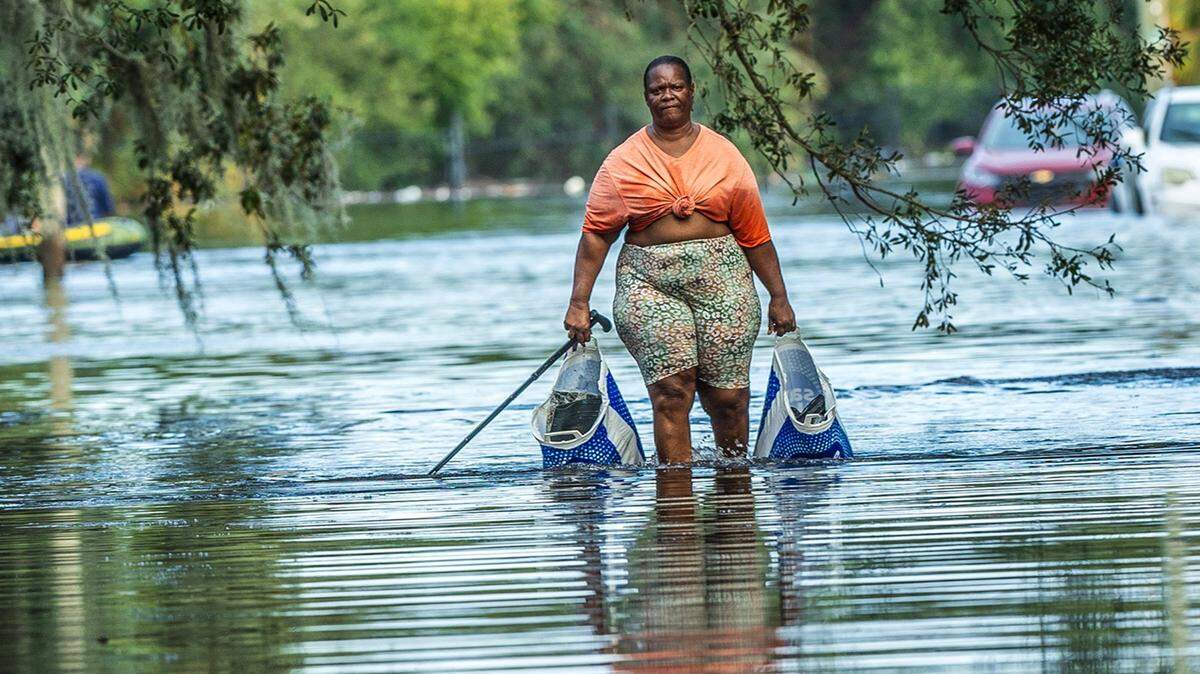
Florida is the state where the most people and the most properties will be at risk of experiencing “severe coastal flooding” by 2050, according to new analysis released on Wednesday.
Just 25 years from now, a total of 23,000 people and 17,000 homes in Florida will experience annual coastal flooding, with high tides or strong winds that whip ocean water onto land, including into areas that would have previously been unaffected, research by non-profit Climate Central found.
“When we think about the fact that this is just within the next 25 years, this is a level of exposure that’s going to require a massive amount of planning and investment in coastal resilience,” said Kristina Dahl, vice president for science at Climate Central.
That Florida is especially vulnerable – with more homes and people than the next most at-risk states of New York, New Jersey and Louisiana – is in part because it has a long coast that lies almost at sea level. It it also reflects the state’s approach to zoning and planning, with high population density right in the areas most vulnerable to catastrophic damage.
With some coastal areas already frequently overwhelmed with the excess water coming from sky and sea, continuing to emit heat-trapping greenhouse gases – 74 percent of them from fossil fuels – is making matters worse: As ice from land masses like Antarctica and other places melts into the oceans, it is raising sea levels. That allows tides and storm surges to reach areas that hadn’t been flooded before.
“Say a king tide floods two blocks of Miami today, when you raise the sea level, that king tide will flood a larger area,” Dahl said.
The research was released alongside a “Coastal Risk Finder” that allows users to zoom into specific areas and adjust outcomes based on whether political leaders and industries implement policies to transition the economy to cheaper, more sustainable energy sources like solar and wind power.
In Miami-Dade, for example, the current targets to cut emissions would lead to annual coastal flooding of 2,500 residents and 1,700 homes by 2050. “Sweeping cuts” would almost half the number of people and properties affected – down to 1,300 and 930, respectively. Under “unchecked emissions”, however, the number would rise dramatically, to some 3,200 people and 2,200 homes affected by annual coastal flooding.
In Broward, 1,700 people and 1,200 homes will be see annual coastal flooding under the current target. With sweeping cuts of emissions, that number would drop to 1,400 people and 990 homes. “Unchecked pollution” however, would put 2,200 people and 1,600 homes at risk.
Most likely, the reality will be much bleaker. The mapping neither accounts for rainy day flooding, which already affects large areas across Florida, nor the effects of stronger, more destructive hurricanes and their devastating storm surges.
Storm surges as high as 10 feet have destroyed thousands of homes on the Gulf Coast last year, and the higher the sea levels, the higher the potential storm surge.
The research and “Climate Risk Finder” are intended to help policymakers better understand the risks and plan accordingly. Adapting homes and infrastructure to coastal flooding is not just expensive, but will have limitations.
“What I have heard over and over from people living in coastal areas is that they want to stay in their community to the extent that that’s possible,” Dahl said.
The faster the economy transitions to green energy sources, the smaller the number of people and homes that will be affected by coastal flooding in the first place.
“Reducing heat-trapping emissions and also building resilience to coastal flooding will be important so that the people who are potentially exposed to this aren’t as affected as they might otherwise be,” Dahl said.
This climate report is funded by Florida International University, the John S. and James L. Knight Foundation and in partnership with Journalism Funding Partners. The Miami Herald retains editorial control of all content.
If you have questions for the climate team, please email climate@miamiherald.com.