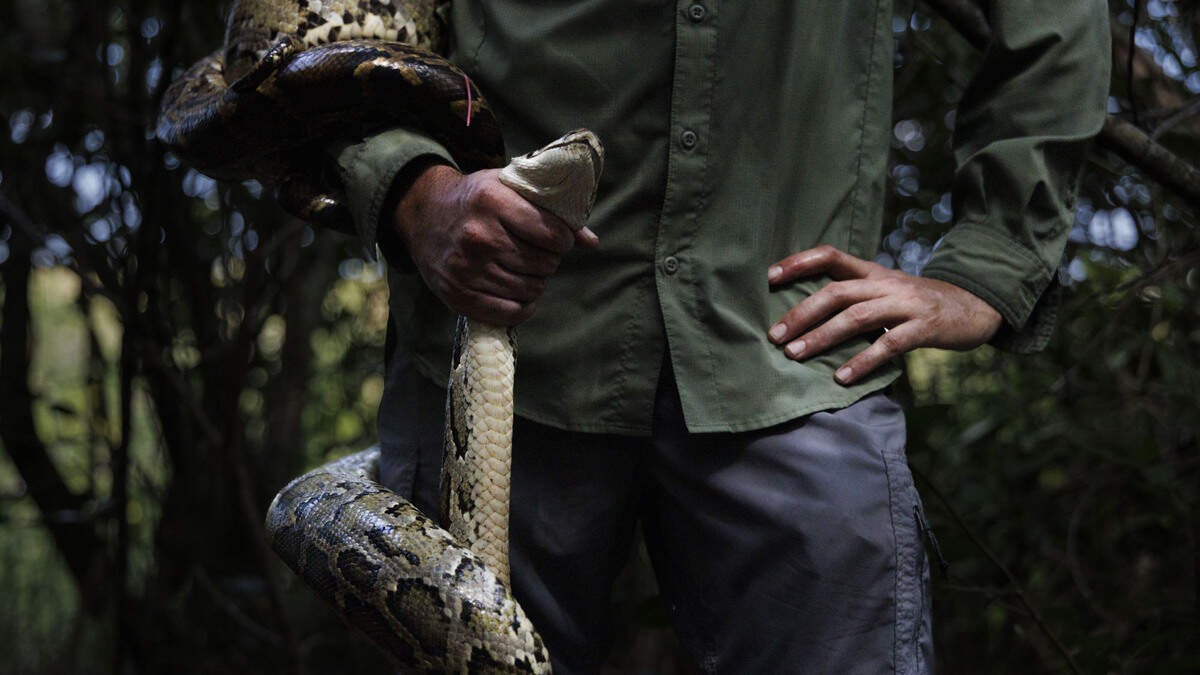
Eric Suarez, research program coordinator for University of Florida Croc Docs, holds a female python during a research trip to collect python eggs on Tuesday, June 30, 2026, from a nest the scientists have been tracking in the Everglades outside of Weston. Pythons are an invasive species in Florida, so knowing their breeding patterns is important.
Alie Skowronski
askowronski@miamiherald.com
As Eric Suarez and Brandon Welty pulled their duo of airboats off to the side of an island in the Everglades, this spot looked no different from the rest of the canal. But inside was one of the most notorious invasive species in the ecosystem: a Burmese python.
“This is where the nest is,” said Welty. “I’ve been tracking her for some time.”
Suarez and Welty work together at the University of Florida “Croc Docs” research program, which has been tracking pythons since the start of the program in 2022.
Brandon Welty, wildlife biologist and invasive species research coordinator for University of Florida Croc Docs, drives an air boat during a research trip to collect python eggs on Tuesday, June 30, 2026, from a nest the scientists have been tracking in the Everglades outside of Weston. Welty has been tracking pythons since the UF python program started in 2022. Alie Skowronski askowronski@miamiherald.com
There wasn’t a trail, and Welty headed straight into the low-lying trees on the side of the island. As the researchers trekked through the brush, joined by South Florida Water Management District scientist Jenna Cole and her intern, there wasn’t a path. Welty was following a GPS tracker that researchers had imbedded into the female python.
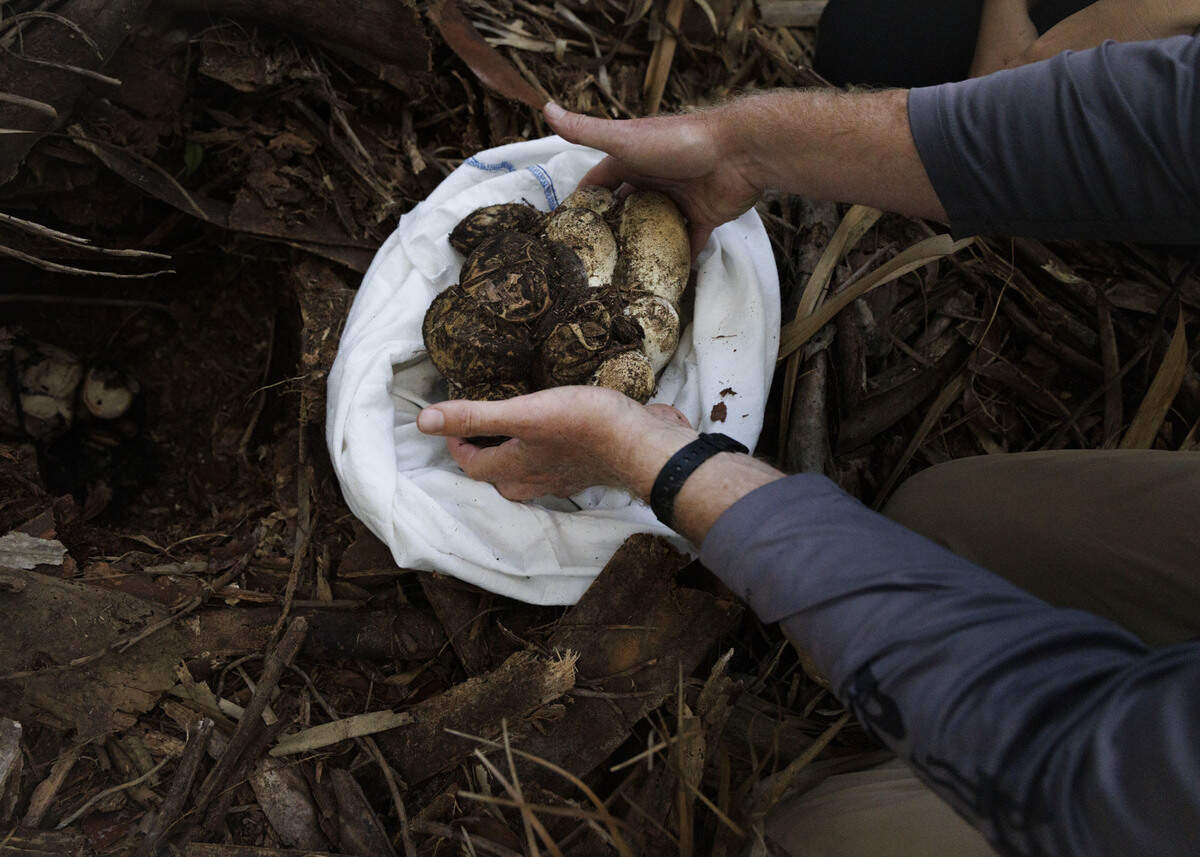
The GPS tracker lead them straight to the nest. They were able to pull out the clutch of eggs to take them back the laboratory for research.
“We will not allow the eggs to hatch, but we’re not going to kill the snake, so we’ll release her back to the wild,” said Welty.
Their research will help policymakers in Florida come up with effective plans to rid the ecosystem of the invasive species that is chomping through the local food chain.
Take a look at the photos from the day by Miami Herald photographer Alie Skowronski.
Brandon Welty, wildlife biologist and invasive species research coordinator for University of Florida Croc Docs, center, looks at data while Jenna Cole, invasive animal biologist with South Florida Water Management District, left, and her intern Sophia Buller, right, tend to the air boat during a research trip to collect python eggs on Tuesday, June 30, 2026, from a nest the scientists have been tracking in the Everglades outside of Weston. Welty has been tracking pythons since the UF python program started in 2022. Alie Skowronski askowronski@miamiherald.com
Eric Suarez, research program coordinator for University of Florida Croc Docs, pulls a female python out of her nest during a research trip to collect python eggs on Tuesday, June 30, 2026, from a nest the scientists have been tracking in the Everglades outside of Weston. “She's part of our tracking snake program, so we know when she got to this spot, and we have a pretty good idea of when she laid these eggs. So we pull the eggs before they hatch, and then we're going to get how many eggs she laid and the environmental data inside and outside the nest, try to figure out what makes a good nest,” said Brandon Welty, wildlife biologist and invasive species research coordinator who works with Suarez in collecting data. Alie Skowronski askowronski@miamiherald.com
Eric Suarez, research program coordinator for University of Florida Croc Docs, holds the female python while Brandon Welty, wildlife biologist and invasive species research coordinator, right, retrieves testing supplies to get data during a research trip to collect python eggs on Tuesday, June 30, 2026, from a nest the scientists have been tracking in the Everglades outside of Weston. Alie Skowronski askowronski@miamiherald.com
Eric Suarez, research program coordinator for University of Florida Croc Docs, back right, holds a female python while her eggs, front left, sit in their nest during a research trip to collect python eggs on Tuesday, June 30, 2026, from a nest the scientists have been tracking in the Everglades outside of Weston. Alie Skowronski askowronski@miamiherald.com
A female python flick out her tongue so that receptors on the tongue can pick up chemical particles, i.e. “smelling” her surroundings, during a research trip to collect python eggs on Tuesday, June 30, 2026, from a nest the scientists have been tracking in the Everglades outside of Weston. Alie Skowronski askowronski@miamiherald.com
Eric Suarez, research program coordinator for University of Florida Croc Docs, points to the tracker imbedded in a female python during a research trip to collect python eggs on Tuesday, June 30, 2026, from a nest the scientists have been tracking in the Everglades outside of Weston. The tracker, which seems to have popped one of the stitches, allows the scientists to see mating patterns, where nests are, and behaviors of the pythons to learn how to manage the invasive species. “It might just heal over. They don't do well with surgery after they've been sitting on eggs. They're dehydrated, their immune system is kind of messed up, so I'm tempted to just let her go do her thing,” said Brandon Welty, wildlife biologist and invasive species research coordinator who works with Suarez in collecting data. Alie Skowronski askowronski@miamiherald.com
Brandon Welty, wildlife biologist and invasive species research coordinator for University of Florida Croc Docs, collects a blood sample from the female python during a research trip to collect python eggs on Tuesday, June 30, 2026, from a nest the scientists have been tracking in the Everglades outside of Weston. A researcher at Croc Docs is looking into microplastics in pythons. Alie Skowronski askowronski@miamiherald.com
Eric Suarez, research program coordinator for University of Florida Croc Docs, holds a female python during a research trip to collect python eggs on Tuesday, June 30, 2026, from a nest the scientists have been tracking in the Everglades outside of Weston. “We know that hand capturing is the best method right now to remove these pythons, we're just trying to get as much data as possible to make these hunters and these agencies more effective,” said Suarez. Alie Skowronski askowronski@miamiherald.com
Brandon Welty, wildlife biologist and invasive species research coordinator for University of Florida Croc Docs, collects the clutch of python eggs to bring back to the laboratory for testing during a research trip on Tuesday, June 30, 2026, from a nest the scientists have been tracking in the Everglades outside of Weston. Pythons are an invasive species, and scientists are studying the eggs to better understand how to manage and mitigate the population. Her eggs were taken back to the lab to be studied by scientists, and they will not hatch them, they will dispose of them. Removing the eggs keeps the population from growing more than it already is. Alie Skowronski askowronski@miamiherald.com
Eric Suarez, research program coordinator for University of Florida Croc Docs, releases a female python back into her habitat during a research trip to collect python eggs on Tuesday, June 30, 2026, from a nest the scientists have been tracking in the Everglades outside of Weston. Alie Skowronski askowronski@miamiherald.com
This story was originally published July 5, 2026 at 5:51 PM.