
Budget talks among Florida lawmakers remain unsettled on Everglades, citrus
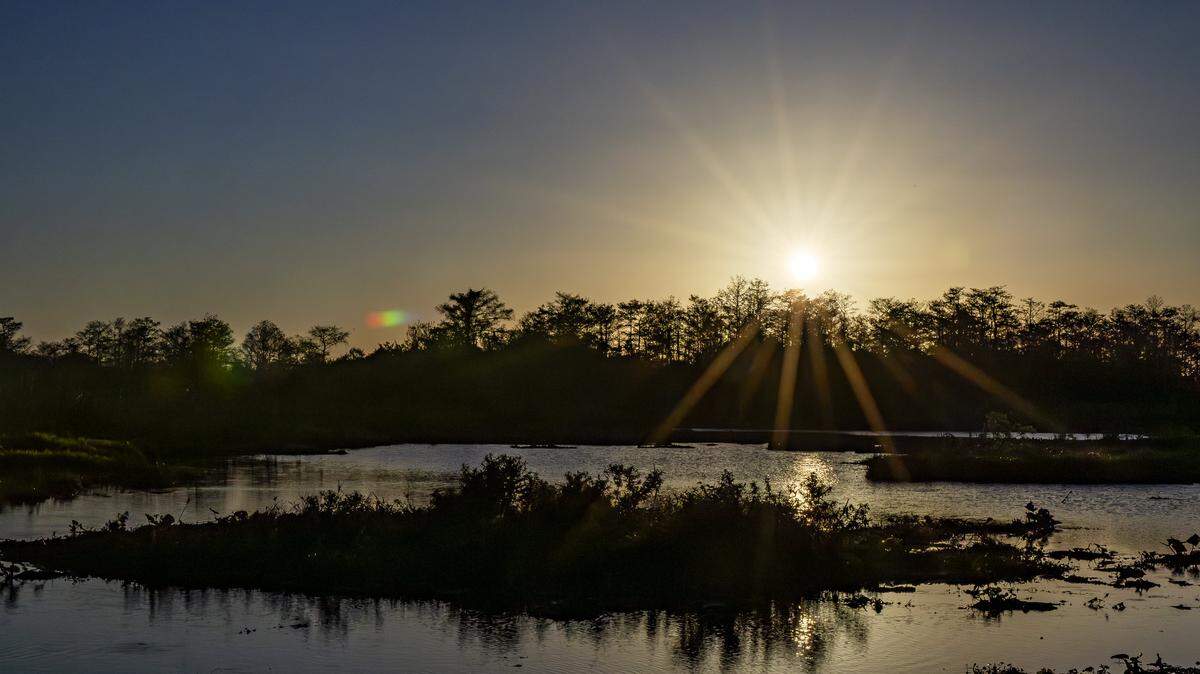
House and Senate budget negotiators managing environmental and agricultural issues approached the special session’s first deadline with funding gaps still outstanding in areas involving citrus research, land preservation and Everglades restoration.
Unresolved issues are to be turned over to the budget leaders Friday afternoon.
The two chambers entered Friday having settled on various parts of the Everglades restoration project, including $34.7 million for the Northern Everglades Estuaries, $30.7 million for aspects of the Comprehensive Everglades Restoration Plan and $20 million for the Western Everglades Restoration Plan.
But a big chunk of the funding, for the Everglades Agricultural Area Reservoir Project, stood at $424.7 million from the Senate and $249.3 million by the House.
The project is seen as vital to clean water and a healthy environment for the South Florida region, as it is designed to store more water from Lake Okeechobee to be cleaned before it is sent south to the Everglades. That will prevent polluted excess water being sent on estuaries east and west of the lake that have befouled waters with blue-green algae that has led to massive deaths of marine life within the past decade.
“It’s a giant pot of money. I mean, you know, even at the low end of the offers, we’re talking about half a billion dollars (for overall Everglades funding),” Senate Agriculture, Environment and General Government Appropriations Committee Chairman Jason Brodeur told reporters Thursday evening.
As part of negotiations in the special session, which began Tuesday and is expected to last just under three weeks, unresolved conference committee negotiations are to be handed off Friday afternoon to Senate Appropriations Chairman Ed Hooper, R-Trinity, and House Budget Chairman Lawrence McClure, R-Dover.
In his proposed budget, Gov. Ron DeSantis recommended more than $810 million for Everglades restoration projects, including $681 million for the Comprehensive Everglades Restoration Plan.
Brodeur said the numbers are all getting closer.
“If you watch the ping-pong, back-and-forth, at some point we’re going to get pretty close to where we’re going to land,” Brodeur said.
Talks involving agriculture and environmental programs gave the struggling citrus industry a lock on $4.4 million for a citrus health response program. But the Senate wants $179.5 million for citrus research and $15 million for citrus nursery and packing infrastructure. The House countered with $9 million for research and $5 million for the nursery and packing infrastructure.
Brodeur, a Sanford Republican, said there have been signs of success against the two-decade plight of citrus greening disease, through treatments and resistance found in the Donaldson sweet orange variety.
“We want to continue to help make sure that Florida is a place where we’re known for citrus,” Brodeur said. “And with this new program, we have a chance for recovery.”
Meanwhile, the chambers remain split on oyster restoration funding, with the House pushing for $22.1 million and the Senate sticking at $2.1 million. The funding would be in addition to the nearly $1 million already agreed upon for oyster restoration and monitoring in the Apalachicola Bay and the Big Bend region.
The Florida Fish and Wildlife Conservation Commission this year ended a five-year ban on oyster harvesting in some parts of Northwest Florida’s Apalachicola Bay. The FWC has estimated that restoration goals for the bay will annually require between $30 million and $55 million.
Both chambers have a $200 million baseline for conservation easements through the Department of Agriculture and Consumer Services’ Rural and Family Lands Protection Program. Rather than acquiring the land, easements allow existing agricultural operations to continue in exchange for restricting future land development.
But the House wants another $75 million for the Rural and Family Lands Protection Program, which the Senate did not match.
The Senate’s latest offer included $75 million for the historic Florida Forever land program, which does make conservation land purchases, with the House at $25 million.
Brodeur said the Florida Forever program under the Department of Environmental Protection has money unspent from the current year and could draw additional money for maintenance and management of existing sites.
“We could end up having a lot of money in Florida Forever by the time everything is done,” Brodeur claimed.
There’s $2 million from the Senate for reef protection in Monroe County without a match from the House. The Senate also proposed $1.9 million to establish a new state forest on 12,243 acres in Bay County, which the House has not supported.
DeSantis and the Cabinet approved the $32.65 million acquisition of the forest land from Bear Creek Timber LLC in December 2024. The land is about six miles north of Tyndall Air Force Base.
Meanwhile, the chambers have agreed to $1.6 million for a mollusk survey program, $25 million for state park facilities improvements, $8 million for shooting sports facilities, $10 million for invasive plant control, $2 million to combat Burmese pythons, and $300,000 for the wild turkey management program.
This story was originally published May 15, 2026 at 2:49 PM.