
As Miami-Dade drags its feet on trash troubles, other areas smell the stench
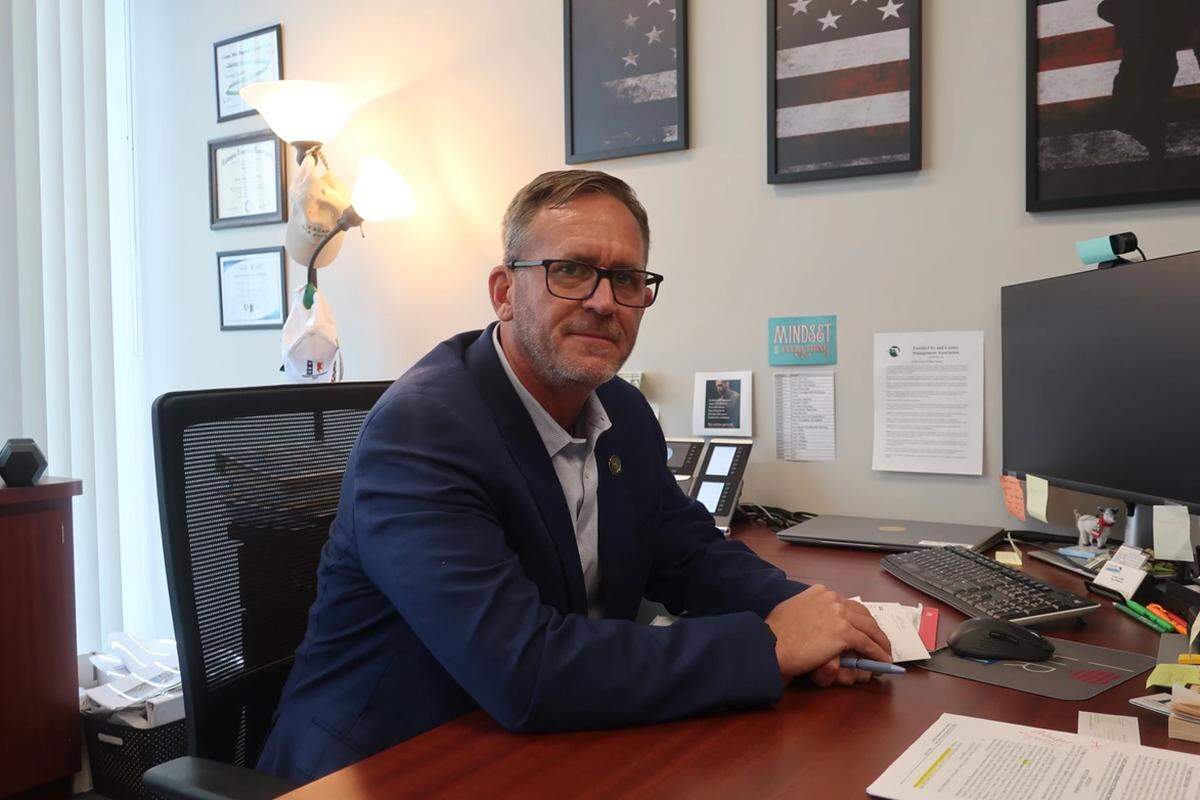
About two years ago, George Landry noticed a strange traffic pattern on Virginia Avenue in Fort Pierce, a city about 125 miles north of Miami. Dozens of heavy-duty trucks rolled past the front of his office every day, a far cry from the family-packed cars that were typical. He didn’t know why.
As the top county administrator of St. Lucie County, a job that carries high stakes in a county of about 400,000, knowing things is a big part of Landry’s job. One day, the U.S. Army veteran and recipient of two Bronze Stars and a Purple Heart decided to go back to his roots and leave the office on a reconnaissance mission.
“ If you see the truck on the road, it has a big green container on the back and the truck doesn’t have any markings on it,” said Landry. “So I followed one down and seen it go to the rail yard.”
The trucks, Landry soon learned, were directly connected to the massive fire that destroyed the waste-to-energy facility in Doral in early 2023 and to the large, multibillion-dollar decisions that have yet to be made in Miami-Dade County about the future of its solid waste.
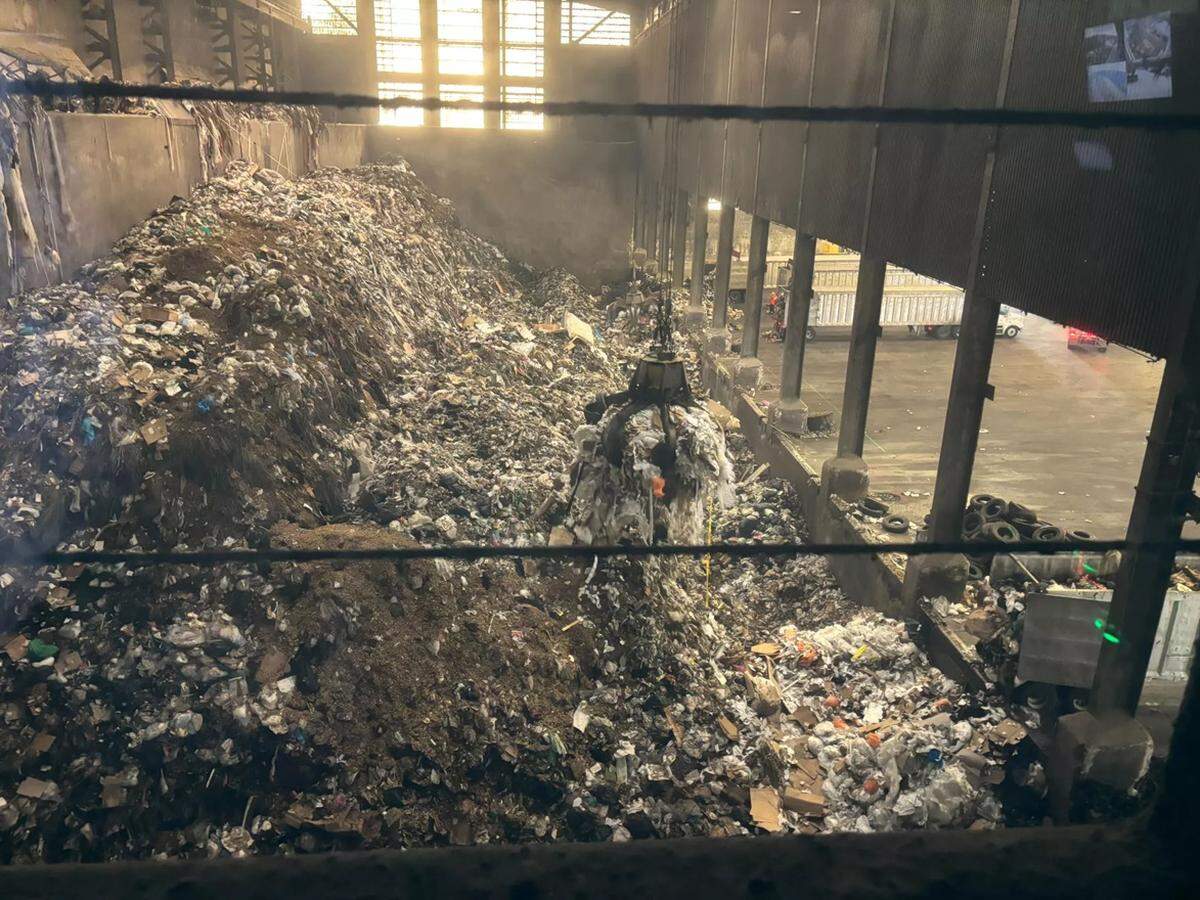
The defunct facility was one of the main ways Miami-Dade got rid of its trash: The sIte burned solid waste to provide electricity to nearby homes. But after the fire destroyed the facility, residents did not stop producing thousands of tons of trash every day. Scrambling, Miami-Dade decided to ship much of it north through a route that ran directly through Fort Pierce.
Three years later, the trains and trucks have become a fact of life in St. Lucie County.
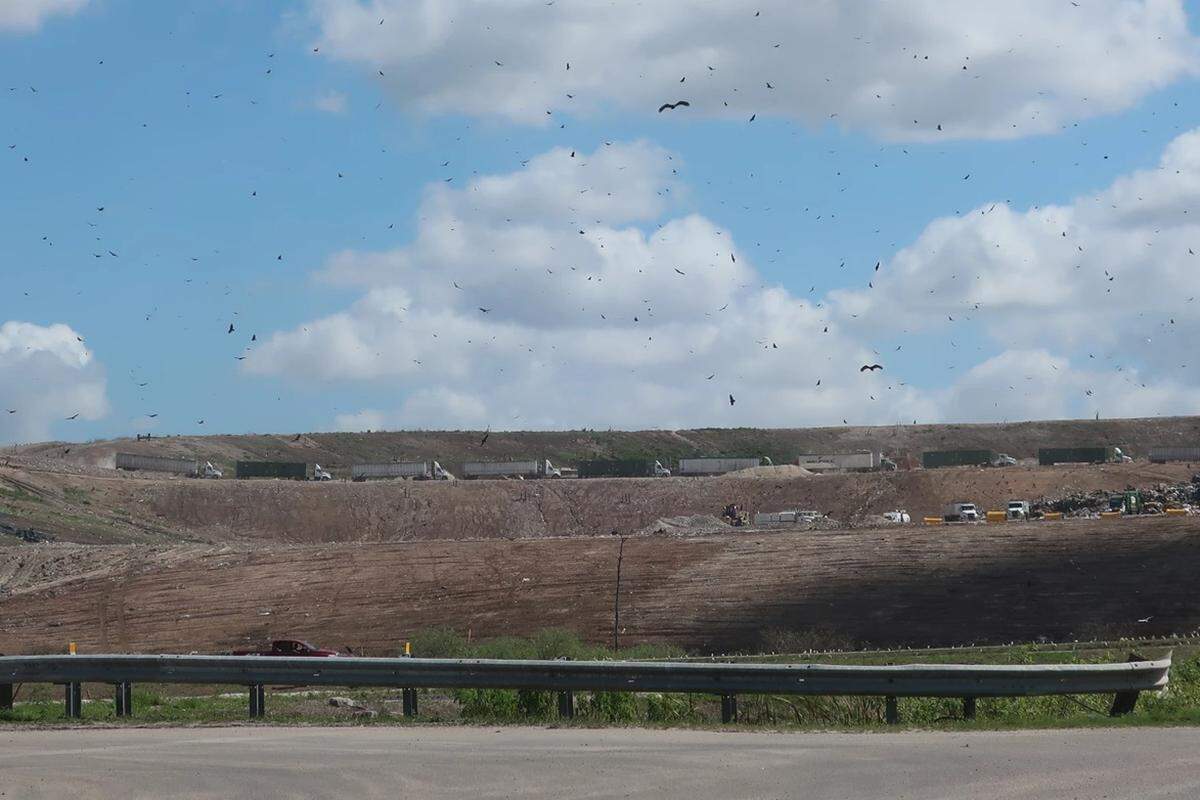
Miami-Dade contracts with the company Waste Management to ship much of its trash to a landfill in Okeechobee County. To get there, the company transports the trash to Fort Pierce by rail, where it is offloaded. Heavy-duty trucks then pick up the garbage and drive through the center of Fort Pierce, across St. Lucie County and into Okeechobee County to the landfill owned by Waste Management.
Landry said the trucks present a traffic issue for his community as well as increased wear and tear on roads and environmental issues.
The rail yard borders the Indian Hills Golf Course. Golfers have not been fond of the smell, said Landry.
“ There is a nuisance from the public’s perspective on the smell and the traffic,” said Landry. “And our understanding is that volume may go up even more.”
The rail yard sits a few blocks south of downtown Fort Pierce, a historic district lined with boutique shops, colorful bars, fish shacks, a theater and restaurants. Trainloads of garbage from Miami were parked there for days on end.
Sitting under the hot sun, the stench from tons of waste wafted over the train tracks and into the noses of nearby residents.
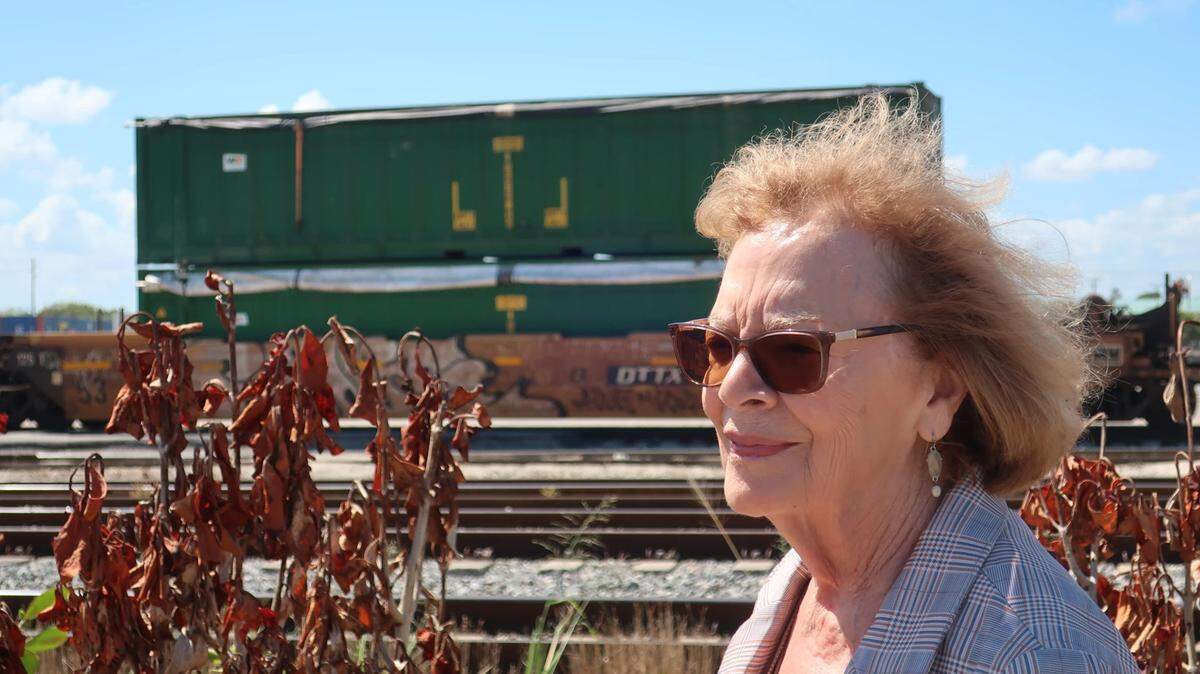
Fort Pierce Mayor Linda Hudson said her phone began to ring shortly after the “trash trains,” as she calls them, began to arrive.
“You can imagine sitting right next to a great big trainload of garbage next to your house that sits on the beautiful Indian River,” said the mayor. “That is causing us problems because the trash is open air and the stench and it causes rodents, roaches, coyotes, flies and horrible smells.”
Mayor Hudson told WLRN that her complaints to the company led to Waste Management putting a tarp on the trash containers as opposed to leaving them open-air. Her calls led to the Florida Department of Health twice visiting the site, she said, but no issues were reported.
Railroads are regulated by the federal government, not municipalities, so there is little her office can do.
“ As a public official I don’t like to not be able to do something about something. So we tell them that we will do what we can,” said Hudson.
Republican U.S. Rep. Brian Mast, who represents Fort Pierce, posted a fiery video in February about the trains full of Miami-Dade trash. He said the trash issue was “ruining” Fort Pierce. He blamed Florida East Coast Railway, the company that owns the railroad tracks and rail yard.
Mast said — in the now-deleted post: “You’re gonna stop hauling garbage from Miami.”
For Hudson, the trains full of trash and the hundred or so trucks driving through the city center every day are a lose-lose situation: “We’re not getting any revenue from this. I’m not sure we would want revenue, we just don’t want the trash here. That’s the most important thing.”
Big decisions for Miami-Dade
Miami-Dade’s trash transportation was supposed to be a temporary measure. But three years later, the county is still exporting its trash.
After the massive accidental fire destroyed the county’s 1980s-era waste facility in Doral on Super Bowl Sunday 2023, leaders have been trying to agree on a site for a new waste-to-energy plant.
Simply moving the trash to other landfills inside the county meant that they would fill up much sooner than anticipated.
In short, the fire created a short-, medium- and long-term problem for the county, and shipping out of county was the obvious immediate solution — at no small cost.
In the 2022 to 2023 fiscal year, the county spent $41 million to haul the trash north, and that ticked up to $44 million the following year. For the current fiscal year, which ends in September, the county estimates that it will spend $65 million to transport the trash as an interim solution.
For the medium and long term, the county began a three-year search for a new waste-to-energy facility site. Public debates garnered significant pushback from residents and elected leaders who don’t want a garbage facility near residential areas.
“ I don’t care what district it’s in. I do not believe it should be near residents for many different reasons,” Miami-Dade Commissioner J.C. Bermudez told WLRN in an interview. His district includes Doral.
When the Covanta facility was built, the city of Doral (which was incorporated in 2003) did not exist. Bermudez, who also served as Doral’s founding mayor, said he objected when the county zoned the area around the plant as residential and townhouses were allowed to go up on the perimeter.
With the facility gone, nearby residents have spoken out against rebuilding a waste-to-energy plant in Doral.
President Donald Trump’s son, Eric, met with Bermudez in 2024 and expressed his family’s objection to rebuilding a solid-waste plant near the Trump National Doral resort and golf course, just over a mile to the south of the old site.
“ It would probably have an impact on the resort regardless who would be the owner. In this case, you’re just talking about the fact that today it’s owned by President Trump’s family,” Bermudez told WLRN.
After that meeting in 2024, discussions about rebuilding the Covanta facility were thrown out. Bermudez said he has not met with Eric or the Trump family recently, but is adamant that a new facility not be built in Doral.
But fellow Miami-Dade Commissioner Rene Garcia is equally adamant that any new waste-to-energy plant should be built at the old location in Doral.
Garcia agrees with Bermudez that housing should have never been built nearby, but also points out that residents still bought homes next to the plant. Nearby homes were built as recently as 2020, according to county property records. Similarly, the Trump Organization bought the resort in 2012, when the plant was operating and clearly visible for all to see.
“They knew what they were buying,” said Garcia. “A lot of politics gets played into this.”
Garcia said that as the county commission has dragged its feet on making a decision, the cost for building a new facility continues to increase. Estimates for a new plant already hover around $2 billion. That cost will increase if the county has to purchase land on which to put that facility.
“ The studies all say Doral is the cheapest site because the infrastructure that’s there, and the insurance monies would have kicked in to help rebuild it there,” said Garcia. “It’s embarrassing for us as a county commission to say that we haven’t selected a site or who is going to be doing it.”
Beyond Doral, the county is looking for sites while fielding proposals from several companies. Florida Power and Light (FPL), and FCC Environmental Services each submitted individual proposals to build and run a new waste-to-energy facility.
In February, county leaders asked the two firms to team up and come back with a joint bid in late April.
The FPL-FCC consortium has since proposed the creation of a solid-waste campus that would include a new waste-to-energy facility to burn trash into energy, a recycling center and an anaerobic digestion plant where microorganisms will break down organic waste such as food.
The two locations that FPL and FCC proposed are both in Bermudez’s district in west Miami-Dade County off of Okeechobee Road in a primarily industrial zone.
“Both of the entities understand these are the two sites that are being considered. There are really no residents out there,” Bermudez said.
The county expects a full proposal from FPL and FCC at the county commission meeting on Tuesday, April 21.
Whichever way the decision goes, Commissioner Garcia said it is likely that some trash might continue to be shipped north for the foreseeable future even if a new plant is built. The expected capacity of a new facility could not be enough to handle all of the trash created in the county. But Garcia would like to keep the amount shipped to other areas to a minimum.
“ We’re just shipping it to someone else and that’s become someone else’s problem,” said Garcia. “I think we should be mature enough and responsible enough to own up to where we’re right and where we’re wrong, and fix our own problems.”
The Palm Beach model
Roughly 80 miles north of Doral, Palm Beach County is gearing up to build a third waste-to-energy facility to replace its first, aging plant.
Whereas Miami-Dade has been unsuccessful in conquering its trash, Palm Beach has become the lead recycler in the state three years running. Its recycling rate — which includes waste to energy — sits at 90%, more than double Miami-Dade’s 36%.
According to Ramana Kari, the executive director of the Palm Beach County Solid Waste Authority, the difference is organizational.
The SWA was set up by a special act of the Florida Legislature in 1975. A key provision stemming from the act is “flow control,” which establishes that no waste is allowed to leave Palm Beach County. After waste is collected, it must be delivered to the SWA.
“ If the waste leaves the county, then that would trigger a drop in revenues,” Kari said. The revenues are important to staying financially solvent, building new facilities and managing waste in a growing county, he said.
The SWA’s authority is intentionally concrete. It is not a sub-branch of a city or the county’s public-works department, like in other municipalities. It’s independently funded in county tax bills and independently governed as well.
Kari described one scenario in which the authority recently noticed that Broward County construction firms were bringing waste to Boca Raton facilities, run by the SWA, for more favorable rates.
The SWA raised prices at those facilities to discourage them.
“We’re not built to take care of issues from outside of Palm Beach County,” Kari said. “We build our facilities to make sure our residents get the best system possible.”
The SWA zealously guards its flow-control powers, to the chagrin of some residents.
In 2023, a Jupiter woman who ran a composting business told a TV news station in West Palm Beach she was forced to shut down her business after receiving a cease-and-desist letter from the SWA. The SWA accused her of unlawfully transporting waste to an unpermitted site — waste that belonged to the SWA, according to the news report.
The SWA’s legislatively-defined powers allow for the authority to plan ahead of 2071, which is when its landfill is projected to become land-full.
Last October, the SWA’s board approved construction of a new facility at a cost of $1.5 billion.
The SWA says the new facility, which it calls “REF (Renewable Energy Facility) 1R,” will be able to burn more tons of garbage and do so more efficiently.
One county’s trash is another’s treasure
For his part, Okeechobee County Commissioner David Hazellief said he is not in a rush for Miami-Dade to get its act together.
Hazellief sees Miami-Dade’s trash as his county’s treasure, and he wants more of it.
Decades ago, when Okeechobee County sold its landfill to a private company, the county negotiated the right to receive royalties from trash received by the landfill. The more trash that comes, the less the local government has to charge local property owners to fund vital services.
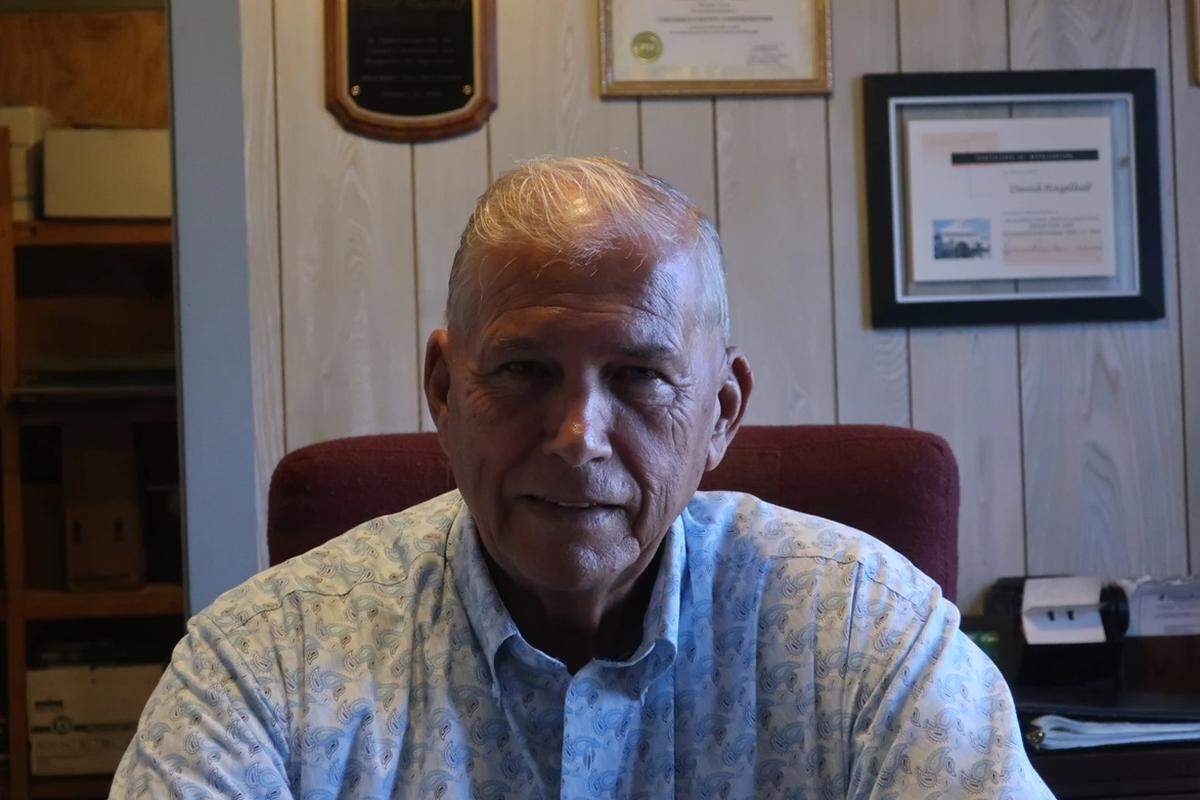
Currently, the county receives about $6 million in annual revenue from the landfill royalties, representing almost 20% of the county’s entire tax base.
“ That number has gone up since Miami-Dade started to ship,” said Hazellief. “ We’ve been fortunate enough to — in the last two years — to reduce our millage [property-tax rate] from 8.0 down to 7.8 and we’re very proud of that.”
“It creates a lot of jobs and a lot of fuel sales for the trucks that might stop and fuel up. It’s been a boost to our economy,” he said.
To ship the trash to Okeechobee, Miami-Dade is paying $31.70 per ton, plus an approximate $2.50 per ton fuel surcharge, according to the Miami-Dade Department of Solid Waste Management. A tiny fraction of each ton goes to the Okeechobee County government in royalties.
Okeechobee also receives trash from Orlando, Tampa and parts of Southwest Florida, and it has plenty of room for expansion.
“ There’s an additional thousand acres. 1,000 acres, in addition to what we have there now is permitted for usable landfill site,” said Hazellief. “It depends on the amount we have coming in, but I wouldn’t think we would run out of space until 2050.”
Even if Miami-Dade County moves toward building a new waste-to-energy facility in a meeting on the topic on Tuesday, such a facility would take years to build, and Okeechobee expects to see increased revenue in the near term.
Miami-Dade has also been shipping trash by truck to the JED landfill farther north, in St. Cloud, since the waste-to-energy facility burned. The county is charged $31.34 per ton for that site. In the future, Miami-Dade expects to start sending trash by rail to the Heart of Florida landfill in Sumter County near The Villages. Shipments to that site will be fully by rail, according to the Miami-Dade Department of Solid Waste Management, costing $43.25 per ton.
On average, Miami-Dade is shipping 57,645 tons of trash per month out of the county.
“These arrangements are part of the County’s interim disposal strategy while long-term solutions are evaluated and advanced,” department spokesperson Caridad Mesa told WLRN.
St. Lucie County administrator Landry said he does not blame Miami-Dade County’s government for the headaches caused in his county. Even after the loss of the waste-to-energy site, residents continued to produce trash, posing an immediate sanitation and safety problem that had to be addressed.
“When it comes to garbage, we get it,” said Landry. “As long as they’re working on an alternative plan — and we’re hoping this is not the permanent plan — to keep St. Lucie County out of it, we’re OK waiting that time to figure it out.”
This report was produced by Miami Herald news partner WLRN Public Media.