Have cold-stunned iguanas in your yard? Bring them to us, FWC says
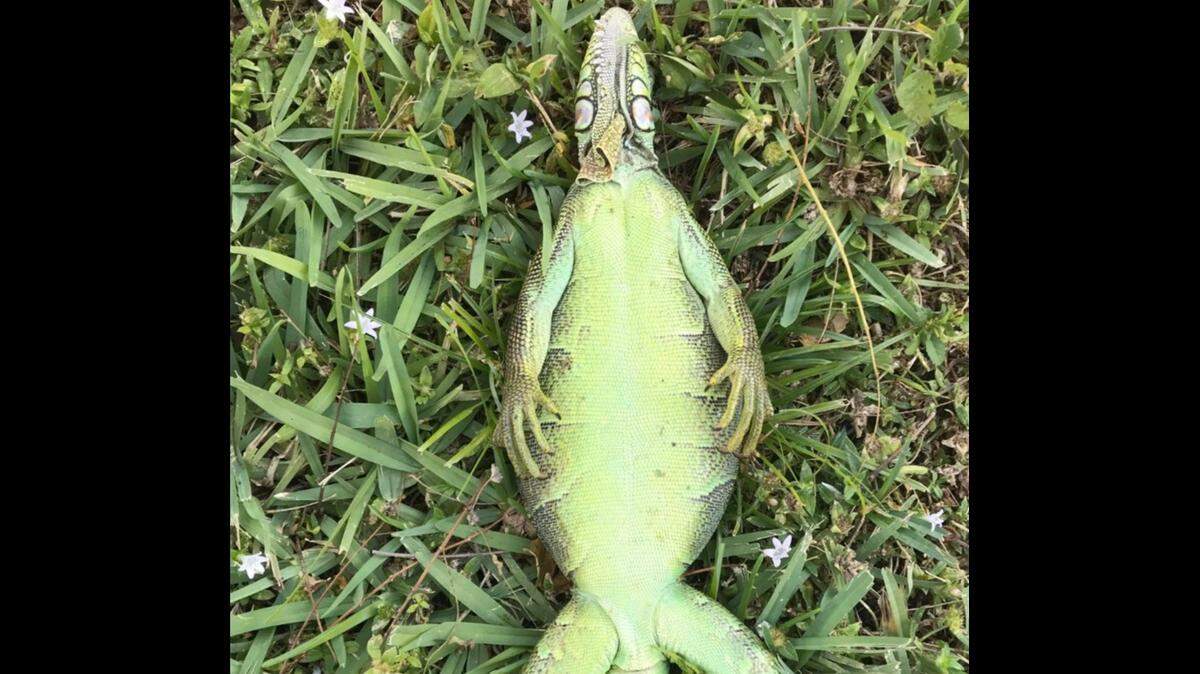
With temperatures expected to dip to lows not felt since 2010, state wildlife officials are seeing it as an opportunity to make a dent in the population of green iguanas, which are an invasive species that has flourished in Florida since being introduced decades ago through the pet trade.
READ MORE: Weather alert: Freeze watch and wind warnings issued for South Florida
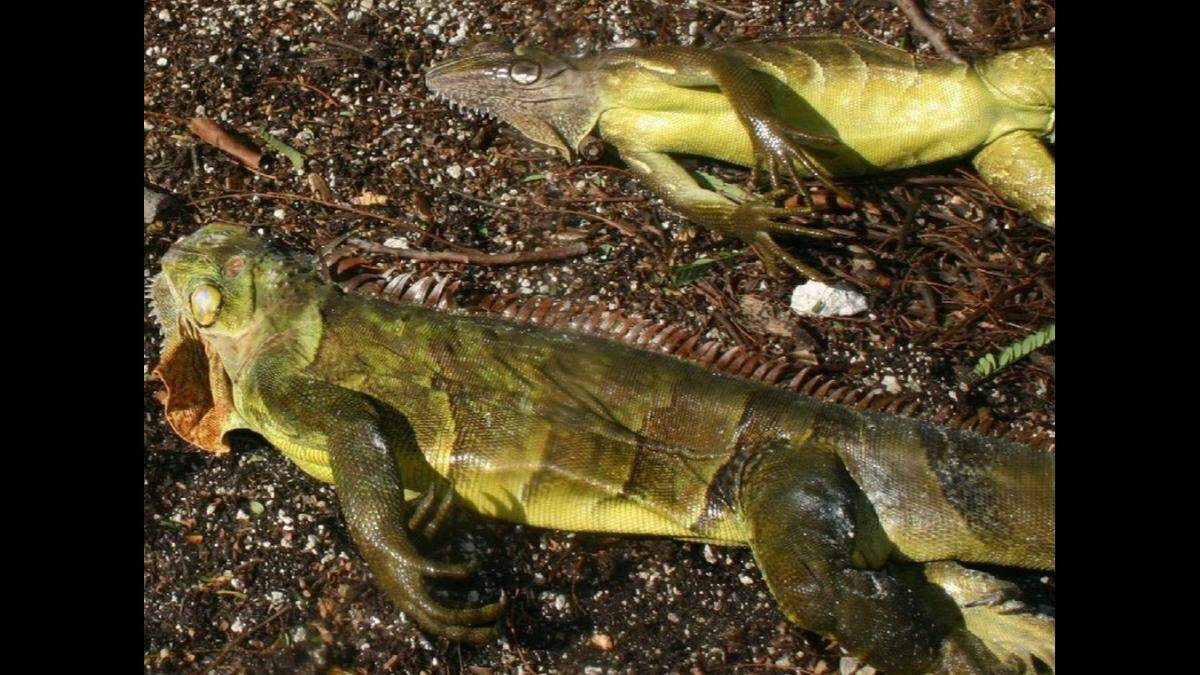
Low temperatures are forecast to be near freezing by Sunday morning, with the cold weather sticking around into the week. Whenever this happens, iguanas, which are accustomed to hot weather, become cold-stunned. They’re not dead, but they go into a state of torpor in which they lose muscle control.
They look dead or frozen, often falling onto the ground from trees.
.jpeg "iguana_fitted (1).jpeg")
The Florida Fish and Wildlife Conservation Commission issued an executive order this week, temporarily allowing people to bring cold-stunned iguanas to five designated offices where the reptiles will either be humanely killed or transferred to permitted pet operators for live animal sales, the agency announced Friday.
READ MORE: Using a space heater in frigid Florida? Make sure you don’t burn your home down
The program is in effect on Sunday and Monday.
“Green iguanas are an invasive lizard in Florida that have adverse impacts on Florida’s environment and economy,” the FWC said in its statement.
Wildlife officials caution people taking part in the program to wear protective gloves, pants and long-sleeved shirts.
READ MORE: What will you do when the cold weather turns warm again in Miami? We know
The iguanas collected must be kept in a secure, escape-proof cloth sack in which the animals can breathe, the FWC said.
Once captured, the sacks should be placed into a second secure contained labeled “Prohibited Reptiles,” the statement continues.
READ MORE: Could it snow in Florida this weekend? What to know about the Gulf Effect
They should be driven to the drop-off sites quickly because their cold-stunned state can wear off once they get warm, wildlife officials said. The sacks must remain sealed until collected by the FWC.
The drop-off sites are scheduled to be open from 9 a.m. until noon Sunday and from 8 a.m. until 4 p.m. on Monday.
The drop-off sites are:
- FWC South Florida Regional Lab, 2796 Overseas Highway 119, Marathon
- FWC office, 10052 NW 53rd Street, Sunrise
- FWC Tequesta Field Lab, 19100 SE Federal Highway (US 1), Tequesta
- FWC Law Enforcement Office, 2423 Edwards Drive, Fort Myers
- FWC Southwest Regional Office, 3900 Drane Field Road, Lakeland